That bony bump on the outside of your foot, right at the base of your little toe, presses against the tightest part of every shoe you own.
It rubs against the seam. It catches on the stitching. And by the end of the day, the skin over your joint is red and sore, because the shoe was never designed with your foot in mind.
A tailor's bunion (also called a bunionette) is the mirror image of a regular bunion, sitting on the outer edge of the foot instead of the inner edge. It's less talked about, but it creates the same shoe-shopping headache, and in some ways a trickier one, because most "wide fit" shoes focus their extra room on the big-toe side.
The right shoes won't cure a tailor's bunion or make it smaller (only surgery can do that), but they can take the pressure off the joint and let you get on with your day without wincing.
What you're looking for is a wide, rounded toe box with room at the outer little-toe edge, a soft upper that stretches over the bump rather than pressing against it, and a genuine wide fitting that keeps the heel secure while the forefoot has space.
At Calla, we design every shoe specifically for women with bunions, so those features are where we started, not compromises we made later. Our founder, Jenni Bailey, has bunions herself and started the brand because she couldn't find comfortable heels for her own wedding. Every design decision we make comes from that experience.
Here are shoes you can consider for a bunionette, but always make sure to measure your feet against the shoe width before ordering:
The Lucinda is Calla's stand-out flat, a square-toe ballet shape finished with stud detailing for an edge the plain flats don't have. A hidden 1cm heel and arch support keep it comfortable, while the wider fit gives the bunion room. Up to EE, true to size.
Origin
Handcrafted in Portugal, designed in the UK
Material
Black leather upper, lamb leather lining
Heel
1cm hidden internal heel
Toe shape
Square toe with stud detailing
Width cap
Up to EE
Toe box
Wide toe box with hidden stretch panel over the bunion area
Browse more images of the Lucinda - Black Studded Leather Ballerinas:
Our Review
Lucinda is the flat I wear when I want something with a bit of edge, since the square toe and the studs make it stand out where a plain ballet pump blends in. It still has the Calla comfort underneath, with a hidden 1cm heel for a small lift and arch support for the day. The wider fit gives my bunion room, and the square toe leaves my toes sitting flat rather than tapered. I wear it with cropped jeans or black trousers to let the studs show. Up to EE, true to size.
Pros
Square toe with stud detailing across the vamp
1cm hidden internal heel keeps the flat profile while raising the rear foot
Hidden stretch panel flexes over the bunion joint
Arch-supported cushioned insole inside a flat shoe
Cons
Width fitting caps at EE so feet wider than that may not fit
Square toe sits more structured than a round ballerina so first wears need easing in
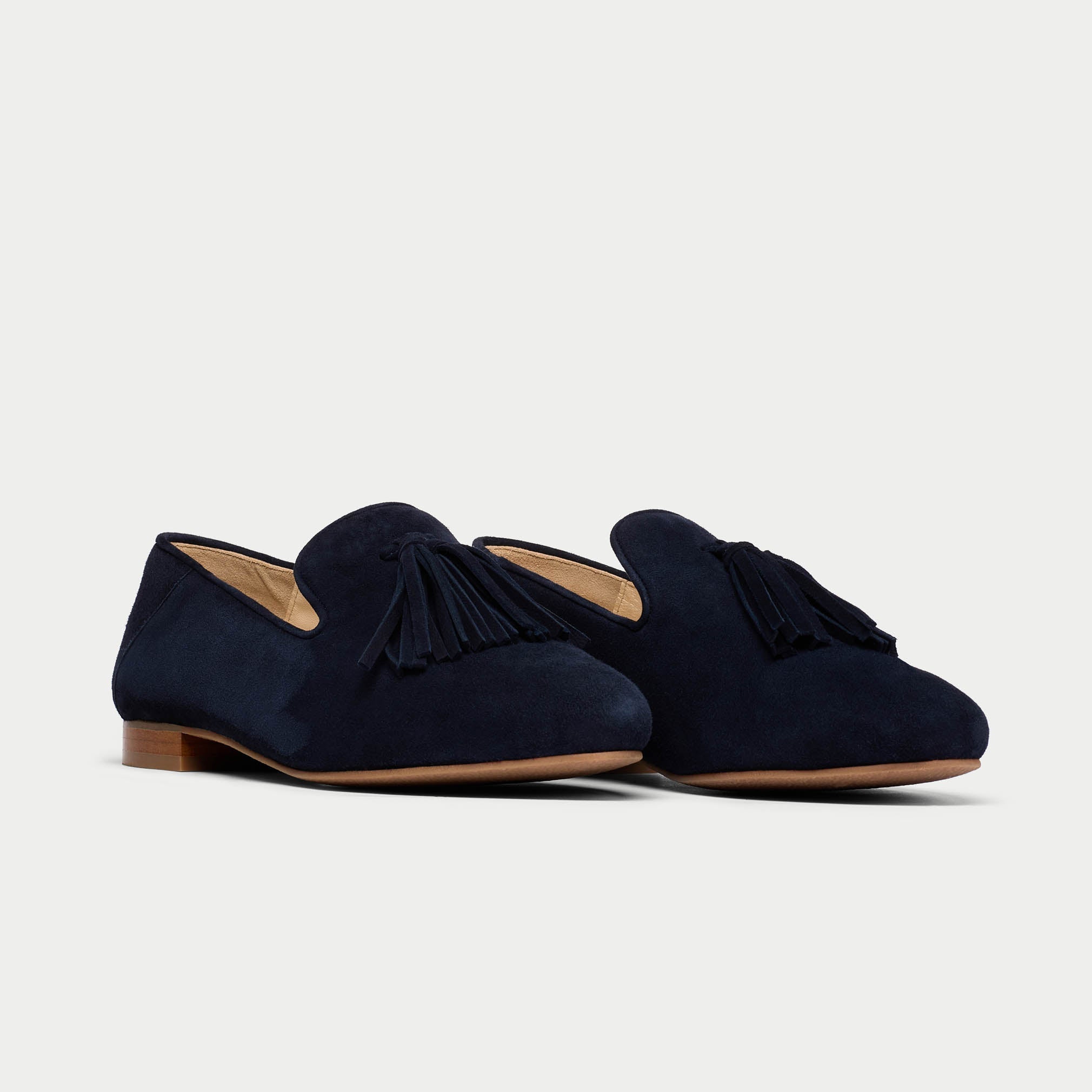
The Freya is Calla's tassel loafer, and black suede is the soft, velvety everyday one. A hidden stretch panel in the toe box flexes over the bunion while the wide toe box gives the forefoot room, so a smart loafer doesn't press on the joint. Runs big in suede, so size down a full size; fits up to EEE.
Browse more images of the Freya - Black Suede Loafers:
Our Review
Black suede is the Freya I wear most, because the soft velvety finish dresses up trousers while still feeling relaxed, and the tassels give it a bit of character. The hidden stretch panel sits in the toe box and flexes over my bunion, so the joint isn't pressed the way it is in a stiff loafer. The wide toe box and cushioned insole carry me through a full day at a desk and out to dinner. The one thing to get right is sizing, since the suede runs big and I took a full size down. Up to EEE, and I brush the suede to keep it looking fresh.
Pros
EEE width cap suits wider feet
Hidden stretch panel flexes over the bunion joint
Flat profile for all-day standing or walking
Lamb leather lining against the foot
Cons
Sizing runs a full size large so you must order down
Suede upper picks up rain marks without a weatherproof spray
Black suede shows scuffs on the toe with regular wear
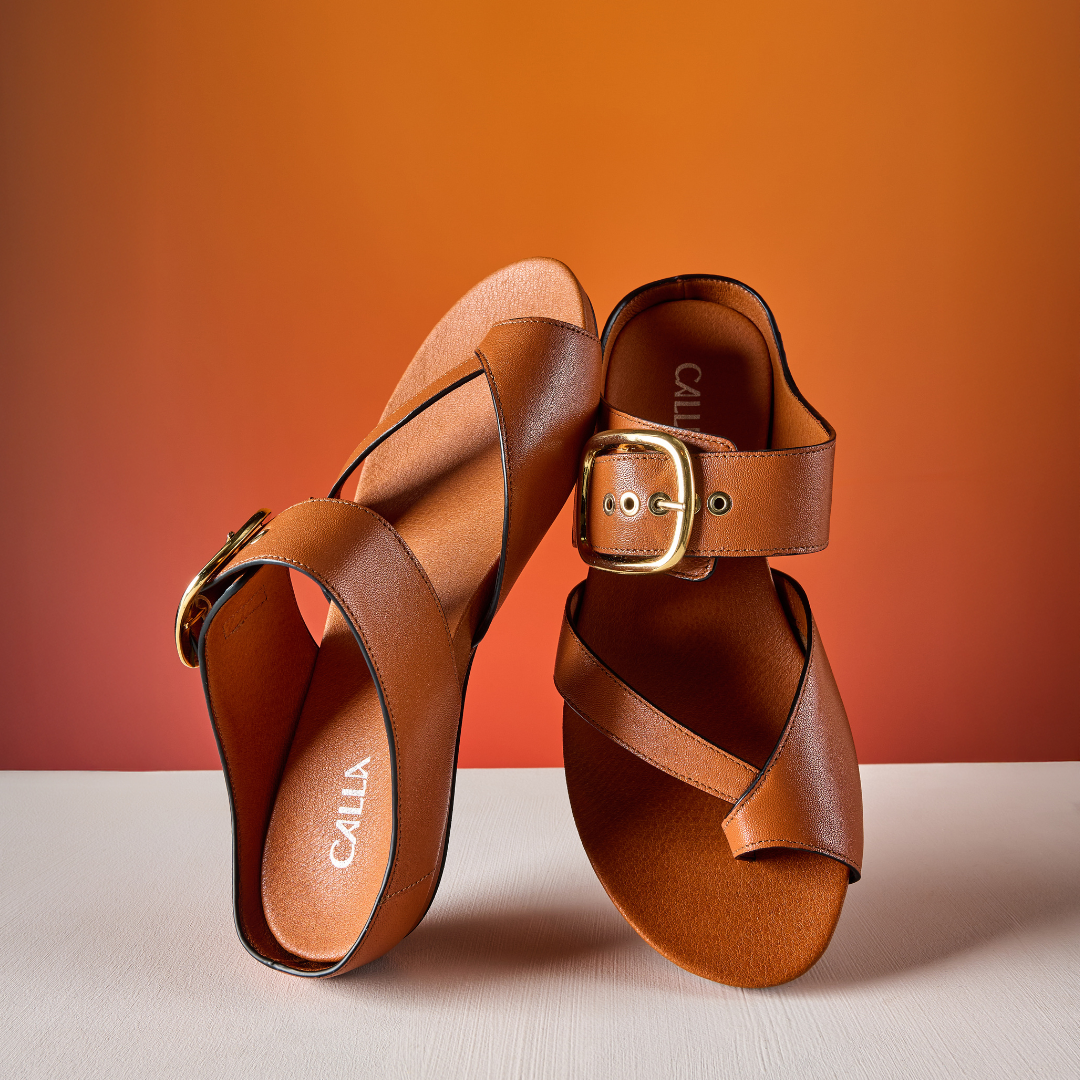
The Ruby toe-post sandal in all-black leather, with the strap set to cover the bunion instead of leaving it on show, and a hidden moleskin 'hallux' panel cushioning the joint underneath. Black takes it from a linen jumpsuit by day to a terrace dinner at night. Fits EE-EEE, true to size.
Origin
Handcrafted in Portugal at a family-run factory in the Porto region
Material
Black leather upper, lamb leather lining
Heel
Flat
Style
Toe-post sandal with strap positioned to cover the bunion joint
Fit
True to size, EE-EEE width
Insole
Arch-supported cushioned insole with hidden moleskin hallux panel
Browse more images of the Ruby - All Black Leather Sandals:
Our Review
Black is the Ruby I wear most, because it does the one thing a barely-there sandal usually can't, which is cover my bunion rather than frame it. The strap sits right across the joint and the hidden moleskin panel cushions underneath, so I can walk a hot city day without the rubbing an open sandal normally brings. The arch support means it holds up for hours rather than going flat and flimsy by lunchtime. In black it goes with everything I pack, from a linen jumpsuit to a navy midi for dinner. True to size for me across the EE-EEE range.
Pros
Strap sits over the hallux joint so the bunion is covered in an open sandal
Hidden moleskin hallux panel sits inside the insole over the joint
EEE width cap accommodates wider forefeet
All-black colourway pairs across day and evening summer outfits
Cons
Leather uppers benefit from conditioning to keep the finish from drying out
Flat pitch suits short walks better than long city days for some wearers
Toe-post style needs a short break-in for the post between the toes
The Abbie is Calla's chunky flat winter boot in black nubuck leather, lined with a plush faux-fur interior for warmth. A 4.5cm chunky sole and cushioned arch-supported insole keep you steady and cosy, with an EEE fit for the bunion. Fits EEE, true to size.
Origin
Handcrafted in Portugal, designed in the UK
Material
Black nubuck leather upper, lamb leather lining
Lining
Faux-fur interior
Heel
Flat with 4.5cm outsole
Width cap
Fits EEE width feet
Toe box
Wide toe box with hidden stretch panel over the bunion area
Browse more images of the Abbie - Black Nubuck Leather Boots:
Our Review
Black Abbie is my winter boot, the one I pull on for cold, wet days because the faux-fur interior keeps my feet warm and the chunky 4.5cm sole keeps me off the cold ground. The flat, wide EEE fit gives my bunion room with a thick sock, and the cushioned arch-supported insole means I can walk in them all day. The black nubuck goes with jeans and a winter coat. Fits EEE, true to size.
Pros
EEE width fitting accommodates wider feet than most boots on the market
Faux-fur lining adds insulation through winter
4.5cm chunky outsole raises the foot off cold pavement
Nubuck has a soft brushed surface that hides minor scuffs
Cons
Nubuck absorbs water and needs weatherproofing before wet wear
Faux-fur lining runs warm so less practical for indoor office days
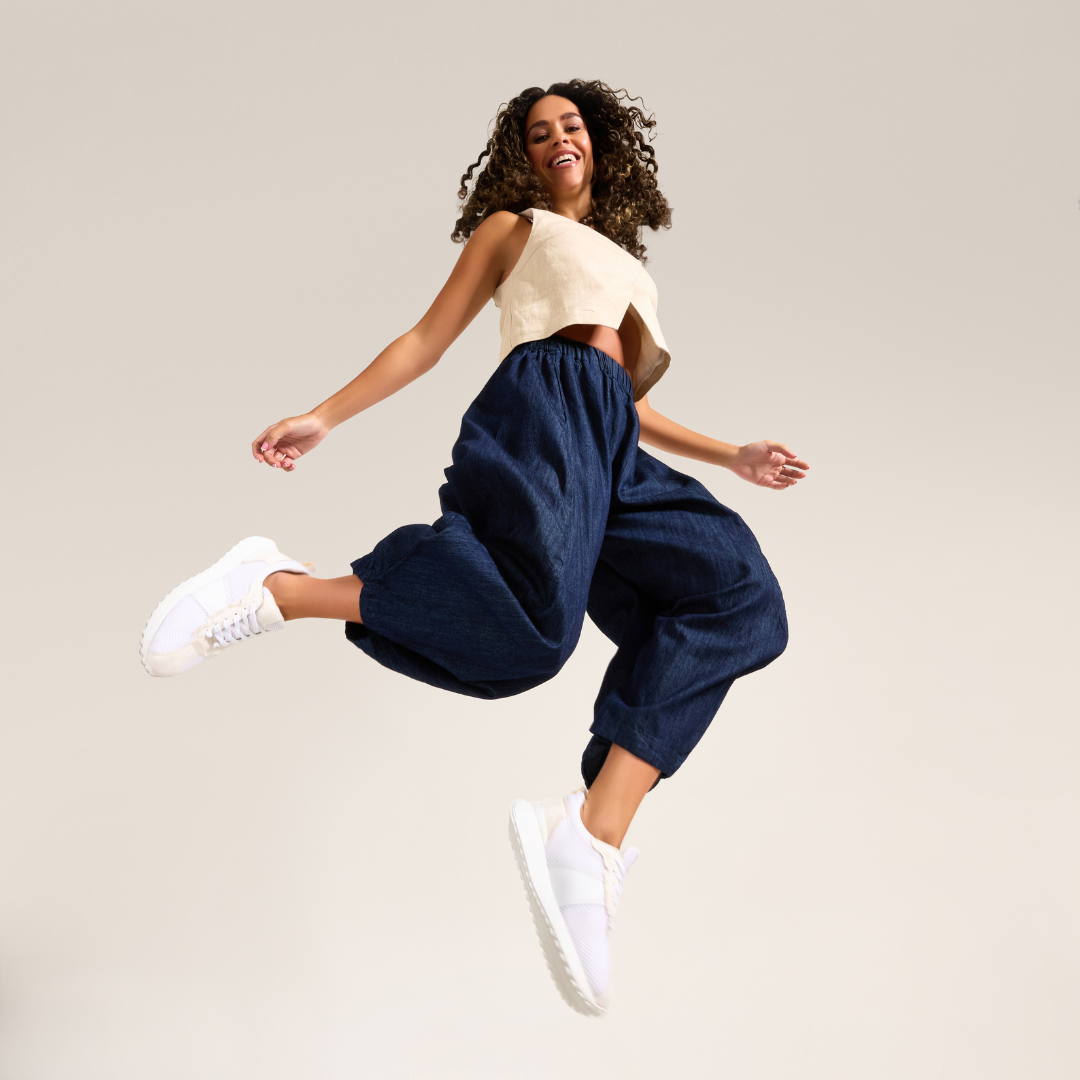
The Estella is Calla's zip-up trainer with no laces to tie, and black leather is the smart everyday one. A side zip means easy on and off without bending, while the removable moulded footbed and wider fit give the bunion room and take your orthotics. Fits up to EEE, true to size.
Origin
Handcrafted in Portugal, designed in the UK
Material
Black leather upper, lamb leather lining
Heel
Flat
Width cap
Fits up to EEE width feet
Toe box
Wide toe box
Closure
Side zip instead of laces
Footbed
Removable moulded footbed, swap in your own orthotics
Press
Voted one of the best stylish trainers for wide feet by Hello, Good Housekeeping, The Independent, The London Evening Standard
Browse more images of the Estella - Black Leather Zip-Up Wide Fit Trainers:
Our Review
The black Estella is the trainer I reach for when I don't want to bend down and tie laces, because the side zip means I step straight in and out. In black leather it looks tidy enough for a casual office or smart-casual day, not just the gym. The wider fit and moulded footbed give my bunion room, and the footbed lifts out for my orthotics. The zip also means a consistent fit every time rather than laces I retie. True to size, up to EEE.
Pros
Side zip means you slip the trainer on without retying laces
Removable moulded footbed for own orthotics
EEE width fitting accommodates wider feet than most trainer brands
Black leather hides scuffs and city-pavement marks better than white
Cons
Zip is a moving part that adds a wear point lace-ups do not have
No laces means no further width adjustment beyond the fixed zip line
All-black trainer reads more formal than casual so it suits office and smart-casual wear more than sport
The Cosmos is the chunky trainer Calla's founder built because the dad-trainer trend kept squeezing her bunions, and black is the wear-with-everything one. A chunky cushioned outsole adds height, while the wider, deeper toe box and removable insole give the forefoot room and take your orthotics. Fits EE-EEE, true to size.
Origin
Handcrafted in Portugal at a family-run factory in the Porto region
Material
Black leather upper with textile side detail, lamb leather lining
Heel
Flat with chunky outsole
Closure
Lace-up
Fit
Wide fit, EE and EEE width feet, standard fit around the heel with additional width and depth in the toe box
Insole
Removable moulded footbed with arch support, swap for own orthotics
Browse more images of the Cosmos - Chunky-Sole Black Wide Fit Trainers:
Our Review
Black is the Cosmos I reach for most, because a chunky trainer usually crushes my forefoot and this one was designed by someone with bunions to do the opposite. The wider, deeper toe box means my bunion has room inside a sporty shape, and the insole lifts out for my orthotics. The chunky outsole gives me a bit of height and a lot of cushioning on hard pavements without any forefoot pressure. In black it goes with jeans, joggers or a midi without a thought. True to size in a wide fit, EE-EEE.
Pros
Chunky outsole gives lift and stride length without putting pitch through the forefoot
Removable footbed accepts the wearer's own orthotics
EEE width cap with extra toe-box depth accommodates wider forefeet and Morton's neuroma
Lace-up closure adjusts across the instep
Cons
Chunky-sole silhouette is heavier on the foot than a standard trainer profile
Leather upper needs conditioning to keep the side panels looking fresh
Sporty trainer styling means it will not slot into smart workwear or occasion outfits
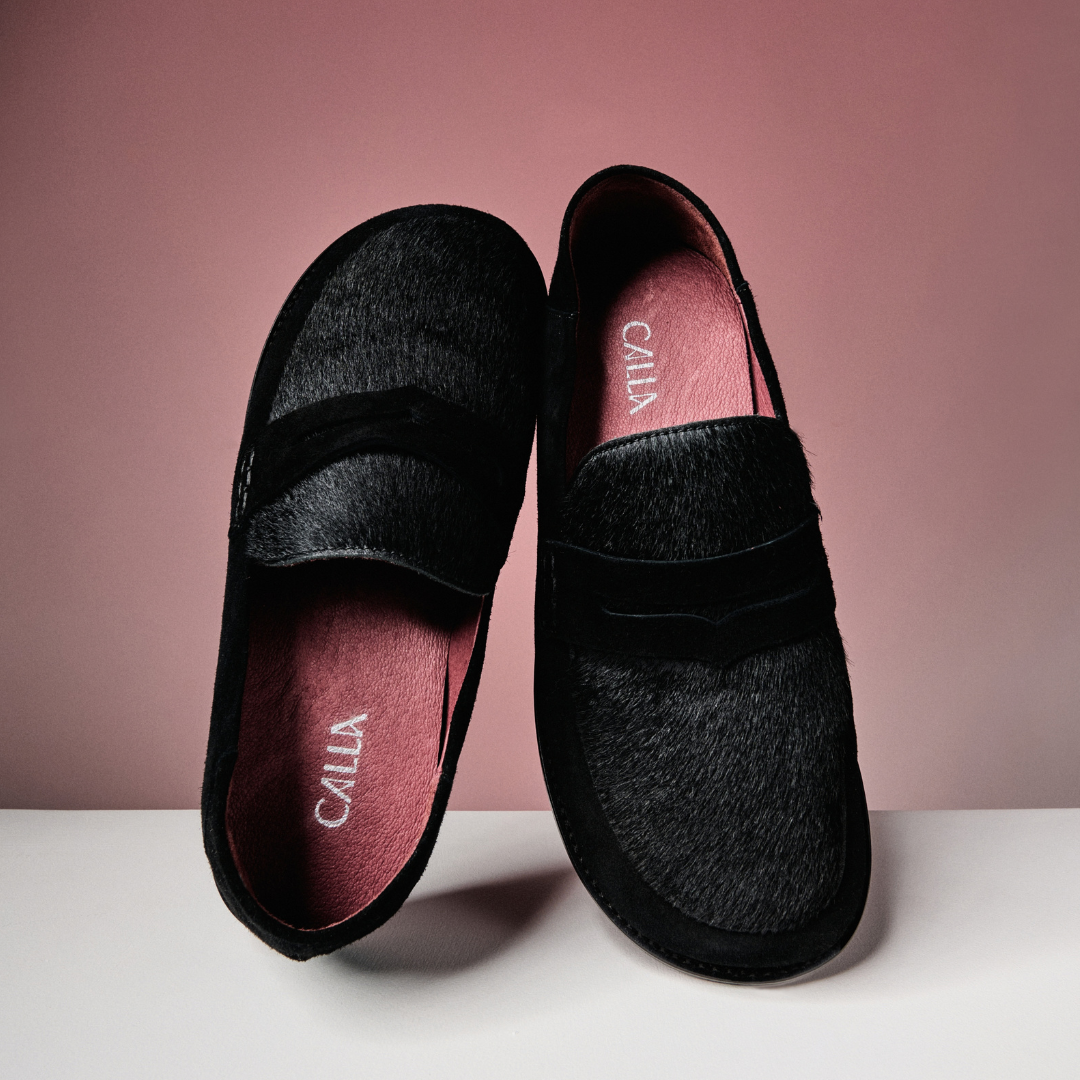
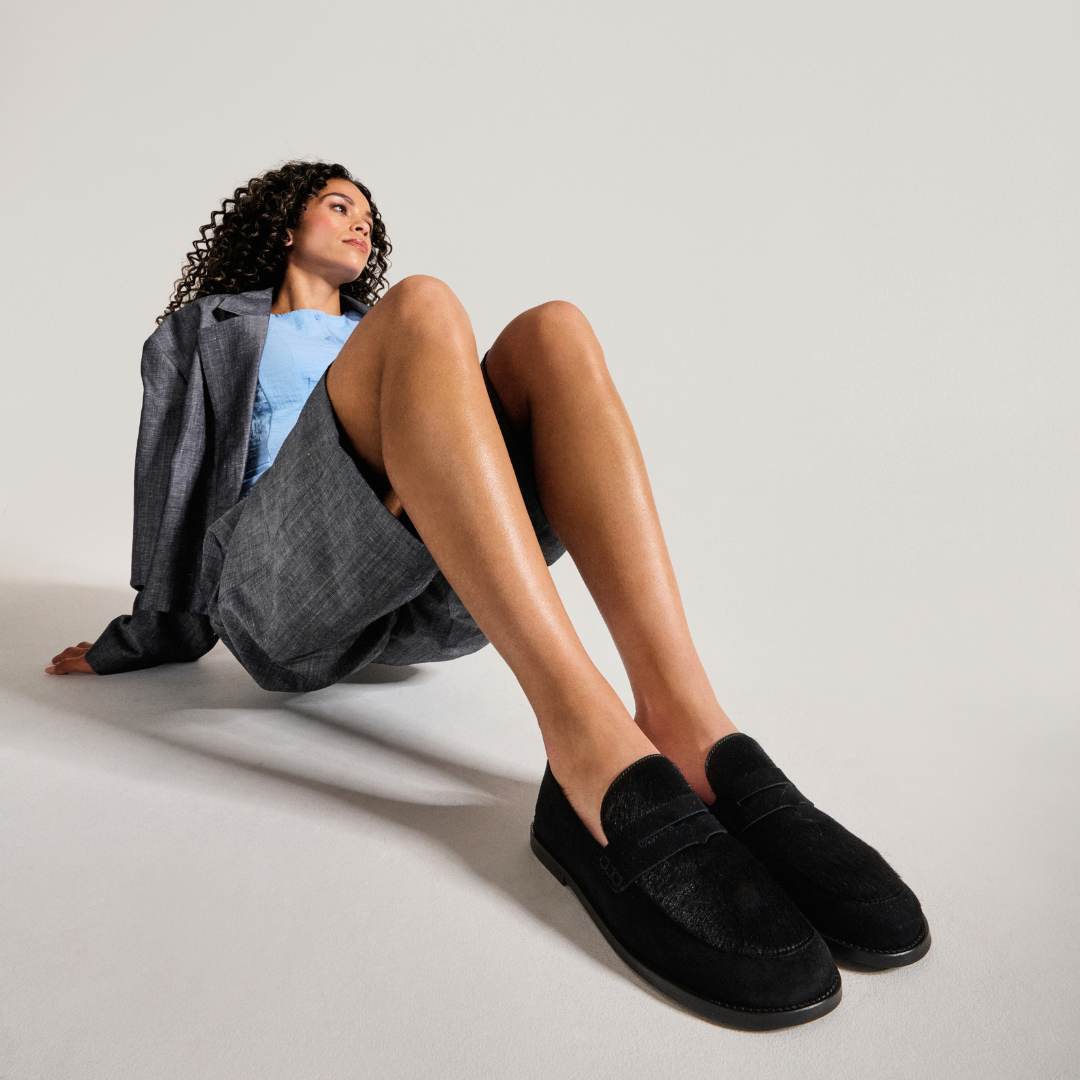
The Meredith is Calla's chunky loafer on a 2.5cm heel, and black leather is the do-everything one. The slight heel and cushioned sole carry a day from the office to dinner, while the wide-enough toe box gives the bunion room a slim loafer wouldn't. Fits up to EE, true to size.
Origin
Handcrafted in Portugal, designed in the UK
Material
Black chunky leather upper, lamb leather lining
Heel
2.5cm
Width cap
Fits up to EE width feet
Toe box
Wide toe box with hidden stretch panel over the bunion area
Browse more images of the Meredith - Black Leather Loafers:
Our Review
The black Meredith is the chunky loafer I wear when a flat feels too slight for tailoring, since the 2.5cm heel and the heavier sole give it some presence under trousers. It takes me from the office to dinner without changing, and the cushioned sole means my feet aren't aching by the evening. The toe box is cut wide enough that my bunion has room rather than being pressed by a narrow loafer. I wear it with trousers or straight jeans. Fits up to EE, true to size.
Pros
2.5cm heel adds height without losing the loafer's flat-shoe ease
Hidden stretch panel flexes over the bunion joint
Cushioned sole takes the impact out of pavement walking
Fits up to EE width feet
Cons
Width fitting caps at EE so EEE feet will be tight
Chunky silhouette sits heavier on the foot than a slim loafer
Slip-on construction means no width adjustment if your foot swells through the day
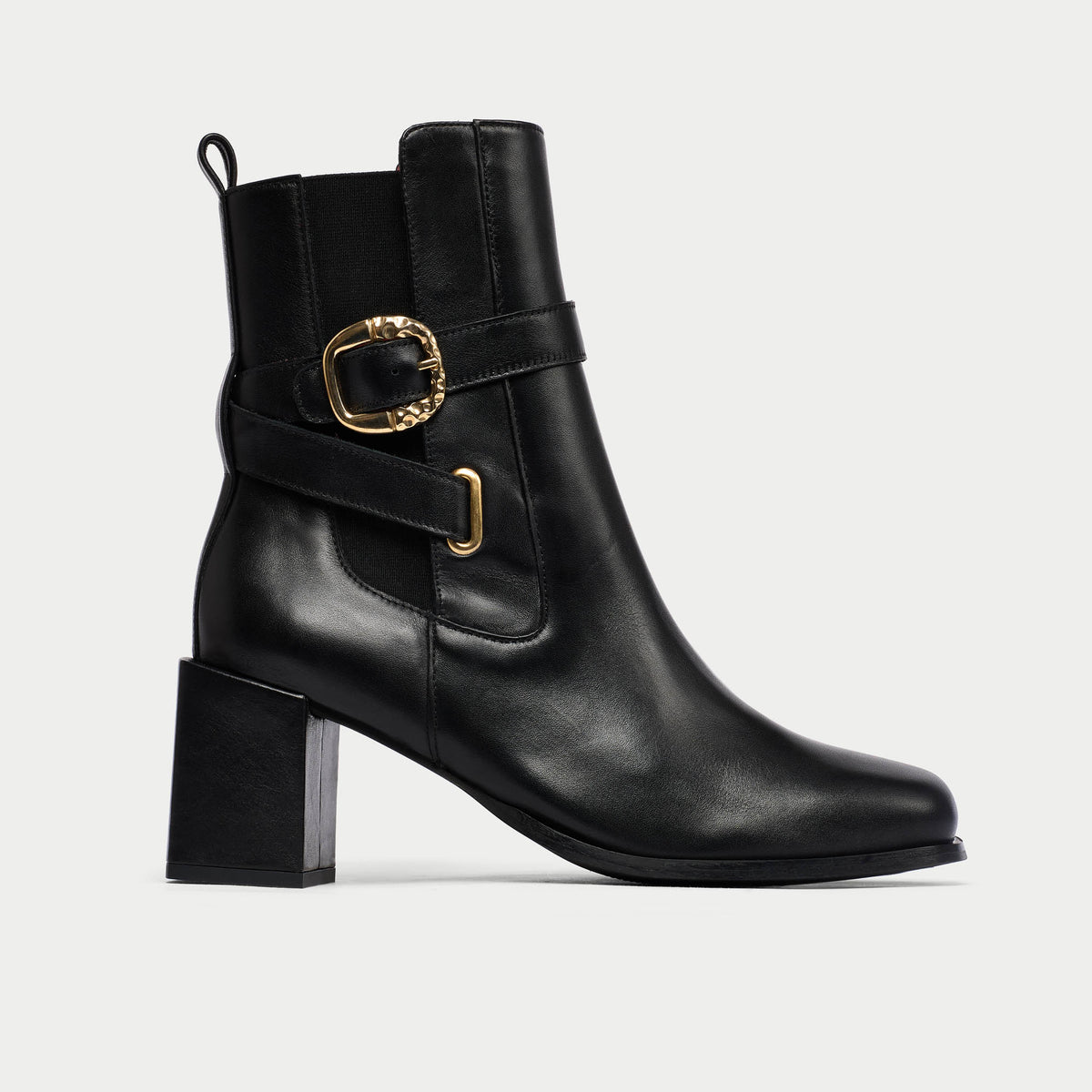
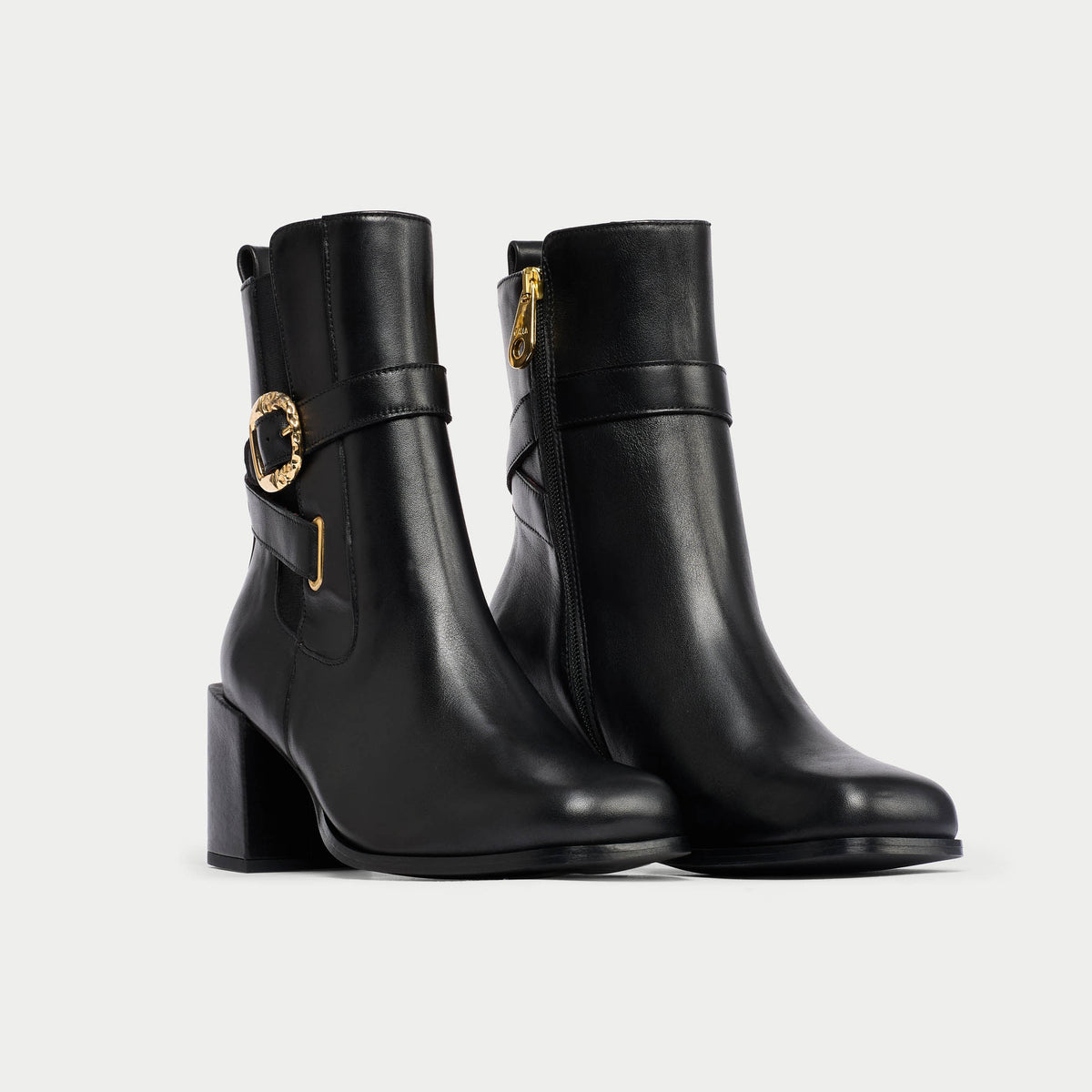
The Alice is Calla's low-heel flat boot on a 4cm heel, in soft calf leather with an easy back zip. An extra wide toe box gives the bunion room while the arch-supported cushioned insole carries an all-day boot. Fits EE-EEE, true to size.
Origin
Handcrafted in Portugal at a family-run factory in the Porto region
Material
Calf's leather upper, lamb leather lining
Heel
4cm block heel
Entry
Back zip
Fit
Fits EE-EEE width feet
Toe box
Wide toe box with hidden stretch panel over the bunion area
Browse more images of the Alice - Black Leather Boots:
Our Review
Black Alice is the everyday flat boot I reach for, since the 4cm heel and soft calf leather are easy with jeans, trousers or a skirt. The back zip makes it simple to get on, and the extra wide toe box gives my bunion room rather than pressing it. The arch-supported cushioned insole means I can wear it all day. It is the go-to boot I pull on without thinking. Fits EE-EEE, true to size.
Pros
4cm block heel gives lift without strain through the forefoot
Back zip eases entry over a wider foot
EEE width cap accommodates the bunion joint
Calf's leather upper softens to the shape of the foot over wear
Cons
Leather uppers benefit from regular conditioning and weatherproofing through wet UK winters
Back zip is the only adjustment so calf width is fixed
4cm heel is not flat so will not suit anyone needing a fully flat boot
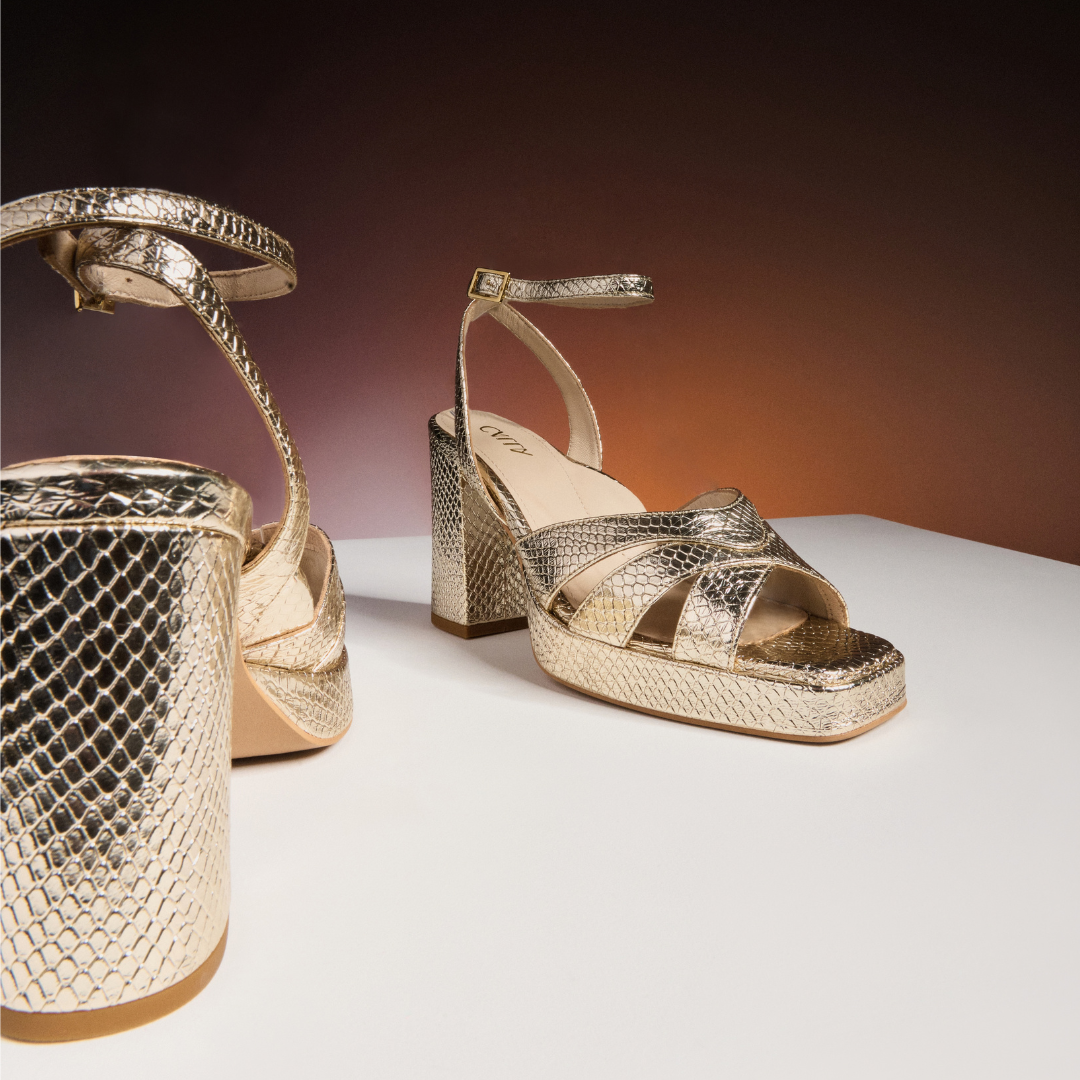
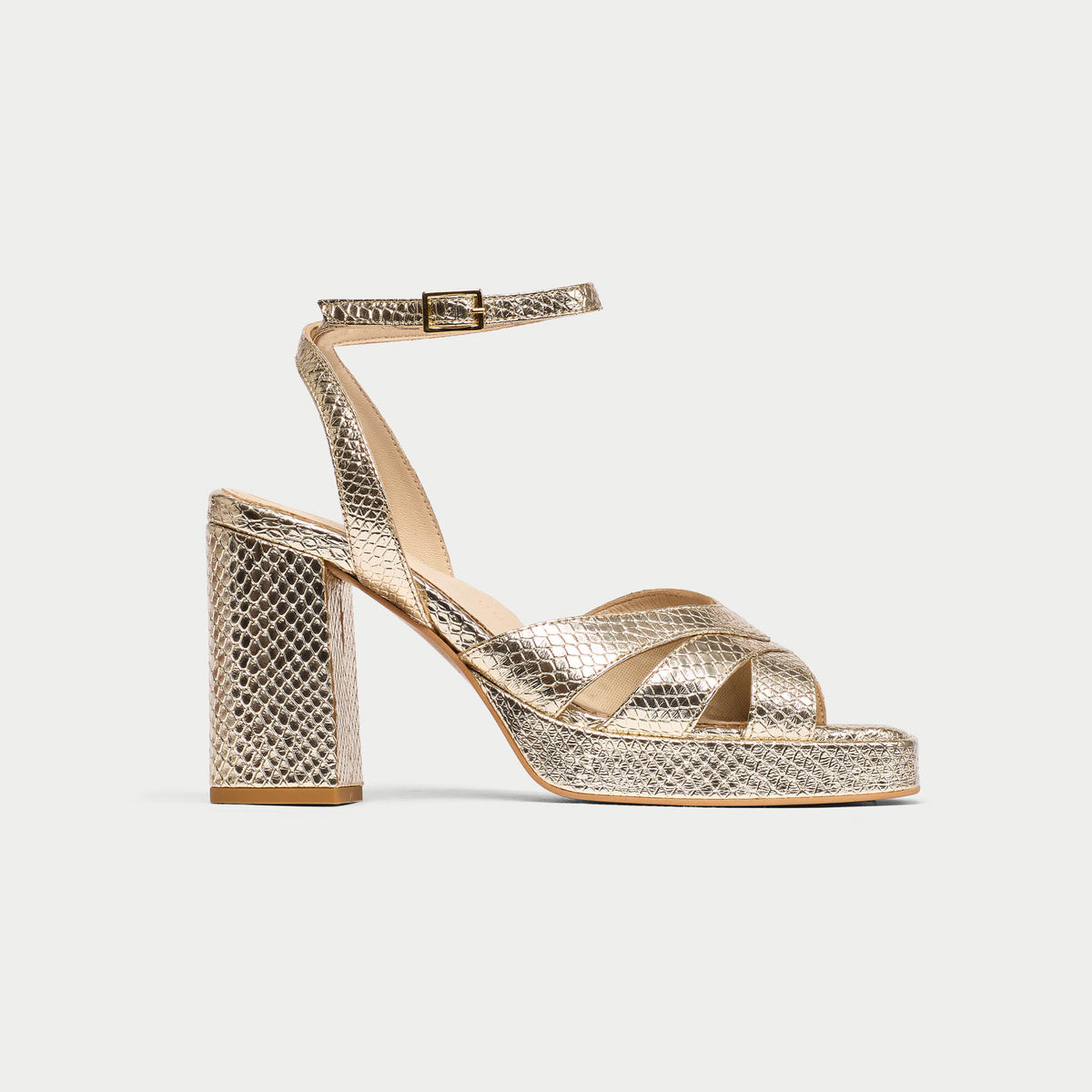
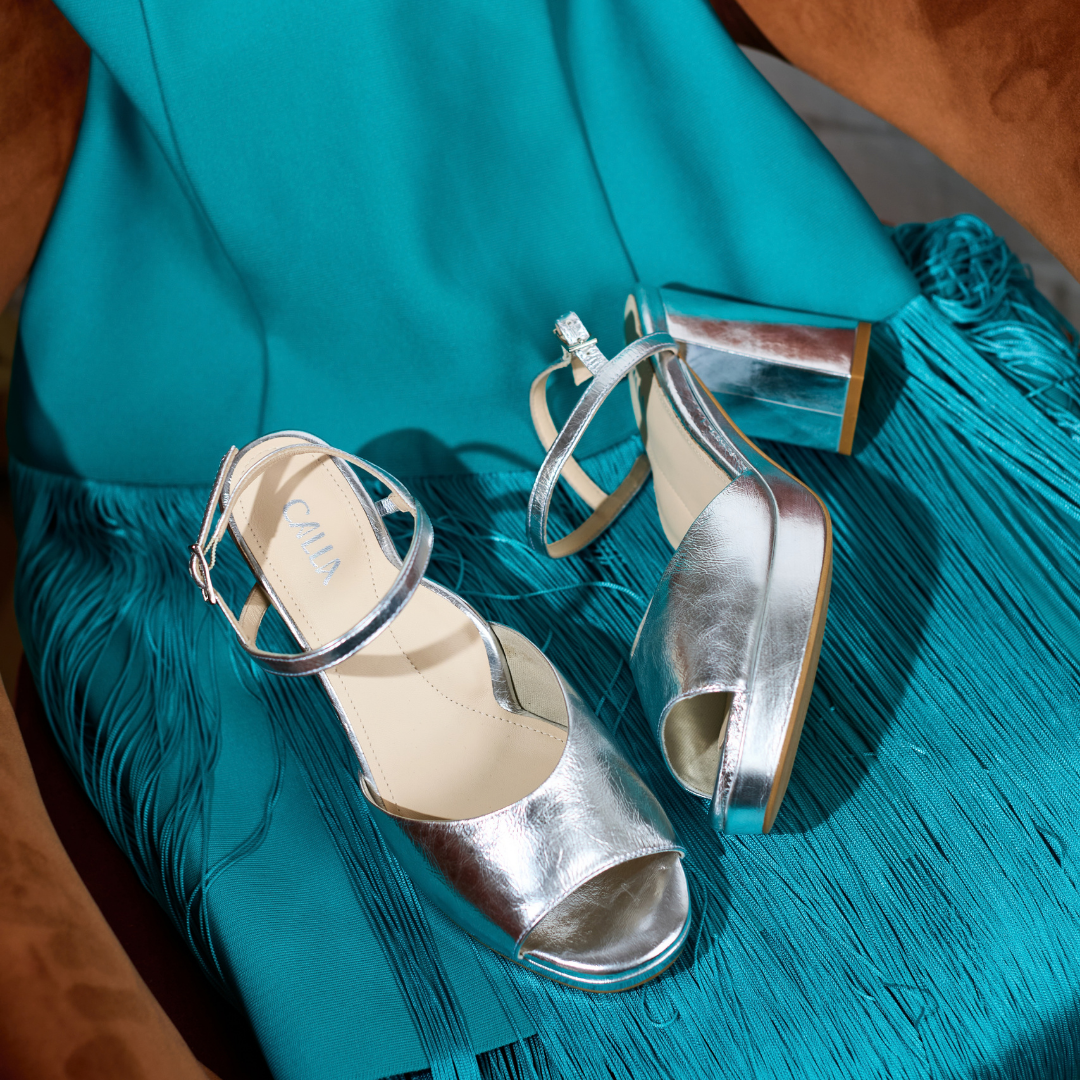
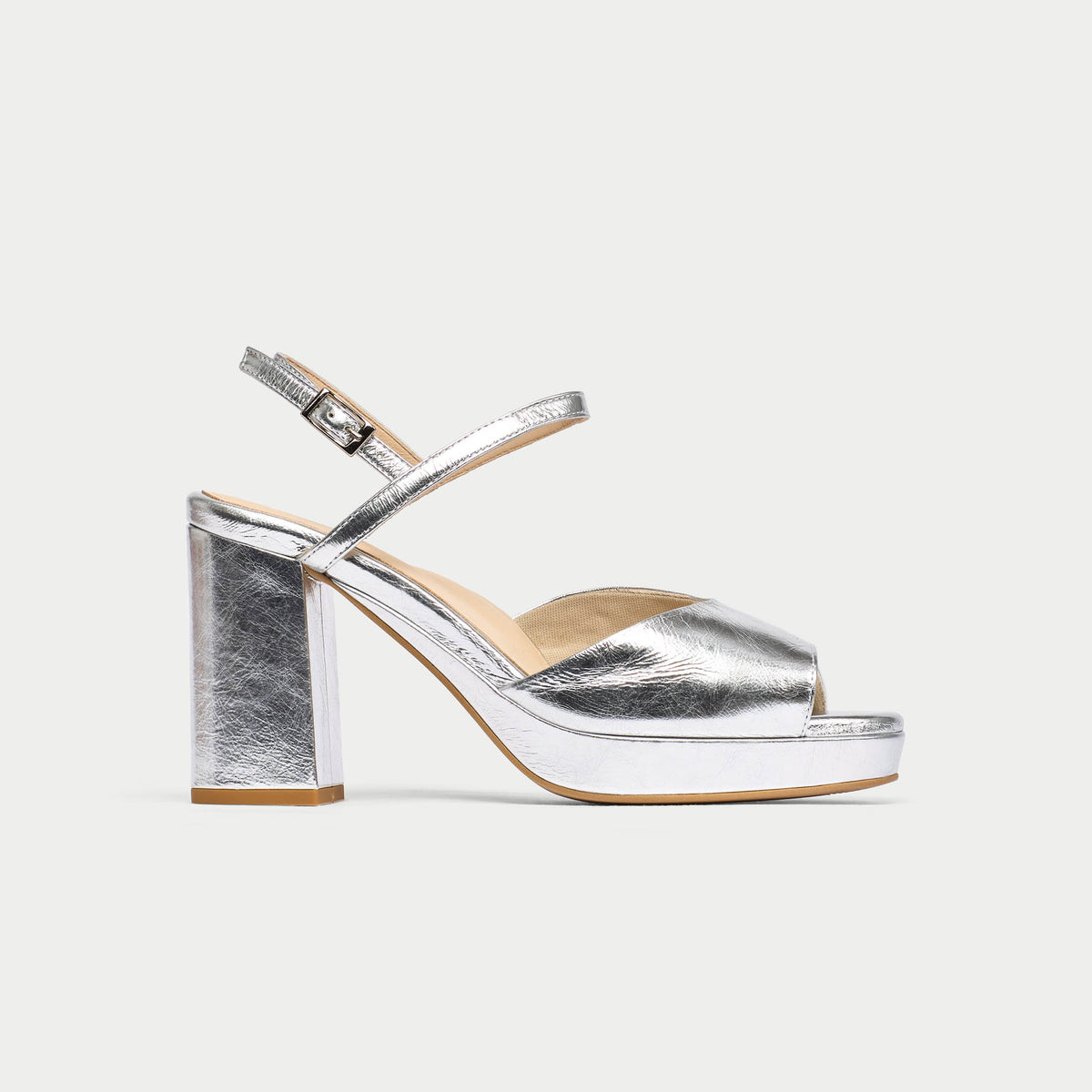
The Daisy is Calla's bow-detail occasion sandal, with super-soft straps and a little bow on a block heel, here in champagne metallic with a subtle shimmer. It is cut with more room than ever, so the soft straps and stretch fit give the bunion space. Fits up to EEE, true to size.
Browse more images of the Daisy - Champagne Metallic Block Heels:
Our Review
Champagne Daisy is the occasion sandal I wear when I want a soft shimmer rather than a bright metallic, since the champagne reads gently dressed-up at a daytime wedding or a garden party. The super-soft straps and the extra room are what sell it for me, because most occasion sandals dig in and these give my bunion space. The little bow keeps it pretty without trying too hard. The block heel is steadier than a stiletto for a long event. Fits up to EEE, true to size.
Metallic leather scuffs more visibly than plain leather and needs a soft cloth between wears
Open strap design leaves the side of the foot exposed
Bow detail ties the shoe to occasion wear rather than everyday use
What is a tailor's bunion (bunionette)?
A tailor's bunion is a bony prominence on the outside of the foot, at the base of the little toe, where the fifth metatarsal (the long bone behind the little toe) angles outward and the little toe drifts inward. It's the same type of shift that causes a regular bunion on the big-toe side, just at the opposite edge of the foot.
Bunions as a family are common. A 2023 systematic review by Cai and colleagues found that hallux valgus (the big-toe equivalent) affects roughly 19% of people worldwide, with women experiencing bunions at nearly twice the rate of men (23.74% compared with 11.43%).
The bump itself is not a growth. It's the head of the bone becoming more prominent as the toe moves out of its normal position. The skin over it often becomes red, callused or swollen, because it's the part of the foot that presses hardest against the inside of your shoe. Narrow, pointed shoes make that pressure worse, but the underlying cause is usually structural: the shape of your foot, the way you walk, or a combination of both, and it often runs in the family.
If you'd like a fuller picture of what a bunion actually is and what causes one, we've written about that separately. What a tailor's bunion means for shoe choice comes down to one thing: the room needs to go at the outer edge of the toe box, beside your little toe.
How a tailor's bunion differs from a regular bunion
A regular bunion sits on the inside of the foot, at the big-toe joint. A tailor's bunion sits on the outside, at the little-toe joint. Both are bony prominences caused by a metatarsal shifting out of alignment, and both are aggravated by tight or pointed shoes, but what it means for your shoes is different.
Regular bunion
Tailor's bunion (bunionette)
Where it sits
Inside of the foot
Outside of the foot
Which joint
Big-toe joint
Little-toe joint
Where the room is needed
Inner edge of the toe box
Outer edge of the toe box
With a regular bunion, the extra room is needed at the inner edge of the toe box. With a tailor's bunion, it's needed at the outer edge. A shoe designed purely for big-toe bunions might leave the little-toe side just as cramped as a standard-width pair. That's why it's worth checking that any "bunion-friendly" shoe gives room across the full width of the forefoot, not just one side of it.
The single most important feature in a shoe for a tailor's bunion is a rounded, foot-shaped toe box with room at the outer little-toe edge. If the toe box tapers or narrows toward the outside, the shoe will press on the bump no matter how soft the leather is.
Beyond that, five other features matter for a tailor's bunion:
Width in the forefoot with a standard heel. This is the detail that most "wide fit" shoes get wrong. A shoe that's wider everywhere, heel included, won't hold your foot properly. The heel slips, your foot slides forward into the tapered front, and the little toe ends up jammed against the front of the shoe. What you need is extra width and depth in the toe box with a standard fit around the heel, so the shoe stays on securely while your toes have room to sit naturally. At Calla, we call this the Calla Comfort Method: a standard width on the heel with an EE-EEE width across the toe box.
A soft upper that stretches over the bump. Leather and suede mould to the shape of your foot over time. A stiff or rigid upper, especially patent, won't give at all and will press on the joint with every step. Stretch panels or a stretch lining over the toe box help too, because they flex where the bump sits instead of pushing back against it. We use Portuguese leather uppers lined with soft lamb leather, and the hidden stretch panel in every toe box is built to flex where the bunionette sits.
A smooth interior with no seams or stiff overlays over the bump. A seam right on the outer edge of the toe box will rub the bunionette every time you take a step. A seam-free, fully lined toe box removes that friction entirely.
A low heel. A higher heel pushes your body weight forward onto your forefoot, which increases the pressure on your little-toe joint. For everyday wear, a heel of around two inches or less is a comfortable starting point. A thicker, block-style heel is better than a thin one, because it spreads the load and keeps the foot more stable. For occasions when you want more height, we build a platform underneath the heel, which reduces the pitch of your foot (the angle between heel and toe) and the pressure put on your feet.
A cushioned footbed with arch support, removable for orthotics. A moulded footbed (the cushioned insole inside the shoe) that supports the arch helps distribute pressure more evenly across your foot. If yours lifts out, you can swap it for a prescribed orthotic (a custom foot support from a podiatrist) when you need one.
Shoes and features to avoid
Narrow, pointed or tapered toe boxes are the worst offenders. They squeeze your little toe inward and press directly on the bunionette, which is exactly the kind of pressure that makes it sore and inflamed.
High, narrow heels tip your body weight forward onto your forefoot, compounding the problem. Stiff seams, decorative panels or hard overlays over the outer edge of the toe box will rub the bump with every step.
And resist the temptation to size up in length just to get more width. Bunions need width, not length. When you size up to get room, your foot slides forward, your toes jam into the front of the shoe, and you're back to square one. A genuine wide fitting in your correct length is always the better answer.
The best types of shoes for a tailor's bunion
The best shoes for a tailor's bunion share a wide, rounded toe box, a soft upper and a smooth interior, whatever the style, not just trainers. You don't have to give up sandals or smart shoes or boots because of a tailor's bunion.
Trainers and everyday shoes
Trainers are the easiest style to get right for a tailor's bunion, because they tend to have the most room in the toe box and the most cushioning underfoot. Look for a soft leather or suede upper, a roomy toe box with no internal seams over the outer edge, a removable footbed so you can use your own orthotics if you need to, and adjustable laces so you can fine-tune the fit across the instep (the arched top of the foot).
A cushioned, arch-supported insole and a secure heel make a real difference to all-day comfort. If you're on your feet for long stretches, whether that's the school run, a walk with the dog or a full day of errands, a well-fitted trainer with a wide toe box will take the pressure off the bunionette without giving up the support your foot needs.
We design our trainers as fashion trainers, not medical shoes, with the external stitching set forward off the bunion area, so the bump stays hidden from the outside.
Smart shoes for work
Loafers, brogues and low-heeled court shoes can all work for a tailor's bunion, as long as the toe shape is rounded rather than pointed and the upper is soft enough to stretch over the bump. Soft leather and suede are your best options here: both flex with the foot and soften further over time.
A higher vamp (the part of the upper that covers the top of the foot) is worth looking for in a work shoe, because it keeps the bunionette covered and protected without relying on a strap or lace. A low, block-style heel keeps your weight off your forefoot, and a cushioned, arch-supported insole keeps you comfortable through a full working day.
The one thing to avoid is anything with a narrow, tapered toe or a stiff seam across the outer edge. Those two details will make an otherwise smart shoe painful within the first hour.
Sandals for warmer weather
Adjustable straps and a low profile are the two features that matter most in a sandal for a tailor's bunion, because the outer edge of your foot is more exposed than it is in a closed shoe. You want straps that let you set the fit across the forefoot without squeezing the little toe, and a flat base or a low heel that doesn't tip your weight onto the bump.
If you'd rather keep the bunionette covered, cleverly positioned straps or a crossover front can conceal the bump while still giving it space. Adjustable fastenings also work well on warmer days when your feet swell, because you can loosen the fit without taking the shoe off. Our sandal straps are cut deep and wide for exactly this reason, so the bunion sits behind the strap rather than on it.
Boots for colder months
Boots for a tailor's bunion need a soft upper, enough room in the toe box and an easy way in and out. Buttery-soft leather uppers are ideal: they flex over the bump and soften further with wear. Stiff toe caps or rigid shafts are the opposite, and they'll press on the bunionette all day.
A zip or a gusset panel at the side or back makes getting the boot on and off much simpler, especially on days when the joint is tender. And as with any style, check that the toe box gives your little toe room at the outer edge without the heel being so wide that the boot slips. We build our boots to a 38cm leg circumference and an EE to EEE width through the forefoot, so the bunionette has room without the boot feeling loose.
Our wide-fit shoes for a tailor's bunion
Every pair of Calla shoes is shaped with extra width and depth across the toe box and a standard fit around the heel, so the room goes exactly where the bump is and the shoe still holds your foot properly. The toe box accommodates regular bunions, tailor's bunions and hammer toes, with discreet stretch panels that gently flex where the joint sits and soft linings that won't rub against the outer edge.
That shape comes from the last (the mould each shoe is built around), which is designed specifically to accommodate bunions and wide feet and is unique to Calla.
The stitching and panels on the outer side are set forward, away from the bunionette, so the parts of a shoe that usually cause friction are moved off the joint entirely. And the bump is concealed, not advertised: the shoe looks like an everyday shoe, not something you'd been prescribed. Registered podiatrist Dina Gohil put it simply when she reviewed the range: for a shoe designed for bunions and wide feet, 'they don't look hideous,' she said, and called the result 'refreshing.'
Every pair is handmade in Portugal by master shoemakers, from soft leathers and suedes chosen for their ability to mould to the foot, and every style comes with a cushioned, arch-supported insole. If you'd like to browse the full range, our wide-fitting collection is the best place to start, or head to our extra-wide range if you need more room across the forefoot.
How to get the right fit
Measure the widest part of your foot, across the ball and around the bunionette, not just the length from heel to toe. That measurement will tell you which width fitting you need far more accurately than your shoe size alone.
Stand up when you measure, because the weight of your body makes your feet slightly wider when you're standing than when you're sitting. Getting this right matters more than most people realise: a 2018 study by Buldt and Menz found that between 63 and 72% of people were wearing shoes that did not fit either the width or the length of their feet.
Choose your correct length in a genuine wide fitting rather than sizing up. A shoe that's too long will let your foot slide forward, and the little toe ends up pressed against the front of the shoe, which is exactly what you're trying to avoid.
Try shoes on later in the day, when your feet have had time to swell. If a shoe feels tight at three in the afternoon, it won't get better by five. And when you put them on, check two things: that your toes have room to sit naturally without being pressed inward, and that the heel holds your foot without slipping. If both of those are right, the fit is right.
A well-fitted shoe should feel comfortable straight away. Leather will soften and give a little over time, but if a shoe pinches the bunionette on day one, it won't stretch enough to fix that. You can measure across the widest part of your foot using our fitting guide to check your width before ordering.
Can the right shoes reduce a tailor's bunion?
The right shoes reduce pressure on the bump, cut friction against the joint and make daily life with a tailor's bunion far more comfortable. What they can't do is shrink the bump, straighten the bone or reverse the shift in the metatarsal (the long bone behind the toe). Only surgery can remove a tailor's bunion.
You will also read, more or less everywhere, that the right shoes stop a bunion getting worse or slow its progression. Footwear does not change the bone.
The most careful version of that claim comes from podiatric surgeon Ron McCulloch, who says that once a bunion has formed, it is usually not possible to reverse the condition without surgery, and that the best one can hope for is to slow down progression and to limit the worsening of the deformity by taking some simple measures.
In the same interview, McCulloch notes that there is evidence in the medical literature to show that specialised insoles (orthoses) can help with bunion pain, but there is no particular evidence that this approach can stop or slow down the deformity itself.
Even that is his clinical judgment as a surgeon, not a promise about any particular shoe.
What good footwear genuinely does is reduce the irritation that tight, narrow shoes cause. Roomier shoes with a soft upper stop the outer edge of the toe box pressing on the bunionette. Silicone or gel bunionette pads cushion the bump inside the shoe. Icing the joint after a long day and taking an over-the-counter anti-inflammatory when it flares up can both ease the discomfort.
Please remember that the advice in this article is general, and if you are experiencing foot pain you need to see your podiatrist.
FAQs
Why is it called a tailor's bunion?
The name comes from tailors, who historically sat cross-legged on the floor while they worked. That position put constant pressure on the outer edge of the foot, right at the base of the little toe, and the repeated pressure on that joint made tailors particularly prone to developing a bunionette there. The condition itself has nothing to do with tailoring today, but the name stuck.
Do bunion pads help with a tailor's bunion?
Soft gel or silicone bunionette pads cushion the bump and reduce friction between the joint and the inside of the shoe, which can ease the soreness noticeably. They're a useful companion to well-fitting shoes, especially on days when you're on your feet for longer than usual. What they won't do is change the bone underneath. The bump stays where it is; the pad just stops the shoe rubbing against it.
Can you wear high heels with a tailor's bunion?
You can wear high heels with a tailor's bunion, but it's worth being selective. High, narrow heels push your body weight forward onto your forefoot, which increases the pressure on your little-toe joint. If you want a heel for an occasion, a lower block heel with a wide toe box and a soft upper is a much gentler choice. Sticking to two inches or less and choosing a thicker heel for stability will make a noticeable difference. Our heels for wider feet are designed with that balance in mind.




Leave a comment
This site is protected by hCaptcha and the hCaptcha Privacy Policy and Terms of Service apply.