Corns and bunions often show up together, and usually for the same reason: shoes that press across the joint and rub against the toes with every step.
If you have both, you know the cycle. Your bunion aches in anything narrow, your corn builds wherever the shoe grips, and sizing up just shifts the problem to a different part of your foot!
Whether bunions are just beginning to show in your twenties, your feet are suffering from long shifts at work, or you need a softer fit after surgery, the right shoes need specific features:
Width alone is not enough: it has to be in the right place, the lining has to be smooth, and the heel has to sit snugly enough that your foot isn't sliding forward into trouble.
Here are the shoes we recommend for corns and bunions:
The Charlotte is Calla's crossover ballet flat, the one customers keep coming back to, here in soft black nappa leather. The leather crosses over the toes and stretches across the bunion, with a panel that gives both bunions and tailor's bunions room. Fits up to EEE, true to size.
Origin
Handcrafted in Portugal at a family-run factory in the Porto region
Material
Soft black nappa leather upper, lamb leather lining
Heel
Flat ballerina
Colour
Black
Fit
True to size, fits up to EEE width feet
Toe box
Stretch panel across the toe box for bunions and tailor's bunions, crossover design that stretches to the foot shape
Footbed
Enhanced arch support, extra cushioning at the heel
Browse more images of the Charlotte - Black Leather Ballerinas:
Our Review
Black Charlotte is the ballet flat I reach for most, because the crossover design stretches gently over my bunion instead of pressing a hard line across the joint. The soft nappa leather gives where my foot is widest, and the stretch panel handles both my bunion and the tailor's bunion on the little-toe side. Enhanced arch support and extra heel cushioning mean it carries a full day rather than leaving my feet flat and sore. It is the flat I'd recommend to anyone after a bunionectomy who needs softness and width over the scar area. Fits up to EEE, true to size.
Pros
Stretch panel across the toe box gives over both the bunion and the tailor's bunion sides
Nappa leather softens with wear
Extra heel cushioning eases the back of the foot
Fits up to EEE width
Cons
Flat ballerina sole has limited grip in wet weather
Crossover stretch design relies on the panel rather than laces so cannot be tightened
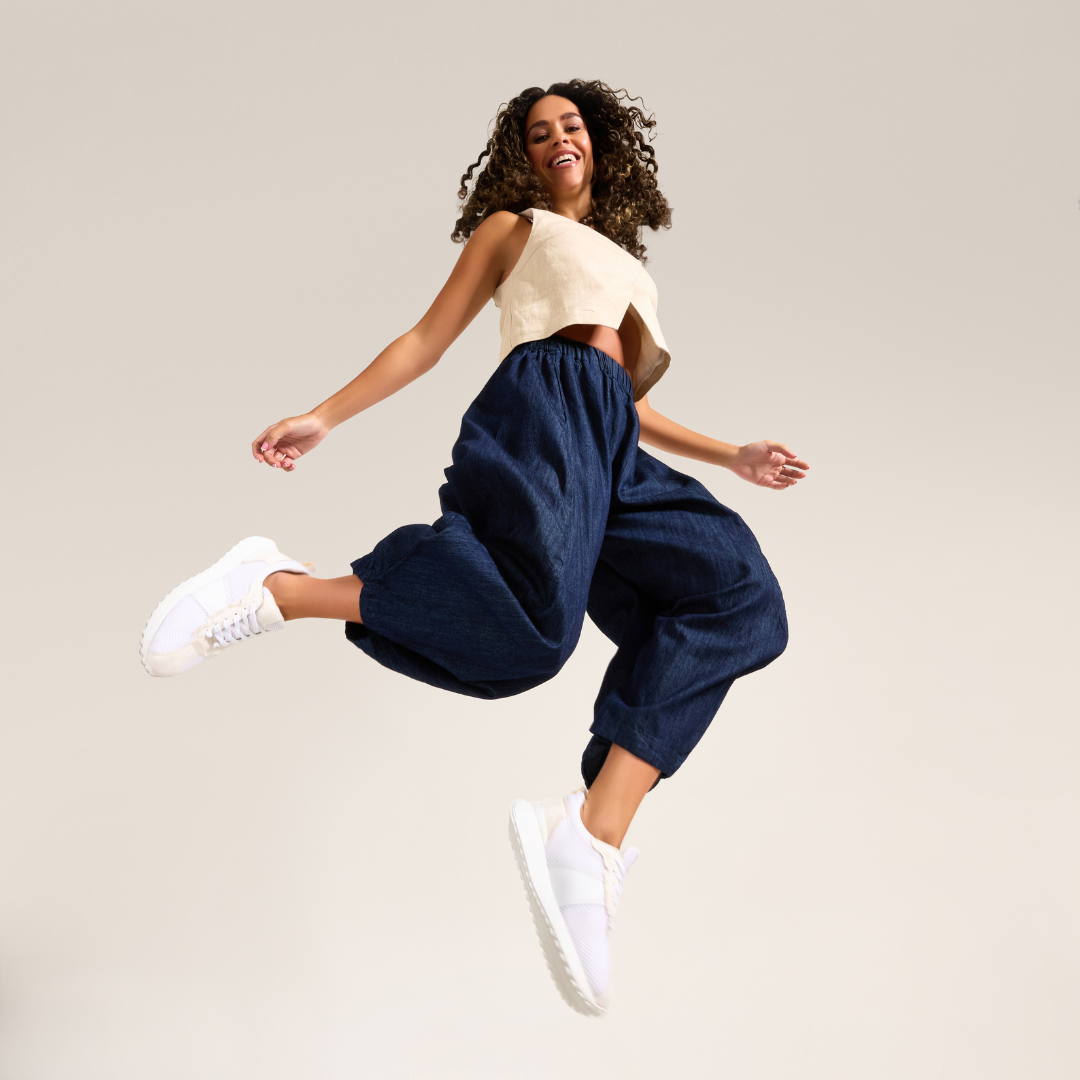
The Star trainer in smooth white leather with grey crackle accents, a cooler-toned white that leans smart and sits as well with tailoring as denim. The wider toe box gives the bunion room and the footbed lifts out for your own orthotics. Fits EE-EEE, true to size.
Origin
Handcrafted in Portugal at a family-run factory in the Porto region, designed in the UK with foot technologists
Material
Smooth white leather upper with grey crackle accents, lamb leather lining
Heel
Flat
Width cap
Fits up to EEE width
Toe box
Wider toe box, fully lined with no seams
Closure
Lace-ups so you can adjust forefoot width
Footbed
Removable moulded footbed so you can use your own orthotics, arch-supported cushioned insole
Designed for
Bunions, wide feet, hammer toes, hallux rigidus
Press
Featured by Hello, Good Housekeeping, The Independent and The London Evening Standard
Browse more images of the Star - White & Grey Leather Wide Fit Trainers:
Our Review
The white and grey Star is the one I wear when I want a trainer that looks considered with tailored trousers, since the grey crackle accents read cooler and smarter than a warm champagne. It is the same comfortable build, with a wider toe box that gives my bunion room and a footbed that lifts out for my orthotics. The grey accents also hide marks at the toe better than an all-white. I wear it with cropped trousers and a knit, or straight jeans and a blazer. True to size in a wide fit, EE-EEE.
Pros
Lace-ups let you adjust forefoot width on a daily basis
Removable footbed swaps out for prescribed orthotics
Fully lined toe box with no seams reduces friction over bunions and hammer toes
EEE width cap accommodates wider forefeet
Cons
White leather scuffs and marks more visibly than darker trainers
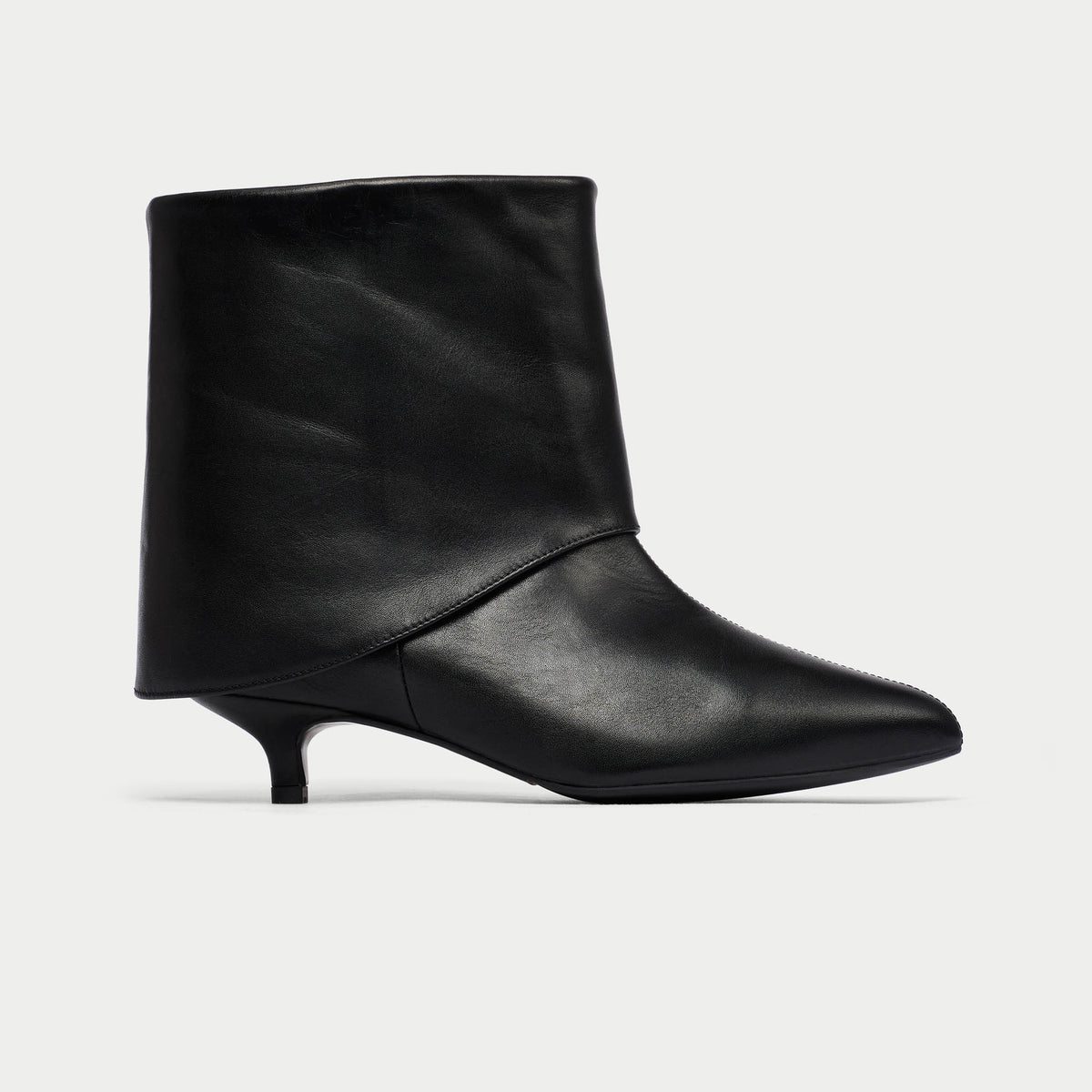
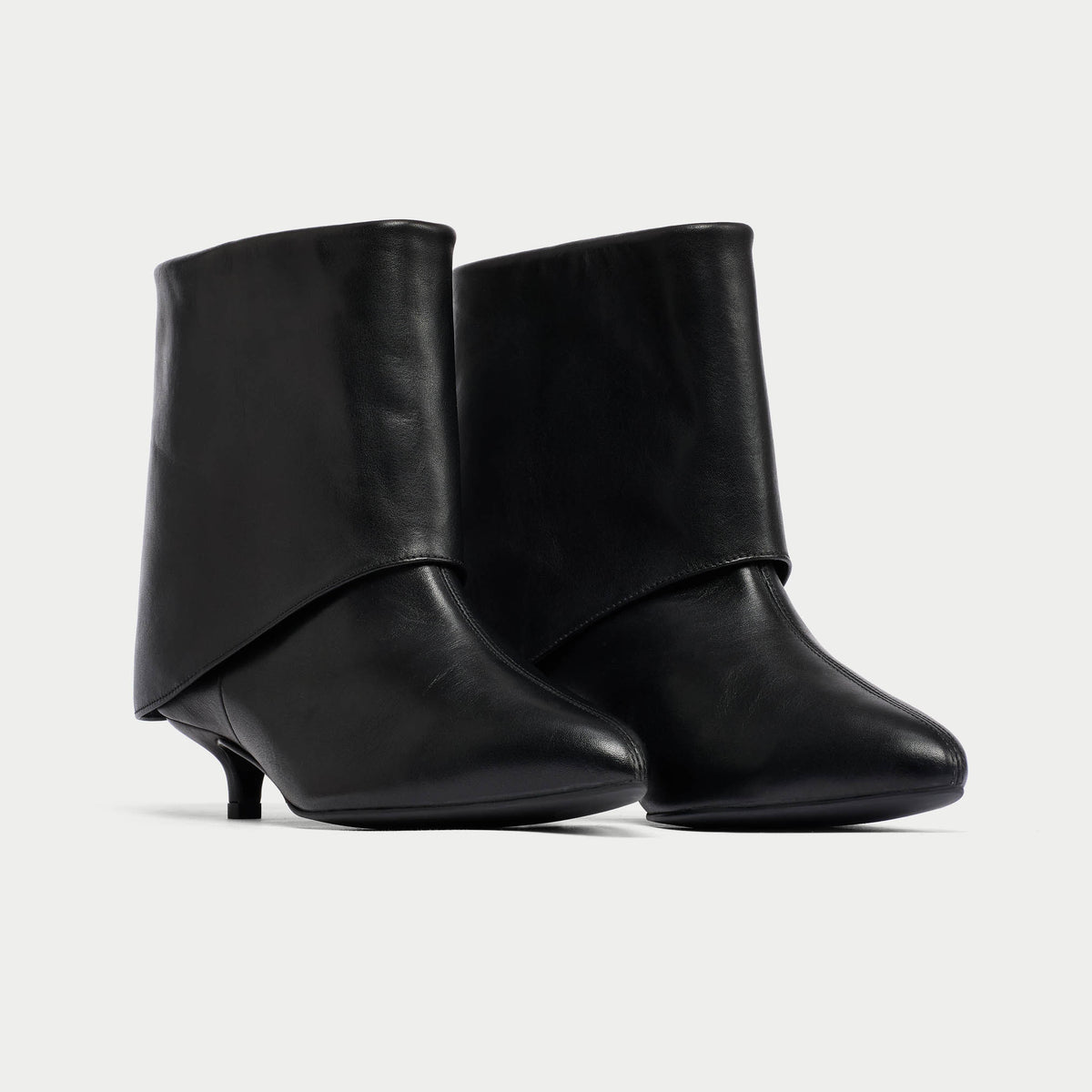
A classic black leather court on a manageable 5cm kitten heel, with extra width and volume through the toe area for a wide forefoot. The roomy toe and arch support carry a full office day, where a standard court would press on the bunion by mid-morning. Fits EE-EEE, true to size.
Origin
Handcrafted in Portugal at a family-run factory in the Porto region
Material
Black leather upper, lamb leather lining
Heel
5cm kitten heel
Fit
Fits EE-EEE width feet best
Toe box
Extra width and volume in the toe area, standard at the heel
Footbed
Arch-supported insole
Best for
Work, weekday dressing and any wardrobe slot that wants a low heel
Browse more images of the Ava - Black Leather Courts:
Our Review
The black Ava is my everyday work court, the pair I put on for a day of meetings because a 5cm heel is low enough to stand and walk in from morning to evening. What makes it work for me is the extra room through the toe area, an EE-EEE that lets my bunion sit without the joint pressing on a hard leather edge the way a standard court does. The arch support holds my foot through hours on office floors. In smooth black leather it goes under any suit or with a pencil skirt. True to size for me across the EE-EEE width.
Pros
5cm kitten heel works for full work-day standing
EE-EEE width cap takes wider feet than most courts on the high street
Extra width and volume in the toe area accommodates the bunion joint
Lamb leather lining over the bunion area flexes with the joint
Cons
Smooth leather sole needs grip pads on wet pavement
Narrower than EE feet may find the toe area roomy
Black leather shows light scuffs at the toe over time
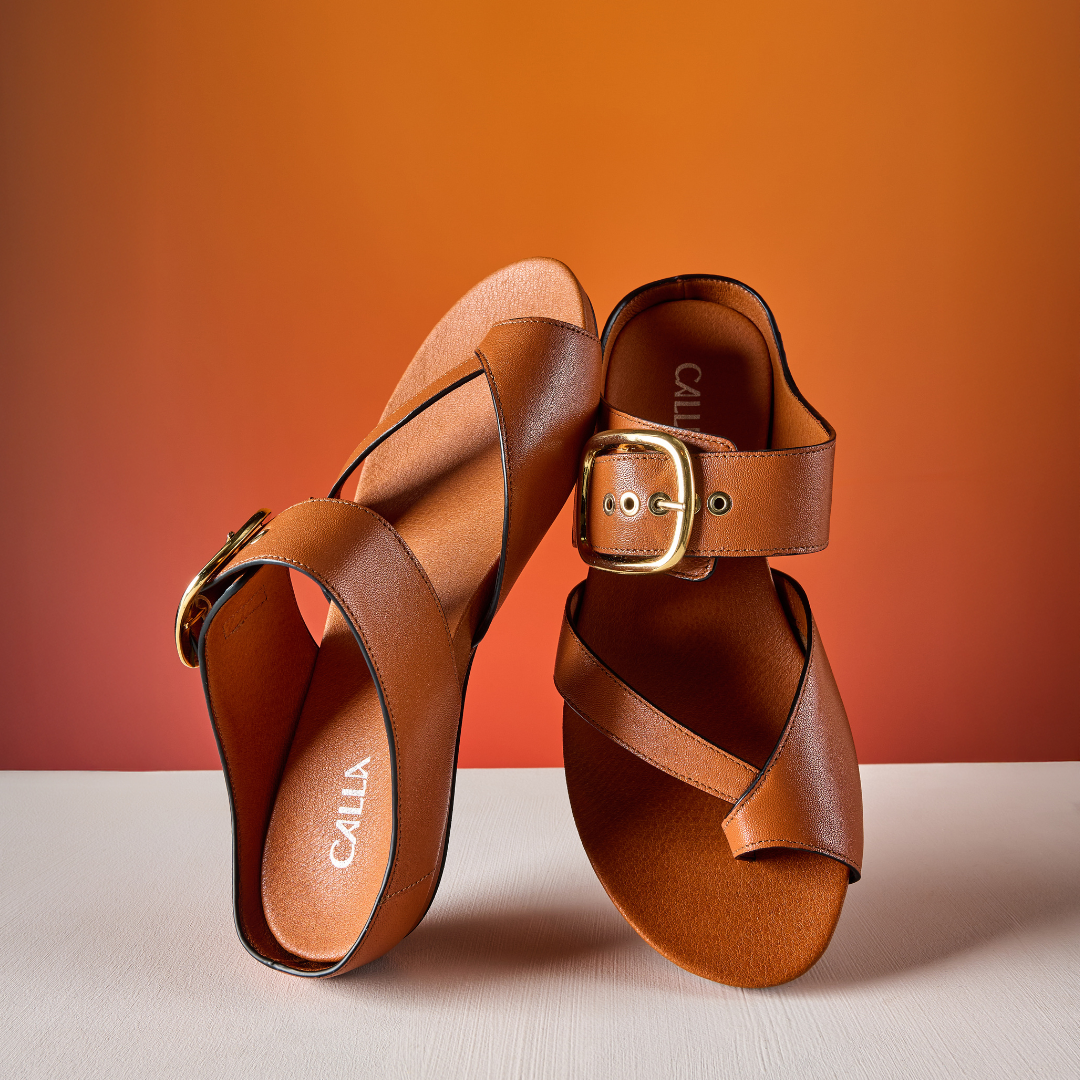
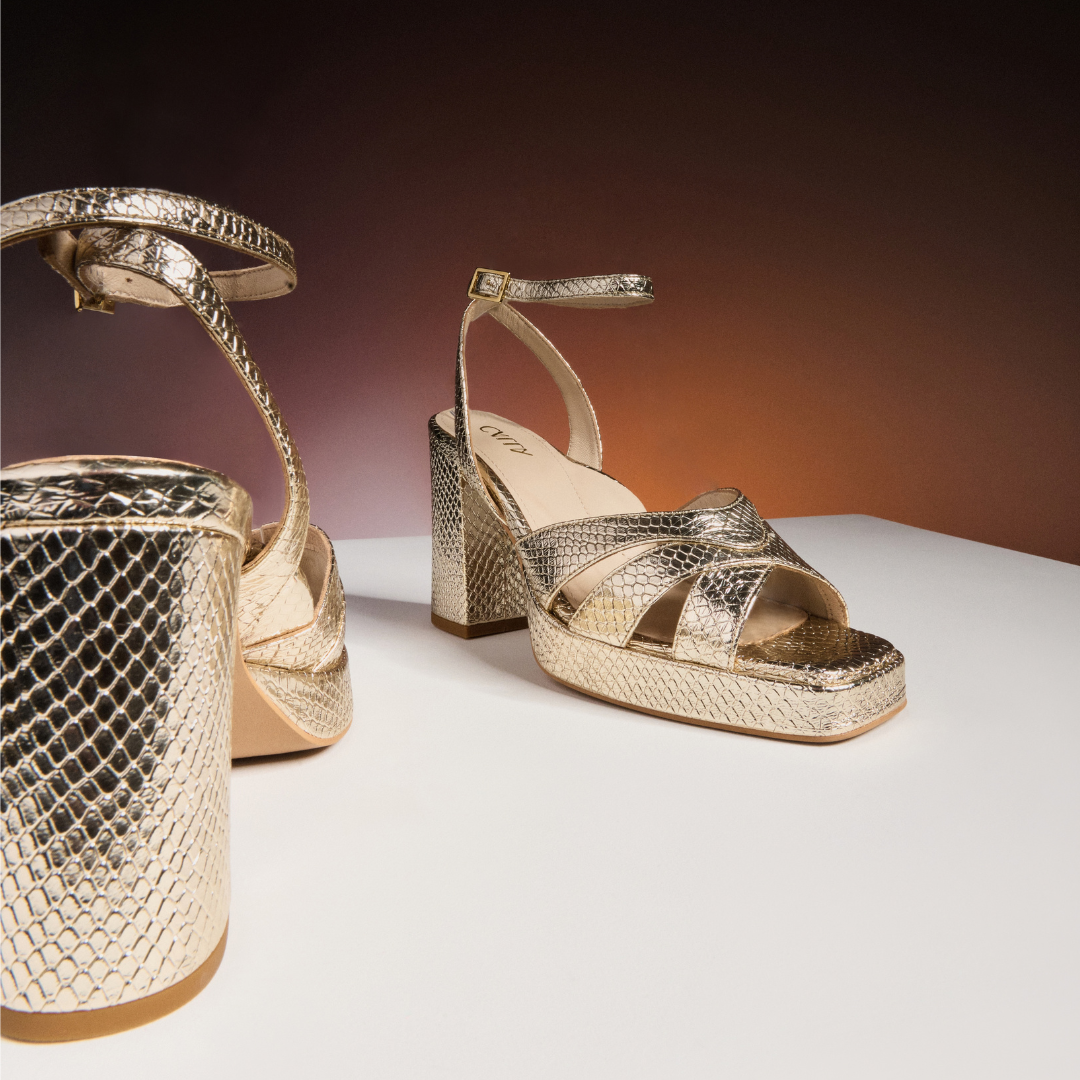
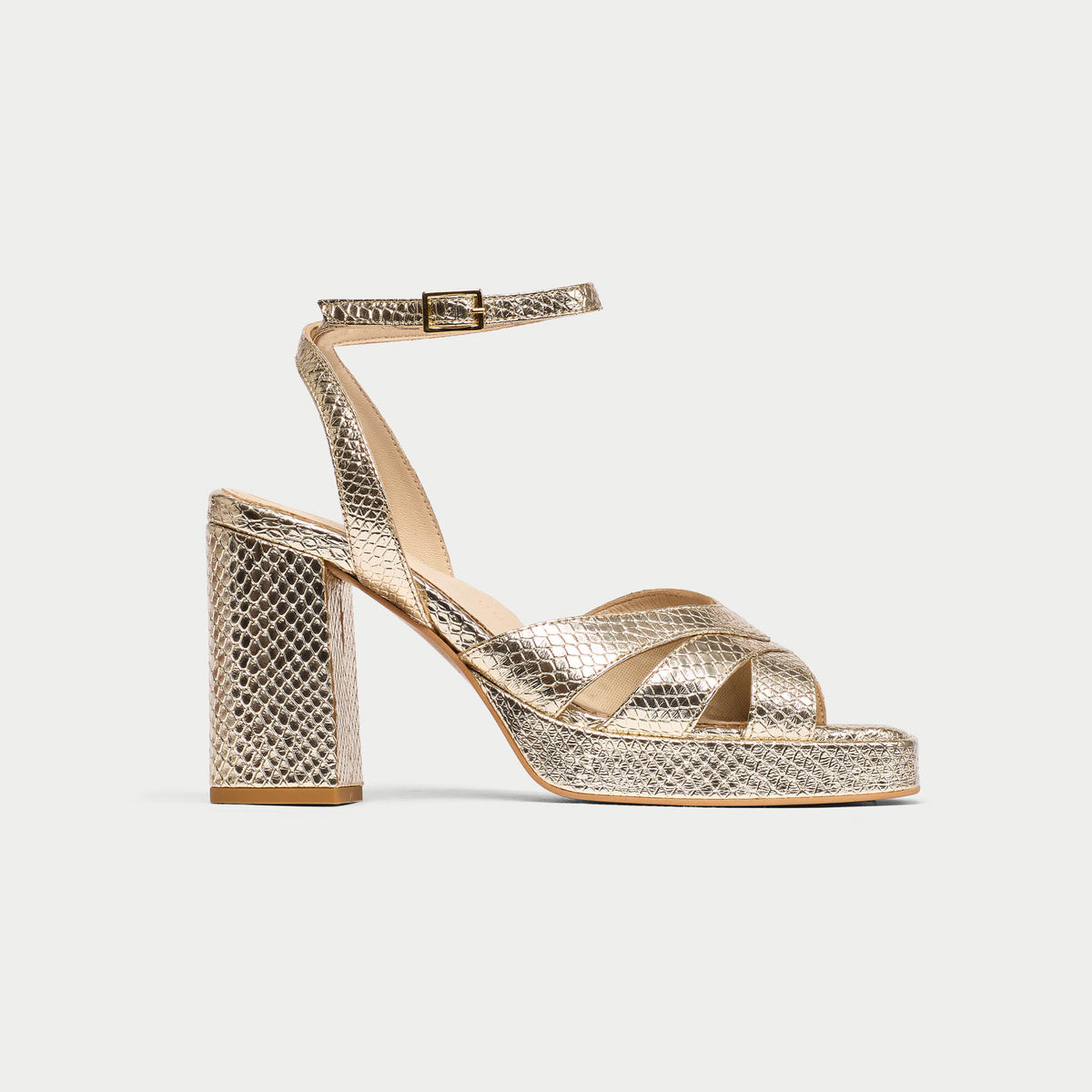
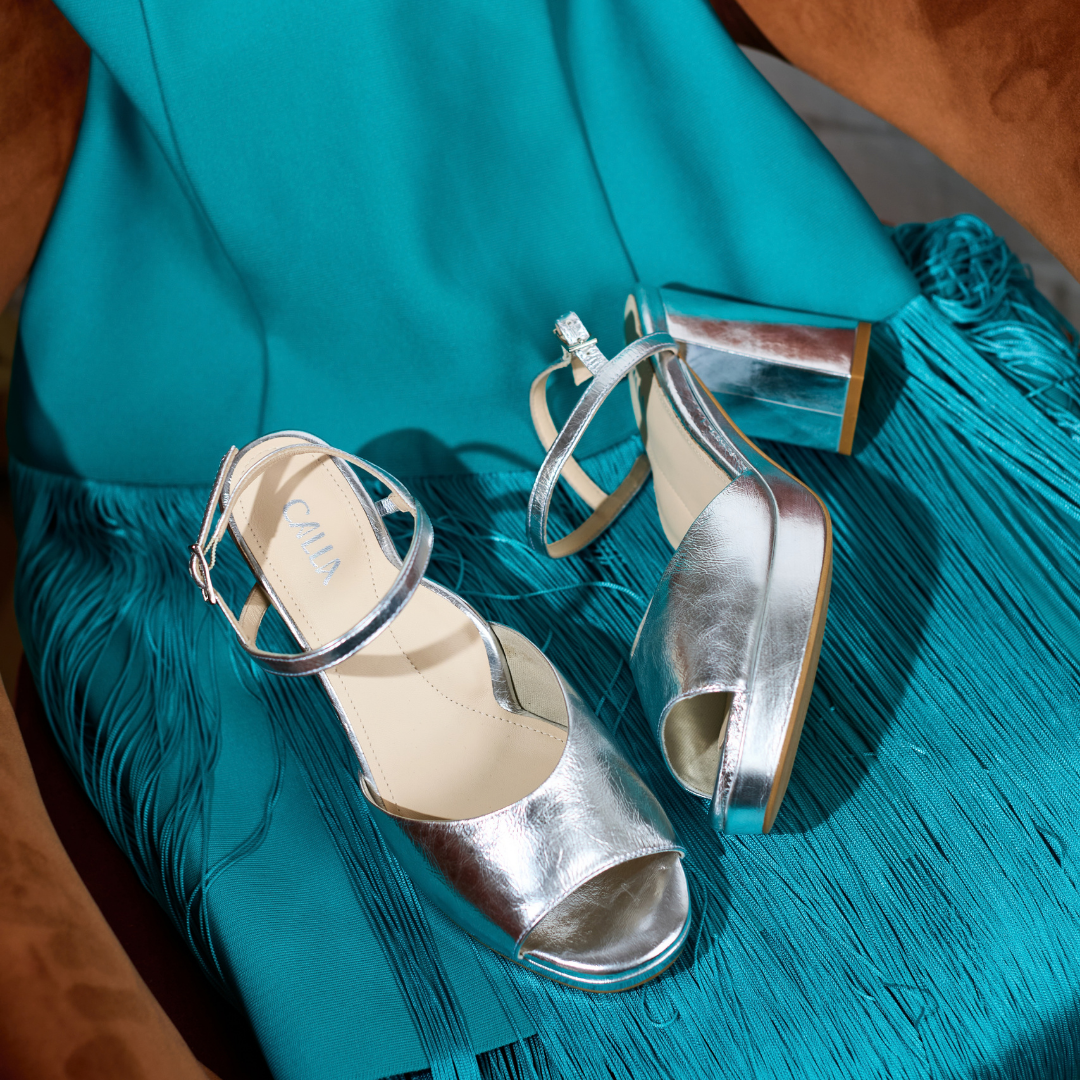
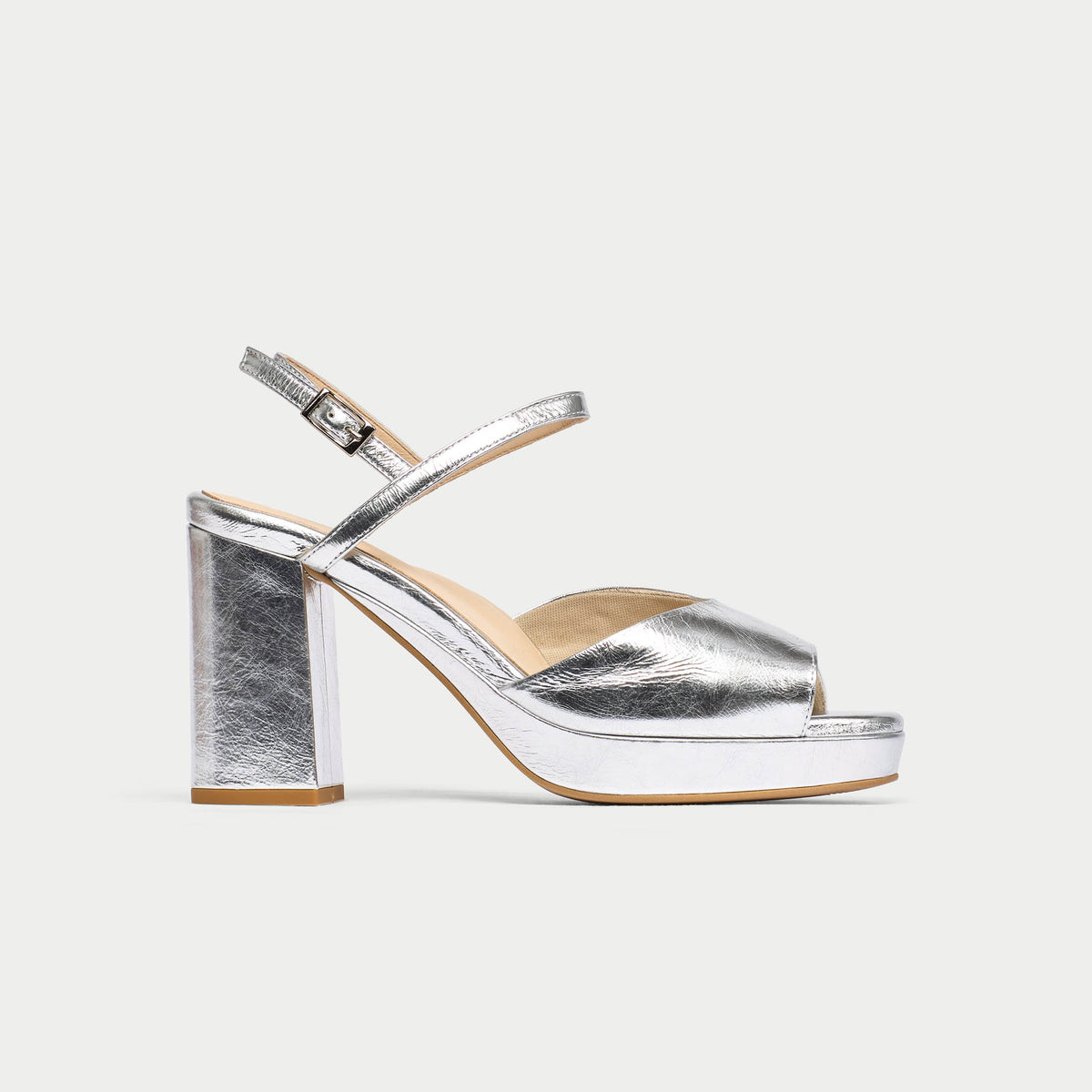
The Ruby sandal in champagne leather with a soft shimmer, dressy enough for a summer wedding but neutral enough to wear all day. The strap still covers the bunion and the moleskin 'hallux' panel cushions the joint, so an occasion on your feet stays comfortable. Fits EE-EEE, true to size.
Origin
Handcrafted in Porto, Portugal
Material
Champagne leather upper, lamb leather lining
Heel
Flat toe-post sandal
Fit
True to size
Width cap
EE to EEE
Bunion cover
Strap positioned to conceal the big toe joint, hidden moleskin hallux panel
Browse more images of the Ruby - Champagne Leather Sandals:
Our Review
I keep the champagne pair for summer occasions, because the soft shimmer reads as dressed-up at a wedding or a garden party without shouting the way a bright gold would. It is still the bunion-friendly Ruby underneath, so the strap covers my joint and the moleskin panel cushions it through hours of standing for photographs. The arch-supported footbed is what lets me stay in them from the ceremony to the evening rather than going barefoot by the speeches. It sits beautifully against blush, cream and pale florals. True to size on me at an EE-EEE.
Pros
Strap positioned to cover the big toe joint while keeping a toe-post silhouette
Hidden moleskin hallux panel against the joint
Arch-supported cushioned insole under the foot
EE-EEE width cap fits wider feet
Cons
Toe-post style takes a few wears to soften against the skin between the first and second toe
Flat profile gives no pitch under the heel
Light champagne leather shows scuffs at the toe edge with regular wear
The Alexa is Calla's everyday ballet flat with a hidden 1cm heel, and black leather is the do-everything one. The subtle lift adds stability a dead-flat ballet pump lacks, while the wide toe box and stretch lining give the bunion room. Fits up to EE, true to size.
Browse more images of the Alexa - Black Leather Ballerinas:
Our Review
Black Alexa is the everyday flat I wear when I want a ballet pump that doesn't leave me walking on a board, because the hidden 1cm heel adds a small lift and a lot of stability. The wide toe box gives my bunion room and the stretch lining flexes over the joint, so it isn't pressed through a day on my feet. The arch support and cushioning are what let me wear it from morning to night. I pair it with straight jeans and a blazer or a midi dress. Fits up to EE, true to size.
Pros
Stretch lining flexes where the bunion sits
1cm hidden heel adds lift without changing the flat look
Black leather pairs with most wardrobes
Arch support and cushioning carry through the day
Cons
Width cap stops at EE so wider EEE feet should look elsewhere
The ballerina shape exposes the top of the foot in cold weather
The Cosmos is the chunky trainer Calla's founder built because the dad-trainer trend kept squeezing her bunions, and black is the wear-with-everything one. A chunky cushioned outsole adds height, while the wider, deeper toe box and removable insole give the forefoot room and take your orthotics. Fits EE-EEE, true to size.
Origin
Handcrafted in Portugal at a family-run factory in the Porto region
Material
Black leather upper with textile side detail, lamb leather lining
Heel
Flat with chunky outsole
Closure
Lace-up
Fit
Wide fit, EE and EEE width feet, standard fit around the heel with additional width and depth in the toe box
Insole
Removable moulded footbed with arch support, swap for own orthotics
Browse more images of the Cosmos - Chunky-Sole Black Wide Fit Trainers:
Our Review
Black is the Cosmos I reach for most, because a chunky trainer usually crushes my forefoot and this one was designed by someone with bunions to do the opposite. The wider, deeper toe box means my bunion has room inside a sporty shape, and the insole lifts out for my orthotics. The chunky outsole gives me a bit of height and a lot of cushioning on hard pavements without any forefoot pressure. In black it goes with jeans, joggers or a midi without a thought. True to size in a wide fit, EE-EEE.
Pros
Chunky outsole gives lift and stride length without putting pitch through the forefoot
Removable footbed accepts the wearer's own orthotics
EEE width cap with extra toe-box depth accommodates wider forefeet and Morton's neuroma
Lace-up closure adjusts across the instep
Cons
Chunky-sole silhouette is heavier on the foot than a standard trainer profile
Leather upper needs conditioning to keep the side panels looking fresh
Sporty trainer styling means it will not slot into smart workwear or occasion outfits
The Saturn rides on a 3cm platform sole, and the cream-and-orange suede is its warm retro-sporty colourblock. The platform adds height with no heel pitch, while the wider seam-free toe box gives the bunion a smooth surface. Fits EE, true to size.
Origin
Handcrafted in Portugal at a family-run factory in the Porto region
Material
Cream and orange suede upper, lamb leather lining
Heel
Flat with a 3cm platform sole
Fit
True to size, fits up to EE width
Toe box
Wider toe box with seamless lining over the bunion area
Browse more images of the Saturn - Cream & Orange Suede Wide Fit Trainers:
Our Review
Cream and orange is the Saturn I wear when I want a bit of height from a trainer without a heel, because the 3cm platform lifts me evenly rather than pitching my weight forward onto the bunion. The two-tone suede has a retro, sporty look that lifts plain denim. The wider seam-free toe box means nothing rubs my bunion, and the laces let me fine-tune the forefoot. Worth knowing it fits an EE rather than going up to EEE, so it suits a moderately wide foot. True to size, and I brush the suede.
Pros
3cm platform sole adds height without a heel angle
Seamless toe-box lining means no stitching to rub the bunion joint
Lace-up lets you slacken the forefoot when feet swell
Cushioned arch-supported insole inside
Cons
Suede needs weatherproofing before wet-weather wear
Cream panels show scuffs and dirt more than darker colours
EE the width cap so EEE feet will need a different model
The Estella is Calla's zip-up trainer with no laces to tie, and black leather is the smart everyday one. A side zip means easy on and off without bending, while the removable moulded footbed and wider fit give the bunion room and take your orthotics. Fits up to EEE, true to size.
Origin
Handcrafted in Portugal, designed in the UK
Material
Black leather upper, lamb leather lining
Heel
Flat
Width cap
Fits up to EEE width feet
Toe box
Wide toe box
Closure
Side zip instead of laces
Footbed
Removable moulded footbed, swap in your own orthotics
Press
Voted one of the best stylish trainers for wide feet by Hello, Good Housekeeping, The Independent, The London Evening Standard
Browse more images of the Estella - Black Leather Zip-Up Wide Fit Trainers:
Our Review
The black Estella is the trainer I reach for when I don't want to bend down and tie laces, because the side zip means I step straight in and out. In black leather it looks tidy enough for a casual office or smart-casual day, not just the gym. The wider fit and moulded footbed give my bunion room, and the footbed lifts out for my orthotics. The zip also means a consistent fit every time rather than laces I retie. True to size, up to EEE.
Pros
Side zip means you slip the trainer on without retying laces
Removable moulded footbed for own orthotics
EEE width fitting accommodates wider feet than most trainer brands
Black leather hides scuffs and city-pavement marks better than white
Cons
Zip is a moving part that adds a wear point lace-ups do not have
No laces means no further width adjustment beyond the fixed zip line
All-black trainer reads more formal than casual so it suits office and smart-casual wear more than sport
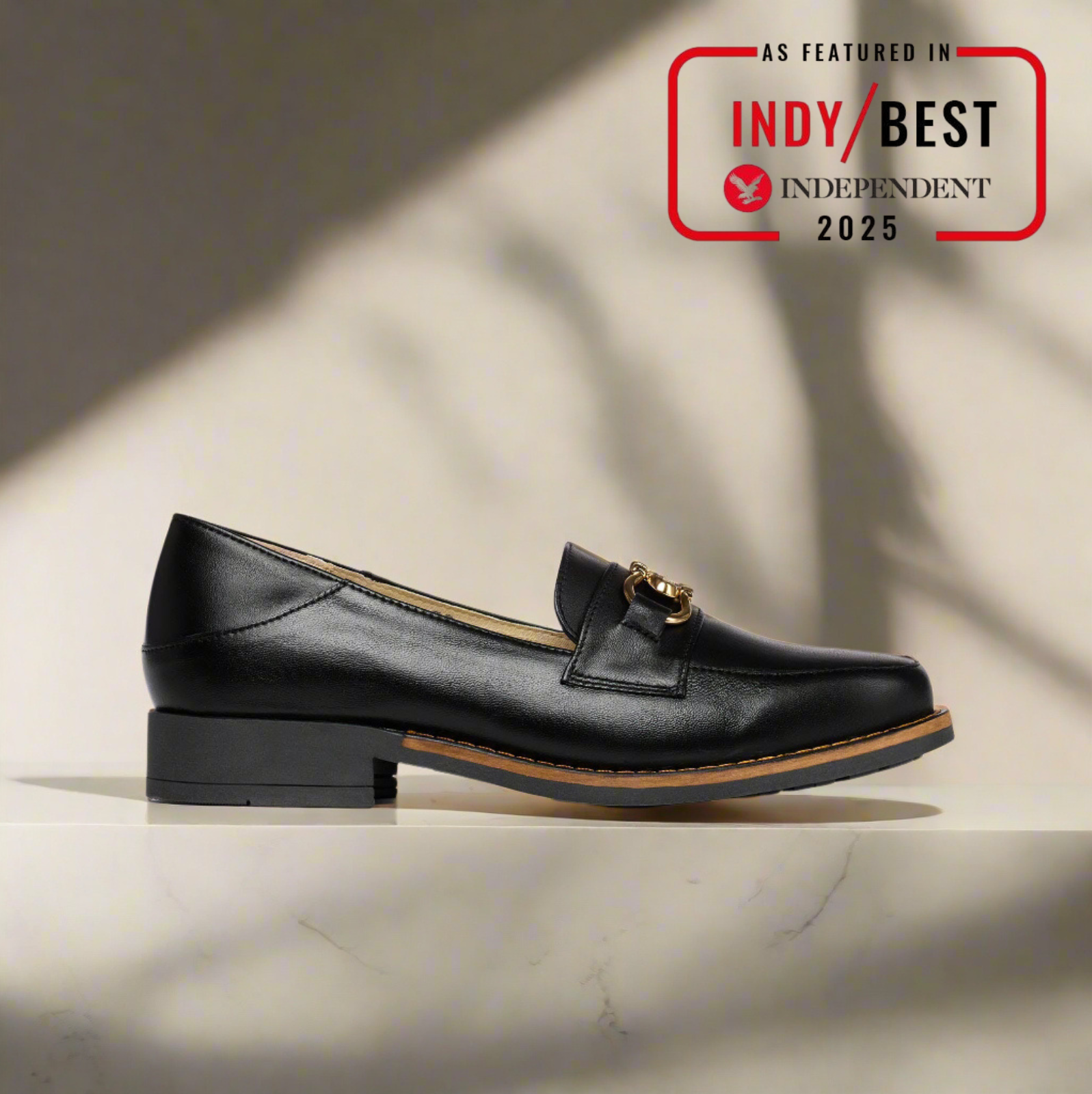
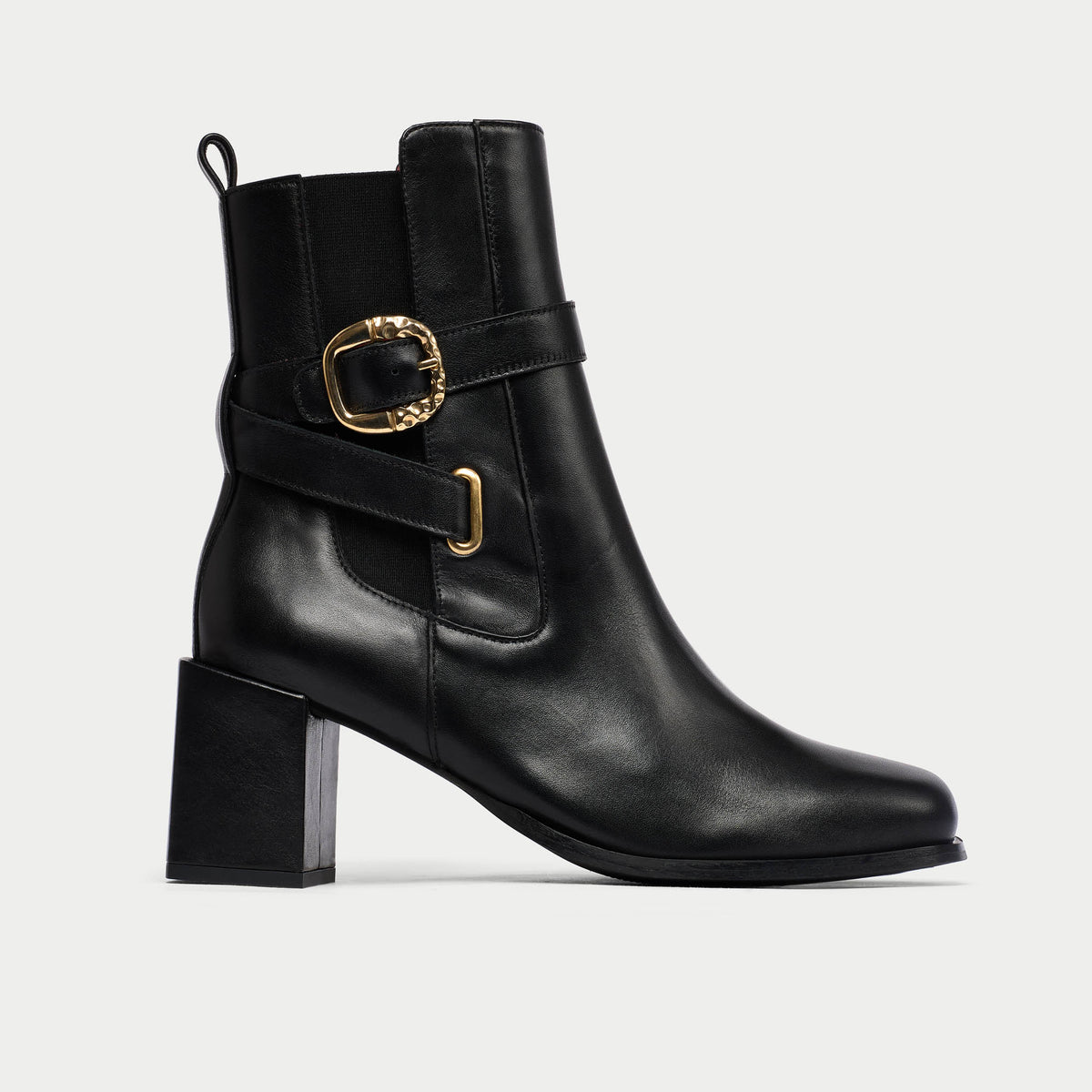
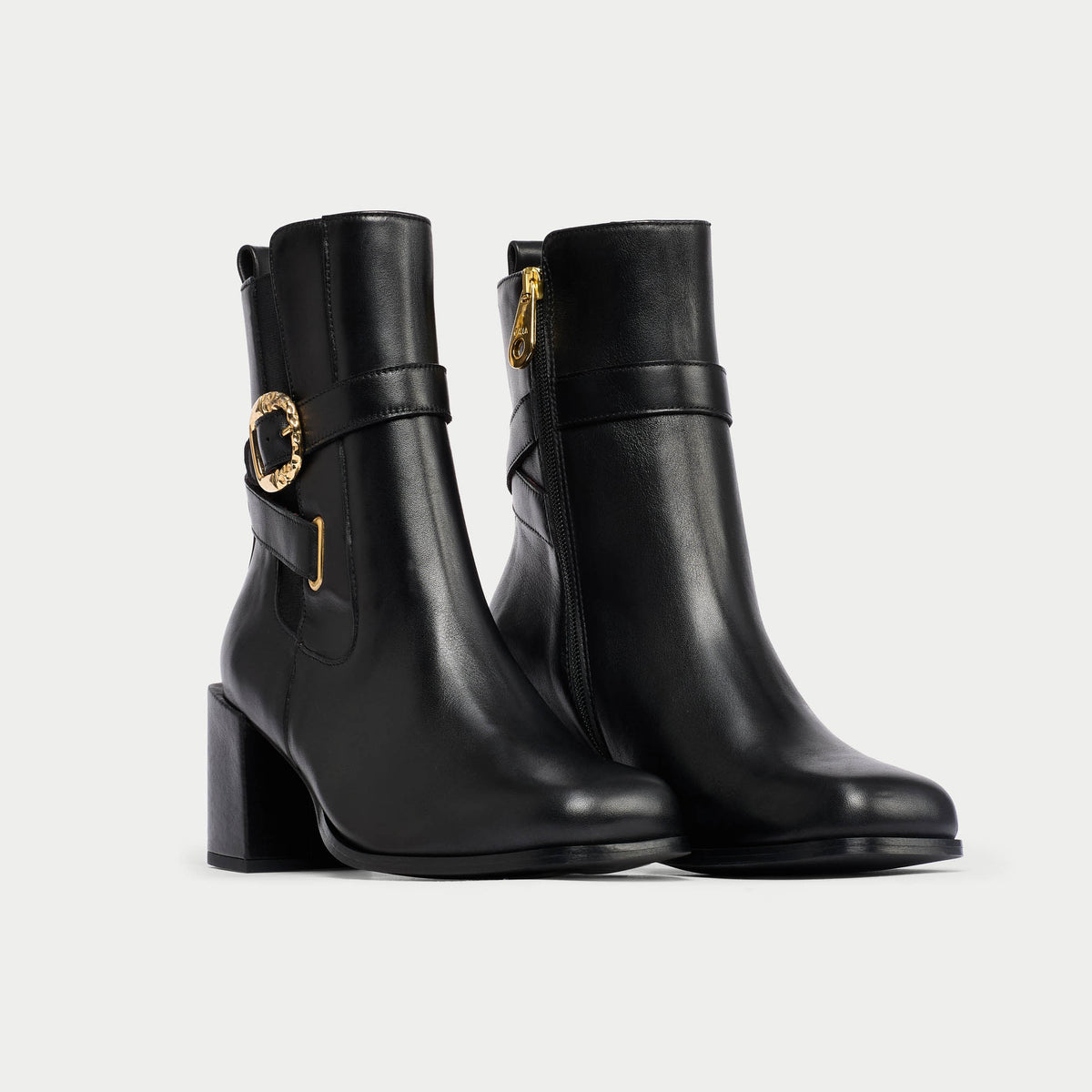
The Meredith is Calla's chunky loafer on a 2.5cm heel, and black leather is the do-everything one. The slight heel and cushioned sole carry a day from the office to dinner, while the wide-enough toe box gives the bunion room a slim loafer wouldn't. Fits up to EE, true to size.
Origin
Handcrafted in Portugal, designed in the UK
Material
Black chunky leather upper, lamb leather lining
Heel
2.5cm
Width cap
Fits up to EE width feet
Toe box
Wide toe box with hidden stretch panel over the bunion area
Browse more images of the Meredith - Black Leather Loafers:
Our Review
The black Meredith is the chunky loafer I wear when a flat feels too slight for tailoring, since the 2.5cm heel and the heavier sole give it some presence under trousers. It takes me from the office to dinner without changing, and the cushioned sole means my feet aren't aching by the evening. The toe box is cut wide enough that my bunion has room rather than being pressed by a narrow loafer. I wear it with trousers or straight jeans. Fits up to EE, true to size.
Pros
2.5cm heel adds height without losing the loafer's flat-shoe ease
Hidden stretch panel flexes over the bunion joint
Cushioned sole takes the impact out of pavement walking
Fits up to EE width feet
Cons
Width fitting caps at EE so EEE feet will be tight
Chunky silhouette sits heavier on the foot than a slim loafer
Slip-on construction means no width adjustment if your foot swells through the day
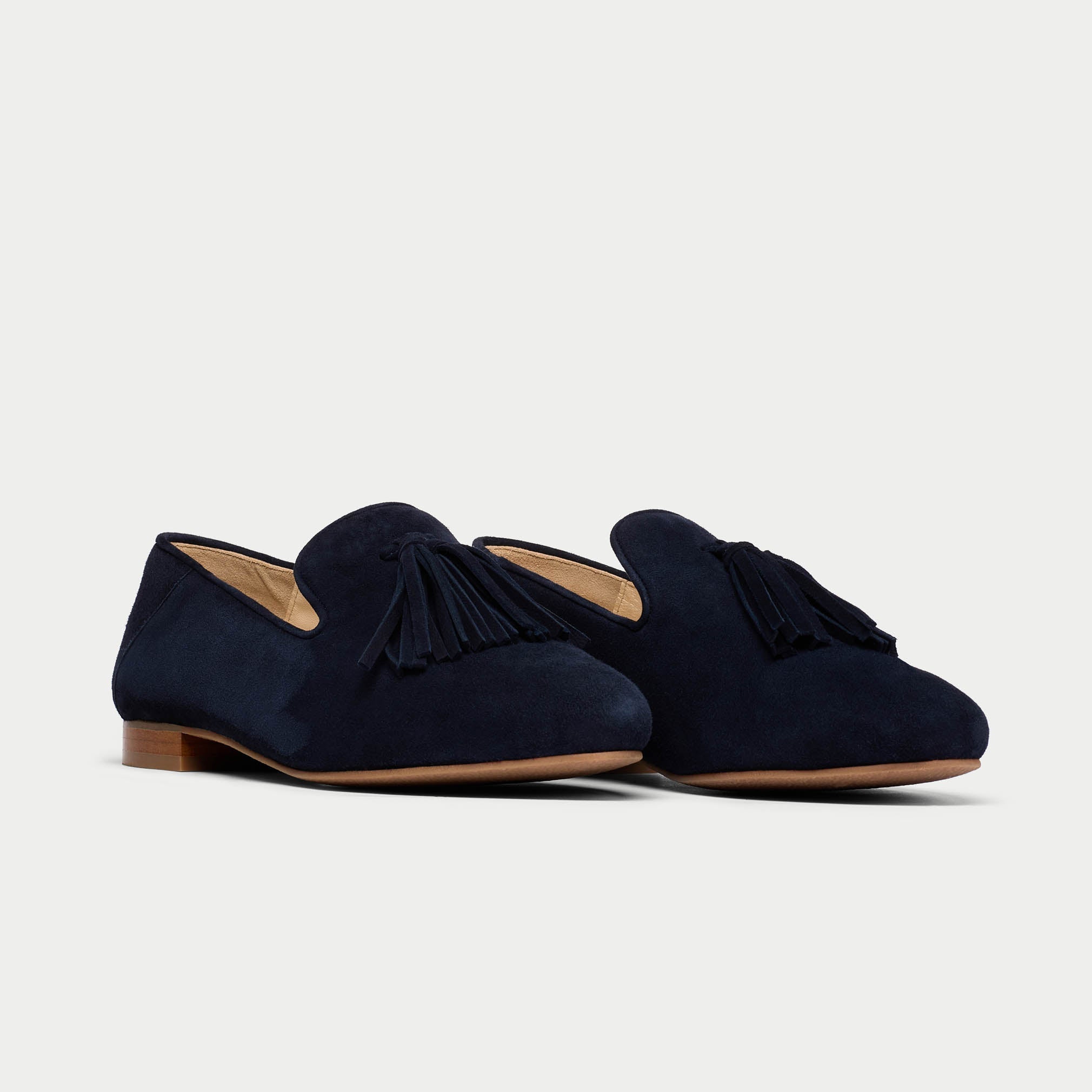
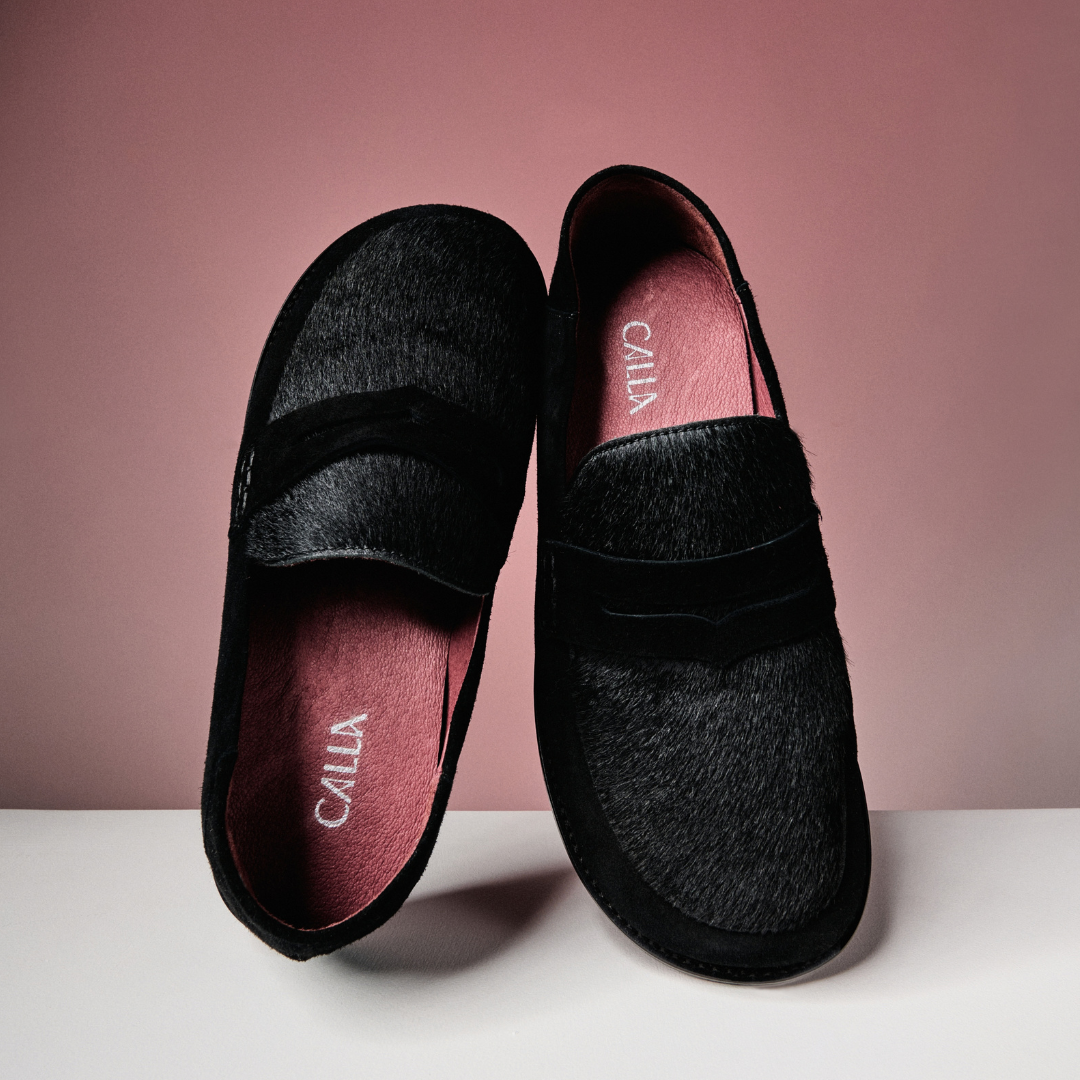
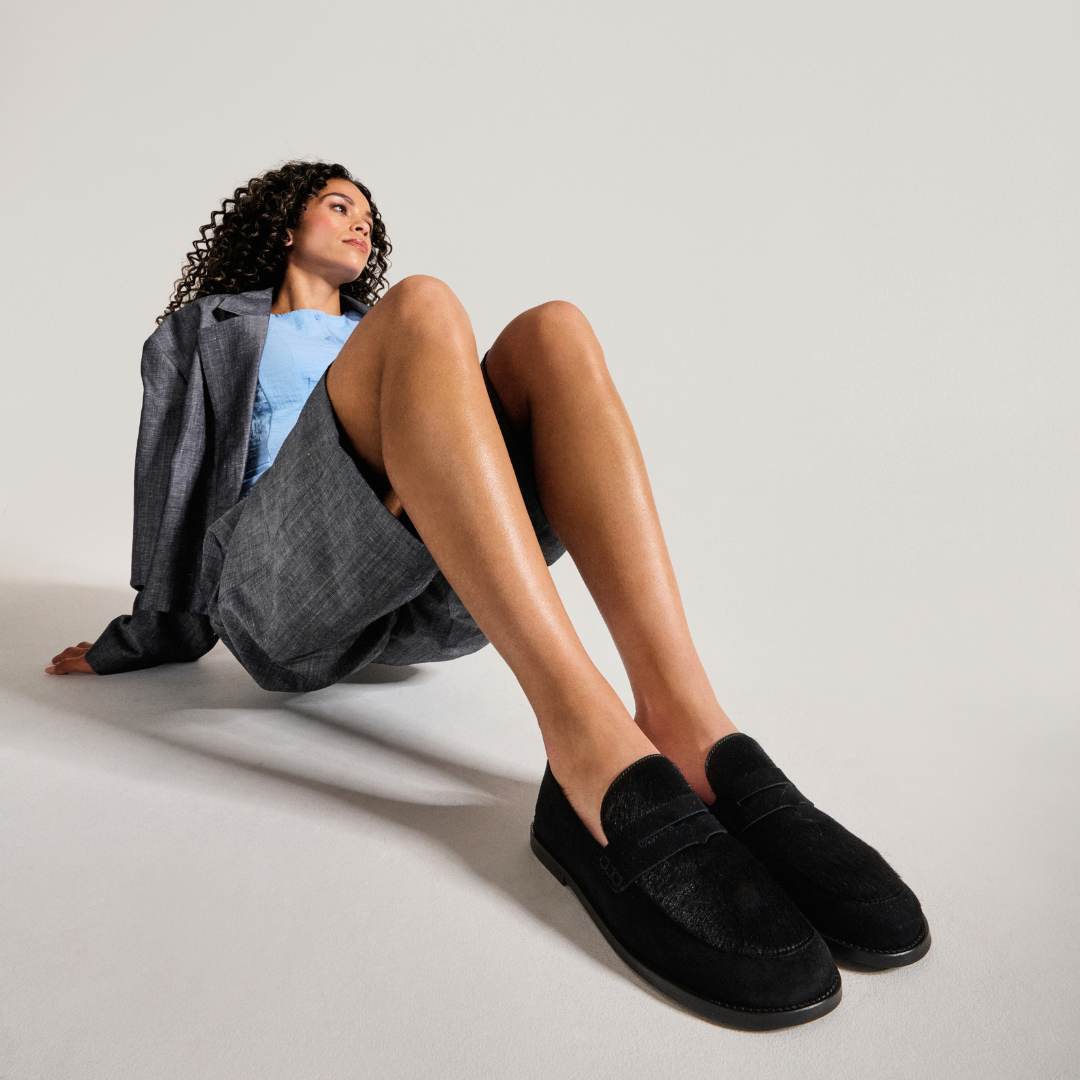
The Freya is Calla's tassel loafer, and black suede is the soft, velvety everyday one. A hidden stretch panel in the toe box flexes over the bunion while the wide toe box gives the forefoot room, so a smart loafer doesn't press on the joint. Runs big in suede, so size down a full size; fits up to EEE.
Browse more images of the Freya - Black Suede Loafers:
Our Review
Black suede is the Freya I wear most, because the soft velvety finish dresses up trousers while still feeling relaxed, and the tassels give it a bit of character. The hidden stretch panel sits in the toe box and flexes over my bunion, so the joint isn't pressed the way it is in a stiff loafer. The wide toe box and cushioned insole carry me through a full day at a desk and out to dinner. The one thing to get right is sizing, since the suede runs big and I took a full size down. Up to EEE, and I brush the suede to keep it looking fresh.
Pros
EEE width cap suits wider feet
Hidden stretch panel flexes over the bunion joint
Flat profile for all-day standing or walking
Lamb leather lining against the foot
Cons
Sizing runs a full size large so you must order down
Suede upper picks up rain marks without a weatherproof spray
Black suede shows scuffs on the toe with regular wear
Corns and bunions: different problems, different shoes
A bunion (or hallux valgus, the clinical name) is a bony bump at the base of the big toe where the joint has shifted outward.
A corn is a patch of hardened skin that builds up wherever the shoe rubs or presses repeatedly, usually on or between the toes.
The two often go together because the same narrow, tight shoes that squeeze a bunion also create the friction that forms corns. A callus is the same hardened skin spread over a broader area, usually on the sole of the foot; if that's what you're dealing with, our guide to the best shoes for calluses covers it.
Shoes aggravate the problem, but they are not always the starting point for bunions. Genetics play a significant role, and certain types of feet are more susceptible to developing bunions; those foot types are often inherited. Even the Calla founder's own daughters have developed small bunions despite always wearing roomy shoes, which shows how strong the hereditary factor can be. For more on how bunions and corns develop, the guide covers the genetics and the footwear factors in detail.
Each needs something different from a shoe, though. A bunion is a permanent change in the position of the joint. It is not a growth, but a prominence caused by the big toe moving out of its normal alignment. It needs room and give directly over the bump so the shoe isn't pressing against it with every step.
A corn needs the rubbing to stop. Take away the friction, whether that means a softer lining, a wider toe box, or removing a seam that sits in the wrong place, and the hardened skin can soften on its own.
Shoes can accommodate a bunion and ease the pressure around it. They cannot straighten, reverse or correct one, because only surgery can change the position of the joint itself. But a good pair that gives room in the right places and keeps a smooth, soft interior can genuinely help with both at once.
Bunion
Corn
What it is
A bony bump at the base of the big toe, where the joint has shifted out of alignment: a permanent change in the joint's position.
A patch of hardened skin that builds up wherever the shoe rubs or presses repeatedly.
What a shoe must do
Provide room, and material with give, directly over the bump, so nothing presses on the joint with every step.
Stop the friction, whether through a softer lining, a wider toe box, or removing a seam that sits in the wrong place.
What to look for in shoes for corns and bunions
The features that matter when you have corns and bunions together each address a specific part of the problem:
A wide, deep toe box that follows the foot's natural shape
Soft material with give over the joint
A smooth interior with no hard seams
Proper cushioning underfoot
A low, stable heel
The toe box is what takes the pressure off the bunion. It needs to be wide and deep enough that the joint sits without pressing against the shoe wall, and shaped to match the foot rather than taper to a point. The interior is what stops corns: a smooth lining with no hard seams removes the friction that hardens the skin in the first place.
A low heel keeps weight off the forefoot so neither condition bears more pressure than it needs to. And a removable footbed (the insole you can lift out and replace with a podiatrist's orthotic, a support shaped to your foot) means you can drop in the support you actually need.
The features that cause problems are just as clear:
Pointed toes crowd the joint and push toes together.
High, narrow heels drive weight forward onto the ball of the foot.
Hard seams or stitching across the toe area sit directly on the bunion or rub against toes that are already sore.
A shoe that does any of those things won't be fixed by width elsewhere.
Space and width to take pressure off a bunion
Width at the forefoot, not a bigger shoe all round, matters more than almost anything else when you have a bunion. The bump sits at the widest point of your foot, so the toe box needs to be deep and wide enough for the joint to sit without pressing against the shoe wall. But if the whole shoe is made wider, the heel slips, your foot slides forward, and your toes end up jammed into the tapered front anyway.
Bunions need width, not length. When you size up in length to get width, you end up with shoes that are too long. Your foot slides forward, your toes jam into the front of the shoe, and you're back to square one. A shoe built with extra width and depth in the toe box and a standard fit around the heel keeps room around the bump while holding the foot steady. An EE or EEE forefoot with a standard heel is what separates a shoe designed for bunions from one that is simply a bigger size.
The Calla Comfort Method works on exactly that principle. Every Calla last (the foot-shaped mould each shoe is built around) is designed to accommodate bunions, holding a standard width at the heel while the toe box widens to an EE fitting, so the heel stays secure and you avoid the blisters that come from sizing up for width. You can see how this works across the range in our wide toe-box shoes.
Look for a toe box wide enough that you can wiggle your toes without touching the sides, deep enough that nothing presses on top of the joint, and shaped to follow the foot rather than taper to a point. If the shoe also has a stretch panel or a soft lining with give directly over the bunion, so much the better: the material moves with the bump instead of pressing down on it.
Soft, seam-free materials that stop corns forming
A corn forms where something rubs, so the most important thing a shoe can do to prevent one is to have a smooth, seam-free interior with nothing hard sitting on the skin. A stray seam across the top of a toe, the edge of a stitched overlay, two toes pressed together in a space too small for both: all of these create the friction that builds hardened skin. Stop the rubbing and the corn stops building up.
Soft leather or suede linings give where a synthetic would hold firm, and they ease further with wear so the shoe moulds to the foot rather than the other way round. Lamb leather is particularly good here: it's soft enough that even a sensitive area where a corn has formed sits against something with give in it rather than a surface that grips. A fully lined toe box with no internal seams removes the most common friction point entirely.
The upper matters too. Soft, stretchy material over the toe box lets the bump sit without the leather pulling tight across it. Stiff uppers and hard toe caps hold their shape against yours, and every step drives the same edge into the same spot. Leather and suede breathe, soften with wear, and give where the pressure sits. A knit or mesh upper stretches, but its textured surface can catch against a corn in a way that smooth leather won't.
One thing worth checking before you buy: where the outside stitching sits. If a seam runs across the shoe right where your bunion presses, even a wide, soft shoe will rub at that point. No amount of width fixes a seam that won't stretch.
Calla addressed that problem by moving the whole stitching line forward, clear of the bunion, and finishing the outside so the join is invisible. Nothing on the outside of the shoe constricts or rubs across the joint. Inside, Calla pairs a seam-free stretch-lined toe box with a lamb leather lining, so the material gives where the bump presses and there is nothing hard against the skin. You can see this across the soft-lined flats collection.
Shoe styles for corns and bunions that work
Cushioned flats, leather trainers, low block heels, kitten heels, loafers and sandals with straps that sit clear of the joint: these are the styles that deliver the features above, and the ones worth reaching for when corns and bunions are both in the picture.
Having a bunion doesn't rule out a heel. A lower block heel or a kitten heel keeps your weight distributed across the foot rather than driving it all forward onto the ball, which is where a high, narrow stiletto causes trouble. A thicker heel is better too, because it reduces the pressure put on the toes and gives you stability as you walk.
On your feet all day: a cushioned trainer with a removable footbed and a lined, seam-free toe box. Trainers spread the load, absorb impact, and a removable insole lets you drop in your own orthotics if you need them. Calla trainers add a moulded footbed over a 3cm sole, designed to leave room for a prescribed orthotic rather than crowd it out.
A smart occasion: a low block heel or a kitten heel in soft leather, with a wide toe box that keeps the bunion covered. Court shoes with a pointed toe are the ones to avoid; a rounder or almond shape gives room without losing the elegance. If you want more height for the occasion, Calla court shoes sit on a 3-inch heel with a half-inch platform, which reduces the pitch of the foot so the weight is not driven forward onto the ball.
Warm weather: a sandal with straps positioned to sit clear of the bunion rather than across it. Well-placed straps can conceal the bump while letting the foot breathe.
Everyday walking: a soft leather loafer or a cushioned flat. Loafers with a generous toe box and a leather lining that gives with wear are a strong choice for days when you're on and off your feet. Calla loafers are built from supple leather with a discreet stretch lining over the bunion that doesn't show on the outside.
Work or business dress: a leather brogue or a low court shoe with a seam-free interior. Both can look polished without the tight, narrow fit that causes problems.
After surgery: a trainer or flat with a removable footbed, soft leather, and no seams over scar tissue. The removable insole gives room for a post-operative orthotic without making the shoe tight.
Every pair we make is handmade in Portugal by master shoemakers, built around extra width and depth in the toe box with a standard fit around the heel, soft stretch linings, and a cushioned, arch-supported insole.
Calla finishes the outside of every shoe so that the bunion is hidden, not advertised. Dina Gohil, an HCPC-registered (Health and Care Professions Council) podiatrist, reviewed the range and noted that for a shoe designed for bunions, "they don't look hideous," which she found refreshing because her patients routinely refuse the footwear she recommends when it looks too medical.
Getting the fit right when you have corns and bunions
Fit to the widest part of your foot, not the longest, and check there's no pressure over the bunion when you're standing and walking in the shoe. If it presses in the shop, it will keep pressing at home, and no amount of hoping it will "give" should override what you feel right now.
The most common mistake is sizing up for width. When you size up in length to get width, you end up with shoes that are too long. Your foot slides forward, your toes jam into the front of the shoe, and you're back to square one, with a corn now forming where the toe hits the end. The fix is a shoe built with the width at the forefoot, not a bigger shoe all round.
A few things worth checking when you try a pair on:
Wiggle room: you should be able to spread your toes without touching the sides of the toe box. If you can feel the shoe against your bunion when you flex your foot, the toe box is too narrow.
No pressure over the bunion: stand up, walk a few steps, and check whether anything is pressing on your bunion. If it is, a wider toe box is the answer, not a longer shoe.
A secure heel: the back of the shoe should hold your heel snugly. A heel that slips means your foot is sliding inside the shoe, and that sliding creates exactly the kind of friction that forms corns.
Shop later in the day: feet swell as the day goes on, and a shoe that fits perfectly first thing in the morning can feel tight by the afternoon. Try shoes on when your feet are at their fullest.
Measure the widest point: wrap a tape measure around the circumference of your foot at the bunion, and do it while you are standing. The weight of your body makes your feet slightly wider when you are standing than when you are sitting, so a seated measurement can underestimate how much room you need. Our guide walks you through how to measure your width step by step.
FAQs
What shoes should you wear if you have corns?
If you have corns, wear roomy, soft shoes with a wide toe box and a smooth, seam-free interior: cushioned flats and trainers are the safest choices because they give your toes space without pressing or rubbing. Avoid anything tight, pointed or hard-seamed. If the shoe grips the toe or presses a seam against the skin, it's creating the friction that formed the corn in the first place.
What shoes do podiatrists recommend for bunions?
For bunions, podiatrists recommend a wide, deep toe box, soft and stretchy uppers with give over the joint, and a supportive, stable sole. Ron McCulloch, the principal podiatric surgeon and director of the London Podiatry Centre, recommends shoes with a round toe and a relatively low heel.
As general guidance, keeping the heel height to no more than 4cm helps avoid overloading the big-toe joint, though if you prefer a higher heel, choosing one with a platform reduces the pitch of the foot (the angle between heel and toe) and eases the pressure on the ball of the foot. A removable footbed lets you swap in a podiatrist's orthotic without making the shoe tight.
Podiatrist Claire Forbes of Forbes Feet in Jersey assessed Calla's shoes and found that the foot does not become impinged at the forefoot. In her assessment, the extra volume and padding where the bunion sits means, in her words, "the shoe accommodates the forefoot."
Please remember that this advice is general, and if you are experiencing foot pain you need to see your podiatrist.
Can shoes that are too big cause corns?
Yes, a shoe that is too big can cause corns. It lets your foot slide inside, and that sliding creates friction at your toes, heel and the ball of your foot. A shoe that is too tight squeezes and presses. Both produce the repeated rubbing that forms a corn. The goal is a shoe that fits snugly at the heel and midfoot but gives enough room at the forefoot for the toes to sit without being squeezed or sliding.
Can the right shoes get rid of corns and bunions?
Corns can soften and settle once the rubbing that caused them stops, so switching to a shoe with a smooth, seam-free interior and enough room for the toes can make a real difference. A corn that doesn't improve is worth showing to a podiatrist, because it may need professional treatment.
A bunion is different: shoes cannot reverse, straighten or correct one, because the bump is a structural change in the joint itself and only surgery can reposition it. You will also read, more or less everywhere, that the right shoes can stop a bunion getting worse. In fact, the right shoes ease the pressure on the joint and how the bunion feels day to day; they don't change the shape of the joint.
As podiatric surgeon Ron McCulloch puts it, the best one can hope for is "to slow down progression and to limit the worsening of the deformity by taking some simple measures", of which good footwear is one. He also notes that orthoses (support devices like insoles shaped to your foot) "can help with bunion pain but there is no particular evidence that this approach can stop or slow down the deformity."
What the right shoes do, and do well, is let you get on with your day without your feet limiting what you wear.




Leave a comment
This site is protected by hCaptcha and the hCaptcha Privacy Policy and Terms of Service apply.