You've got the interview. The outfit is coming together, and now you need shoes that look polished walking into the room and feel right standing in the waiting area, walking to greet the panel, and sitting down without once thinking about your feet.
The answer is a closed-toe shoe in a neutral colour, in leather or suede, with a heel you can walk in confidently or a smart flat. The style depends on how formal the role is, but the principle stays the same: polish and comfort together, because a shoe you can't walk in properly isn't the right shoe.
At Calla, we design shoes with extra width and depth in the toe box for women with bunions and wide feet, so we think about this from both sides: how a shoe looks walking into a room, and how it feels across the whole day.
Here are the shoes we recommend for a job interview:
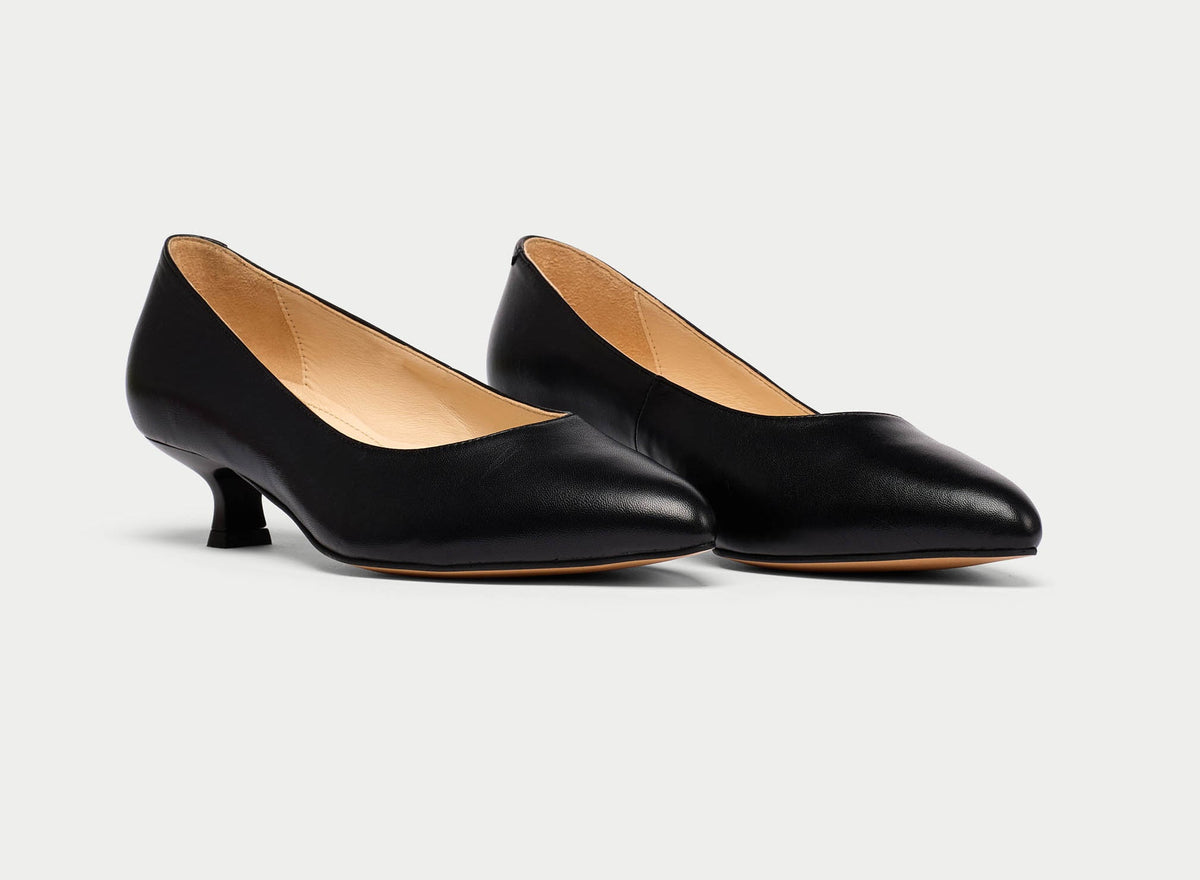
A classic black leather court on a manageable 5cm kitten heel, with extra width and volume through the toe area for a wide forefoot. The roomy toe and arch support carry a full office day, where a standard court would press on the bunion by mid-morning. Fits EE-EEE, true to size.
Origin
Handcrafted in Portugal at a family-run factory in the Porto region
Material
Black leather upper, lamb leather lining
Heel
5cm kitten heel
Fit
Fits EE-EEE width feet best
Toe box
Extra width and volume in the toe area, standard at the heel
Footbed
Arch-supported insole
Best for
Work, weekday dressing and any wardrobe slot that wants a low heel
Browse more images of the Ava - Black Leather Courts:
Our Review
The black Ava is my everyday work court, the pair I put on for a day of meetings because a 5cm heel is low enough to stand and walk in from morning to evening. What makes it work for me is the extra room through the toe area, an EE-EEE that lets my bunion sit without the joint pressing on a hard leather edge the way a standard court does. The arch support holds my foot through hours on office floors. In smooth black leather it goes under any suit or with a pencil skirt. True to size for me across the EE-EEE width.
Pros
5cm kitten heel works for full work-day standing
EE-EEE width cap takes wider feet than most courts on the high street
Extra width and volume in the toe area accommodates the bunion joint
Lamb leather lining over the bunion area flexes with the joint
Cons
Smooth leather sole needs grip pads on wet pavement
Narrower than EE feet may find the toe area roomy
Black leather shows light scuffs at the toe over time
The Claudia court in smooth black leather, a pointed toe on a low kitten heel that sharpens tailoring and lengthens the foot line. The point sits ahead of the toes while the toe box stays wide over the bunion, so a sharp court doesn't pinch the joint. Fits EE, true to size.
Origin
Handcrafted in Portugal at a family-run factory in the Porto region
Material
Black leather upper, lamb leather lining
Heel
Kitten heel
Toe shape
Pointed toe
Fit
True to size, fits EE width feet best
Toe box
Wide toe box with hidden stretch panel over the bunion area
Browse more images of the Claudia - Black Leather Courts:
Our Review
The black Claudia is my pointed court for formal days, the one I wear when a rounded toe feels too soft for a sharp suit. The point lengthens my foot and finishes tailoring cleanly, but the part that matters to me is that the width sits over my bunion while the point extends past my toes, so the shape doesn't crush the joint the way a normal pointed court does. The low kitten heel lets me wear it from a morning meeting into an evening dinner. With a pencil skirt or wide-leg trousers it does the sharp, polished thing I want. I take my true size, an EE.
Pros
Kitten heel gives a small lift suitable for full days on the feet
Pointed toe sits on a wide toe box so the bunion joint has room
EE width cap suits wider forefeet
Black leather pairs with workwear through to evening
Cons
Pointed toe shape narrows visually so very wide feet beyond EE may prefer a rounded toe style
Leather courts need conditioning to keep the upper looking fresh
The Nadia minimalist loafer in navy leather, the softer-than-black neutral for navy and denim wardrobes. A bunion-stretch lining flexes over the joint, built-in arch support holds the day, and the wide toe box gives the forefoot room. Fits up to EE, true to size.
Origin
Handcrafted in Portugal at a family-run factory in the Porto region
Browse more images of the Nadia - Navy Leather Loafers:
Our Review
Navy is the Nadia I wear with navy or denim, since it pulls those outfits together where black can look like an off contrast. The clean minimalist shape keeps it quiet, and the stretch lining flexes over my bunion while the wide toe box gives my forefoot room. The arch support is what makes it a true all-day shoe rather than a couple-of-hours one. It does work and weekend equally. Fits up to EE, true to size.
Pros
2.5cm heel keeps the foot near-flat for all-day wear
Bunion-stretch lining flexes over the joint
Wide toe box fits up to EE
Navy leather sits with both work trousers and denim
Cons
EE width cap rules out EEE feet
Leather upper needs occasional conditioning to keep its finish
Low slip-on loafer offers limited hold across the instep
The Meredith chunky loafer in neutral leather with a gold horsebit detail, the day-to-night one. A 2.5cm heel and cushioned sole carry the day, while the wide-enough toe box gives the bunion room. Fits up to EE, true to size.
Browse more images of the Meredith - Neutral Leather Loafers:
Our Review
Neutral leather is the Meredith I wear when I want a loafer that goes from day to evening, since the soft neutral and the gold horsebit give it just enough polish for dinner. The 2.5cm heel and cushioned sole keep me comfortable from morning on, and the toe box is wide enough that my bunion has room. The horsebit lifts plain trousers without trying too hard. It wipes clean more easily than the suedes. Fits up to EE, true to size.
Pros
2.5cm heel sits low enough for full-day wear
Gold horsebit detail across the vamp
Cushioned arch-supported insole
Lamb leather lining flexes over the bunion area
Cons
Width cap stops at EE
Neutral leather will show scuffs and needs a conditioning cream to keep the colour even
Horsebit detail rules out the most formal black-tie settings
The Charlotte is Calla's crossover ballet flat, the one customers keep coming back to, here in soft black nappa leather. The leather crosses over the toes and stretches across the bunion, with a panel that gives both bunions and tailor's bunions room. Fits up to EEE, true to size.
Origin
Handcrafted in Portugal at a family-run factory in the Porto region
Material
Soft black nappa leather upper, lamb leather lining
Heel
Flat ballerina
Colour
Black
Fit
True to size, fits up to EEE width feet
Toe box
Stretch panel across the toe box for bunions and tailor's bunions, crossover design that stretches to the foot shape
Footbed
Enhanced arch support, extra cushioning at the heel
Browse more images of the Charlotte - Black Leather Ballet Flats:
Our Review
Black Charlotte is the ballet flat I reach for most, because the crossover design stretches gently over my bunion instead of pressing a hard line across the joint. The soft nappa leather gives where my foot is widest, and the stretch panel handles both my bunion and the tailor's bunion on the little-toe side. Enhanced arch support and extra heel cushioning mean it carries a full day rather than leaving my feet flat and sore. It is the flat I'd recommend to anyone after a bunionectomy who needs softness and width over the scar area. Fits up to EEE, true to size.
Pros
Stretch panel across the toe box gives over both the bunion and the tailor's bunion sides
Nappa leather softens with wear
Extra heel cushioning eases the back of the foot
Fits up to EEE width
Cons
Flat ballerina sole has limited grip in wet weather
Crossover stretch design relies on the panel rather than laces so cannot be tightened
The Ophelia is Calla's classic brogue in a mix of smooth black leather and soft suede, with the brogue detailing across the toe. A hidden stretch panel in the toe box gives the bunion room and flexibility, on an EEE toe width. Fits up to EEE, true to size.
Origin
Handcrafted in Portugal at a family-run factory in the Porto region, designed in the UK
Material
Smooth black leather and soft suede upper, lamb leather lining
Heel
Flat
Fit
True to size
Width cap
Fits up to EEE toe width
Toe box
Wide Calla last with hidden stretch panel in the toe box
Browse more images of the Ophelia - Black Leather Brogues:
Our Review
Black Ophelia is the brogue I reach for when I want a smart flat that goes with everything, since the leather-and-suede mix and the brogue detailing look polished with trousers or jeans. The hidden stretch panel in the toe box gives over my bunion so the brogue doesn't press the joint. The shape leaves extra room and flexibility through the forefoot. It is the flat I wear most through autumn and winter. Fits up to EEE, true to size.
Pros
Hidden stretch panel in the toe box flexes over the bunion joint
EEE width cap accommodates wider forefeet
Mixed leather and suede upper takes both office and weekend outfits
Flat heel suits all-day standing and walking
Cons
Suede panels need weatherproofing before wet-weather wear
Black suede shows salt marks in winter
Lace-up entry takes longer to put on than a slip-on flat
The Sophia high-heel court in light beige goats leather, a pale nude that lengthens the leg on a 3 inch (about 7.5cm) heel with a half-inch platform. The platform reduces the pitch on the big toe joint while the goats leather flexes over the bunion. Fits up to EE, true to size.
Origin
Handcrafted in Portugal at a family-run factory in the Porto region
Browse more images of the Sophia - Light Beige Leather Courts:
Our Review
Light beige is the Sophia I wear when I want height and a longer-looking leg, since the pale nude blurs into the leg under a hem. The 3 inch heel is softened by the half-inch platform, so my weight isn't tipped fully onto my bunion, and the goats leather flexes where my forefoot needs it. The leather-lined arch-supported insole holds me through an occasion. I pair it with a midi or tailored trousers. Fits up to EE, true to size.
Pros
Goats leather flexes around the forefoot where bunions sit
Half-inch platform reduces the effective pitch of the 3-inch heel
Light beige sits with most occasion outfits as a neutral
Hidden stretch panel over the bunion area
Cons
Light beige shows scuffs and marks faster than darker tones
3-inch heel sits at the upper end for all-day wear
Width caps at EE so EEE feet should look elsewhere
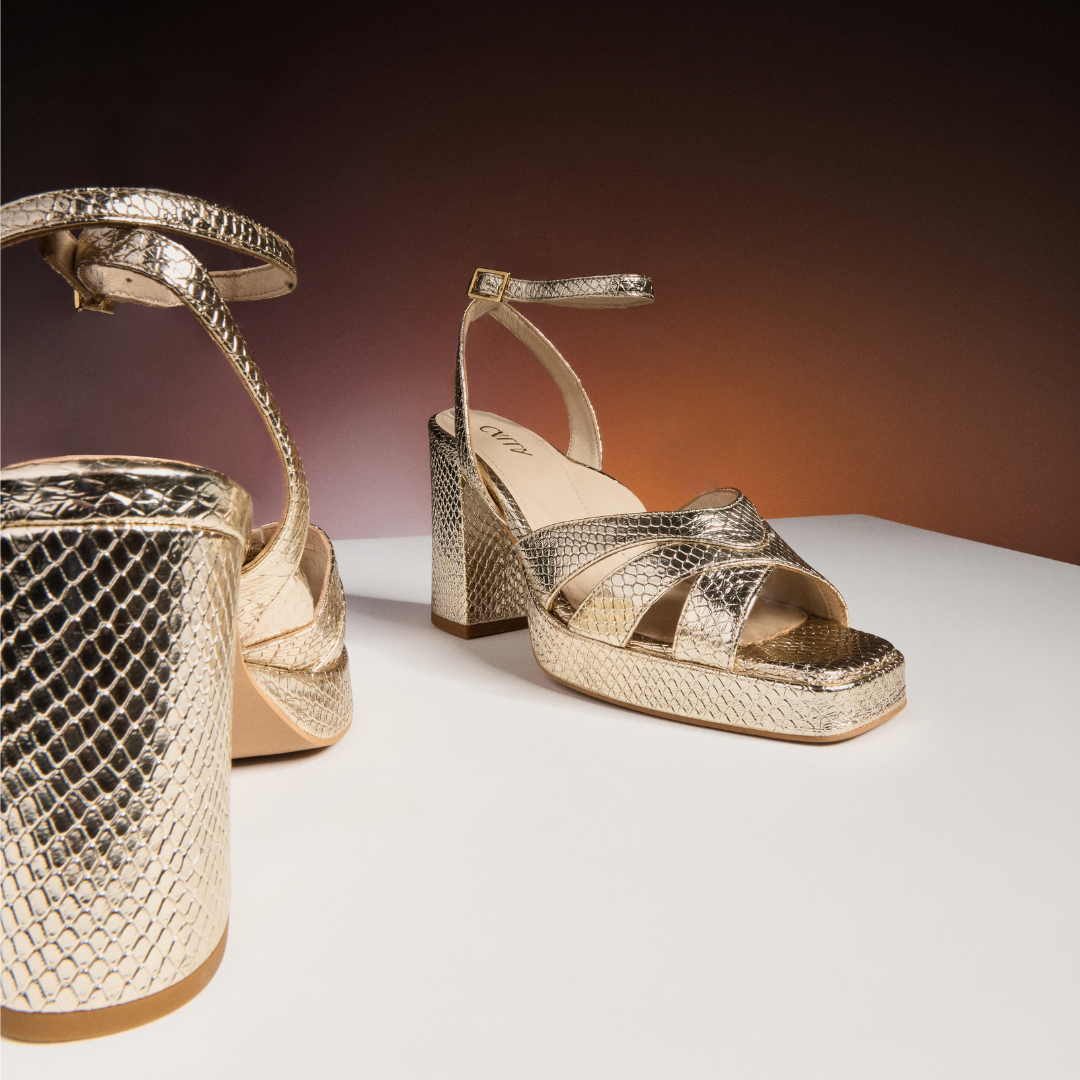
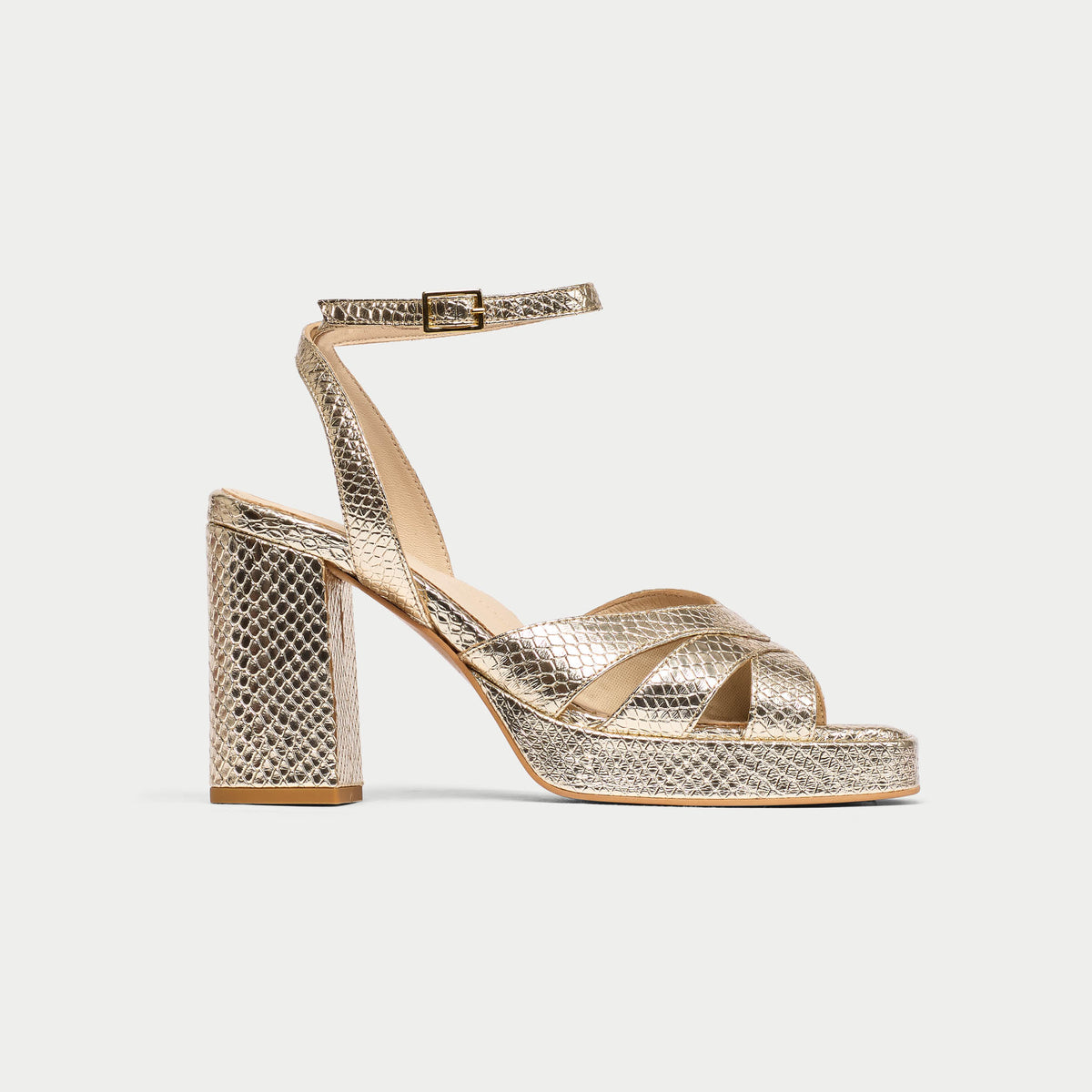
The Margot is Calla's high block-heel sandal, a tall heel kept stable by a block and held by secure straps, here in smooth black leather. The wide toe box and bunion-friendly stretch lining give the joint room, so the height doesn't come at the cost of the forefoot. Fits up to EEE, true to size.
Origin
Handcrafted in Portugal at a family-run factory in the Porto region
Browse more images of the Margot - Black Leather Block Heel Sandals:
Our Review
Black Margot is the strappy heel I wear to evening events, because the high block heel gives me real height on a base I can actually stand on, unlike a stiletto. The secure straps hold my foot in place, and the stretch lining flexes over my bunion so the joint isn't pressed through a long evening. The wide toe box runs to EEE, which is rare in an occasion sandal. In black it goes with any dress or jumpsuit. Fits up to EEE, true to size.
Pros
High block heel sits on a wider base than a stiletto for added stability
Secure straps hold the foot in place across the instep
Fits up to EEE width
Bunion-friendly stretch lining widens over the joint
Cons
High block heel sits at the upper end for hours of standing
Smooth leather scuffs on rough ground
Smooth sole calls for care on wet floors
What makes a shoe right for a job interview
Five things set the right pair apart from the rest of your wardrobe.
Closed toe. Open toes look casual in most interview settings. A closed-toe court shoe, loafer, or flat keeps the look professional without you needing to think about it.
Neutral colour. Black is the safest choice and goes with almost any outfit. Navy, nude, and brown all work too, and they let the rest of what you're wearing do the talking.
Leather or suede. Both look polished and wear well. Leather gives a clean, formal finish; suede is softer and rests more gently over your foot, which matters if you have a bunion or wider feet. We use European leather or suede for the upper because it stretches and gives around your lumps and bumps over wear, and line many styles with lamb leather that moulds around your foot. All our leather comes from Leather Working Group-certified suppliers.
A heel you can walk in, or a smart flat. A polished flat or loafer looks professional. If you do wear a heel, keep it low to mid, roughly 5 to 7cm. Ultra-high stilettos are harder to walk in when you're nervous, and the last thing you want is to be thinking about your balance instead of your answers. Our guide to the most comfortable heels goes into heel height in more detail.
Clean and in good condition. Scuffed or worn-down shoes stand out for the wrong reasons. Give them a wipe, check the soles, and make sure they look cared for. It costs nothing and makes a real difference.
I have bunions myself, and I started Calla in 2010 because I couldn't find comfortable heels for my own wedding. I still try on every pair, and that lived experience shapes everything we design.
Match your shoes to the dress code
Corporate interviews call for a closed-toe court shoe or sleek loafer in black or navy leather. Business-casual offices open the door to flats, Mary Janes, and low block heels. Creative or startup workplaces give you a step more latitude, but the same principle applies: dress a step above what you'd wear on a normal day.
Corporate or formal (law, finance, banking): a court shoe with a low-to-mid block heel, or a structured loafer in smooth leather. Both work best in black or navy. This is the room where polish registers most, and a classic style won't steer you wrong.
Business casual (tech, marketing, admin, education): the dress code is more relaxed, and a loafer, pointed flat, low block heel, or Mary Jane all fit comfortably within it. Suede works well here alongside leather.
Creative or startup: you have more room to express yourself, but an interview still calls for an effort. A pair of brogues, a pointed flat in a colour you love, or a low-heeled ankle boot all signal that you've thought about the impression you're making.
If it's cold or your commute involves a walk, a sleek low ankle boot looks smart enough for most rooms. And if you're not sure about the dress code, a black court shoe or a black loafer is the safest default.
If you have bunions, you'll know the extra question behind every outfit: whether your bump will show. A shoe that covers your bunions while staying elegant takes that worry off the table.
Colour follows the outfit: black is the most versatile, navy and brown add warmth, and nude or beige keeps things light without drawing the eye. If you're putting the full outfit together, our guide to comfortable workwear outfits covers how to bring it all in.
Classic court shoes
A closed-toe court shoe is the traditional formal-interview choice. It looks polished in corporate rooms and pairs with tailored trousers, pencil skirts, and dresses without a second thought.
A block heel is steadier than a slim or stiletto heel and spreads the weight more evenly across the sole, which means less balance effort and more confidence walking into the room. Roughly 5cm (2 inches) is a comfortable middle ground for an interview day.
Our courts are shaped with extra width and depth in the toe box and a standard fit around the heel, so your foot stays secure and your bunion gets the room it needs. A pointed or almond toe doesn't have to mean a squeezed fit: our Ava court has a pointed toe, but its vamp comes up a little higher than a normal cut, so the edges won't dig into your bunion, and it has extra width and volume in the toe area.
A good example of an interview court is the Calla Ava Black Leather Court.
We've picked it because it suits women who need room across the forefoot without losing a structured silhouette, and black works in almost any interview room. The Calla Ava Black Leather Court has:
a 5cm heel
a wide toe box that fits EE to EEE width feet best
a standard-width heel so it stays put all day
a soft kid leather upper and lining, with a cushioned, arch-supported insole
A kitten heel gives you a little height on a low, slim heel and looks polished and understated in both formal and business-casual settings.
At roughly 3.5cm, the heel puts less pressure on the forefoot than a taller heel. You're not pitching your weight forward the way a taller heel demands, which makes standing and walking steadier, especially when nerves are in the mix.
If you do want to go taller, we use a platform underneath the ball of the foot on our higher heels to reduce the drop from heel to toe. It means less pressure on the forefoot even in a dressier shoe.
A good example of an interview kitten heel is the Calla Claudia Black Leather Court.
We've picked it because it's a closed, pointed-toe court on a little kitten heel, so it looks sharp in a formal room and is easy to walk in. The Calla Claudia Black Leather Court has:
A polished loafer or smart flat is a professional shoe, full stop. A heel is not required for a job interview, and the right flat looks every bit as sharp walking into the room.
Loafers are structured, cover your foot cleanly, and need minimal fuss. They suit corporate and business-casual rooms equally well.
Ballet flats give you a closed-toe, neat silhouette. Look for a clean pointed or almond shape and a secure fit around the heel.
Brogues bring a menswear-smart edge that works with trousers and dresses alike. They're also a strong choice if concealing a bunion matters to you, because the construction covers more of your foot.
A good example of a smart interview loafer is the Calla Nadia Navy Leather Loafer.
We've picked it because navy works as a neutral and pairs with most interview outfits, and the loafer looks polished without feeling severe. It has a 2.5cm heel and built-in arch support, so it isn't a zero-drop shoe: you get a little height and structure underfoot. It also has a hidden stretch panel, a stretch lining and a wide toe box, and it fits up to EE. Take a look at the Calla Nadia Navy Leather Loafer.
Three more Calla styles that work well for an interview:
The Calla Meredith loafer, which IndyBest at The Independent named 'Best smart orthopaedic shoe' on 2 September 2026. The reviewer found it accommodates bunions while staying true to size.
The Calla Charlotte Black Leather Ballerina, with a 1cm hidden heel and a crossover design that gently stretches to accommodate your natural foot shape, with arch support built into the insole.
The Calla Ophelia Black Leather Brogue, if concealing a bunion is a priority. It has a Hallux comfort panel over the big toe joint and a stretch lining, and accommodates up to large bunions while keeping a smooth, clean line on the outside.
Staying comfortable from the commute to the handshake
A shoe that's comfortable from the moment you leave the house to the moment you shake hands keeps your focus on the interview, not on your feet.
The moments that matter on interview day are exactly the ones where a bad fit shows: standing to greet the panel, walking from reception to the interview room, and sitting for an hour before standing again. If your shoes are rubbing or pinching through any of that, it's written on your face.
Our shoes are shaped with a wide, deep toe box at the front and a standard-width heel at the back, which we call the Calla Comfort Method. The toe box gives your bunion room without the shoe being oversized everywhere, which is what causes heel slip in generic wide-fit shoes. Inside, a cushioned, arch-supported insole and a soft lining take rubbing and pressure out of the equation.
Every pair is handmade in Portugal by master shoemakers. The Portuguese factory is independently audited to the Sedex SMETA standard for labour and health and safety, with wages above both the Portuguese minimum wage and the regional living-wage estimate.
Podiatric surgeon Ron McCulloch, Director of the London Podiatry Centre, advises that good footwear generally needs a round toe and a relatively low heel, a point he covers in our expert talk on stopping bunions getting worse.
Dina Gohil, a podiatrist registered with the Health and Care Professions Council, reviewed our shoes and found they 'don't look hideous'.
If you're commuting by train or bus, wear comfortable shoes for the journey and change into your interview pair when you arrive. It keeps your shoes clean and your feet fresh for the parts that matter.
Wear your interview shoes around the house for a day or two before the interview. Leather and suede soften and mould to your foot with wear, and a pair that's been broken in gently at home won't surprise you with blisters on the morning you need them most.
Try shoes on later in the afternoon, when your feet are at their largest. Feet swell through the day, and a shoe that feels perfect at 9am can pinch by lunchtime.
Check the width, not just the length. A 2018 review by Buldt and Menz in the Journal of Foot and Ankle Research reports one study in which half of women wore shoes that were too narrow, with more than 5mm between the width of the foot and the width of the shoe. If you have bunions, you need room across the toe box, and sizing up in length to get that width doesn't work: you end up with a shoe that's too long, your foot slides forward, and your toes jam into the front. Most brands simply scale the whole shoe up to get more room, which leaves you with a heel that slips. We use bespoke lasts (the foot-shaped moulds each shoe is built on) to widen only the toe box to EE or EEE while keeping the heel standard, so you can wear your true size and get the room your feet actually need.
A wider toe box in a softer, giving material, with a stretch panel over the joint, accommodates your bunion and keeps the shape of the shoe smooth from the outside.
If you have a bunion, you'll know the worry. A narrow, rigid toe box presses on the joint at the base of your big toe, the material pulls tight over your bump, and the shape can show through the leather. It can rub, it can ache, and it can make you self-conscious in a moment when you want to feel confident.
Suede and stretch-lined leather give a little over the joint.
Inside, a stretch panel flexes with your foot so the shoe moulds around your bump.
From the outside, the line stays clean.
The NHS is clear that you cannot get rid of bunions or stop them getting worse yourself, and no shoe reverses, corrects, or stops a bunion. Foot surgeon Mr David Gordon notes that bunions always progress over time, though the rate at which they get worse can vary, and that narrow shoes and high heels can make a pre-existing bunion worse, even though they haven't been proven to cause one. But a roomier shoe takes the pressure off the joint and avoids adding to it. On interview day, that means less rubbing, less discomfort, and a silhouette that doesn't give you away.
Our shoes are designed to conceal even large bunions. The stretch panels and wide toe boxes accommodate bunions from mild through to large. We finish the outside so the bunion is hidden, not on show, and the line stays clean rather than looking 'orthopaedic'. If your bunion is severe, or if you have any concerns about your feet, please see your podiatrist for advice that's specific to you.
Once you've got the role, the shoe you need changes. An interview pair is built for one polished morning; an everyday work shoe needs to last through eight-hour days, commutes, and meetings on repeat.
That means a cushioned, arch-supported insole and room across the toe box become even more important. A removable insole is worth looking for too, so you can swap in your own orthotics (custom foot supports) if you use them. Our trainers come with a removable moulded footbed (the cushioned base inside the shoe), so you can swap in a clinician-prescribed orthotic if you need one. If you've had bunion surgery (a bunionectomy), the soft leather and seam-free lining avoid rubbing over sensitive scar tissue, and, once your surgeon says you're ready for normal shoes, the proper width means your feet aren't squeezed.
Your overall appearance is part of a first impression, and your shoes are part of that. General careers guidance consistently notes that clean, well-kept clothing and footwear contribute to a professional presentation.
What actually registers is whether your shoes are clean, appropriate for the setting, and look like they belong with the rest of your outfit. Nobody is scoring you on brand or heel height. They're noticing whether the whole picture looks intentional, and whether you look at ease. If you're unsure, we'd always suggest a classic closed-toe court shoe or a sleek leather loafer in black or navy. It signals polish without drawing attention away from your answers.
Can you wear flat shoes to a job interview?
Yes, you can absolutely wear flat shoes to a job interview. A polished flat or loafer looks professional, and a heel is not required. Flats are a strong choice for business-casual settings, for anyone who'd rather not wear a heel, and for any day that involves a lot of walking or standing. The Calla Nadia navy leather loafer and the Calla Charlotte black leather ballet flat are both smart enough for any interview room, and both have a small heel and arch support built in.
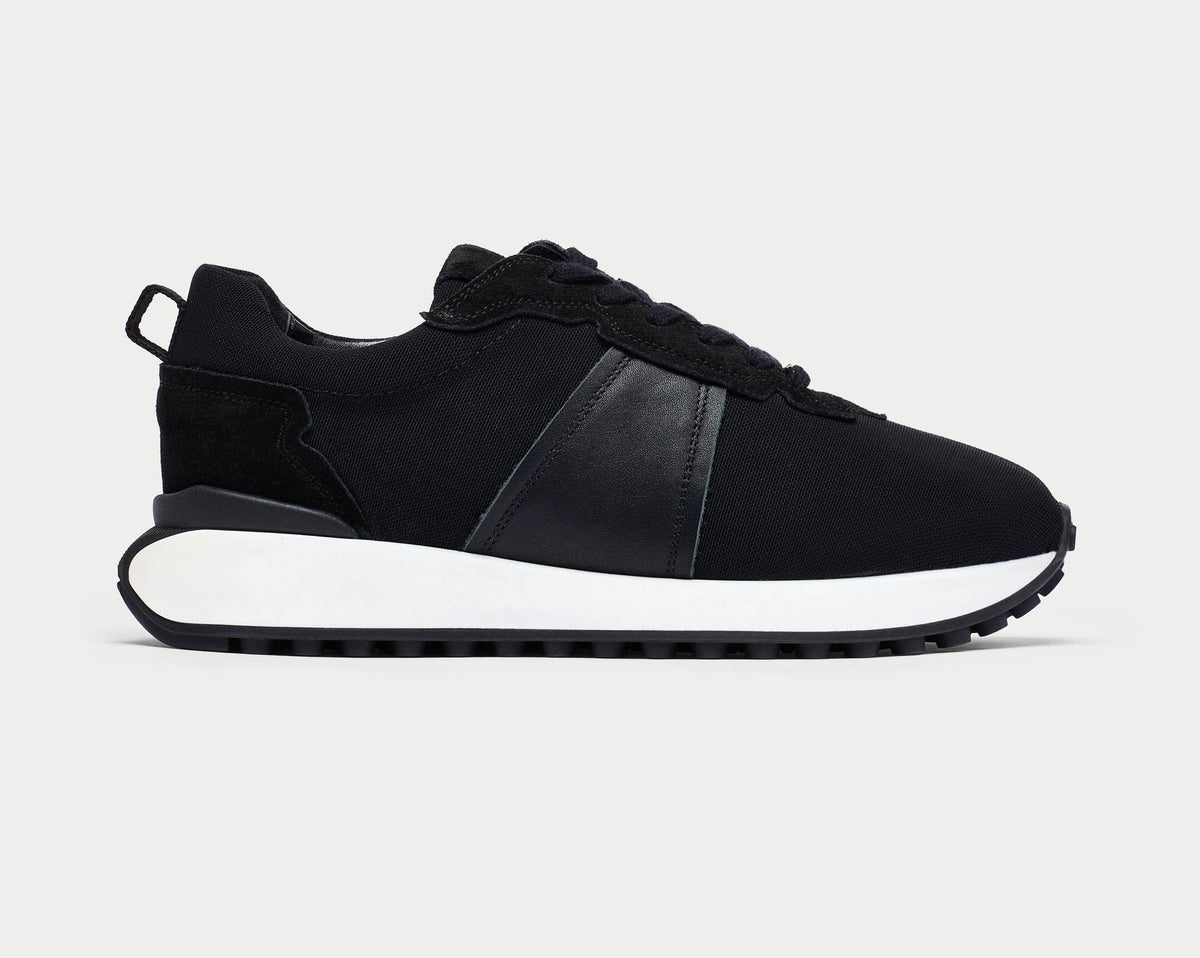
Can you wear trainers or casual shoes to a job interview?
No, you should not wear trainers or casual shoes to most job interviews. Casual trainers, flip-flops, and open-toe sandals look too informal, even in relatively relaxed workplaces.
If the workplace is genuinely casual or creative, a clean, minimal leather style might pass. But a smart flat or loafer is the safer choice and signals that you've made the effort. When in doubt, dress the shoes up rather than down.




Leave a comment
This site is protected by hCaptcha and the hCaptcha Privacy Policy and Terms of Service apply.