Your bent toe catches the top of the shoe. A corn forms on the knuckle where it rubs, your forefoot aches under pressure, and nothing you've tried so far quite fits.
You're not alone. Most shoes, even ones labelled wide-fit, don't give you enough room upward, and sizing up just adds length your foot doesn't need.
At Calla, we understand this firsthand. Our founder, Jenni Bailey, has bunions herself, and the struggle to find stylish yet comfortable shoes for her feet is what drove her to start the brand. Every pair is designed by a bunion sufferer, with the help of expert podiatrists, to accommodate conditions like hammer toes without looking 'orthopaedic'.
What works is a toe box that is deep as well as wide, a soft upper with no seams over the raised joint, a secure heel and a low, cushioned sole that stops the foot sliding forward.
Together, those features reduce rubbing and take pressure off the bent toe. They won't straighten or reverse it, because only surgery does that, but the right fit makes a genuine difference to how your feet feel.
Whether your hammer toe is still flexible or has become rigid and fixed in position, the right shoe helps. A rigid toe that's painful is worth showing to a podiatrist, but either way, room, softness and a seam-free interior are where to start. The same principles cover claw toes and mallet toes too, wherever the bend falls.
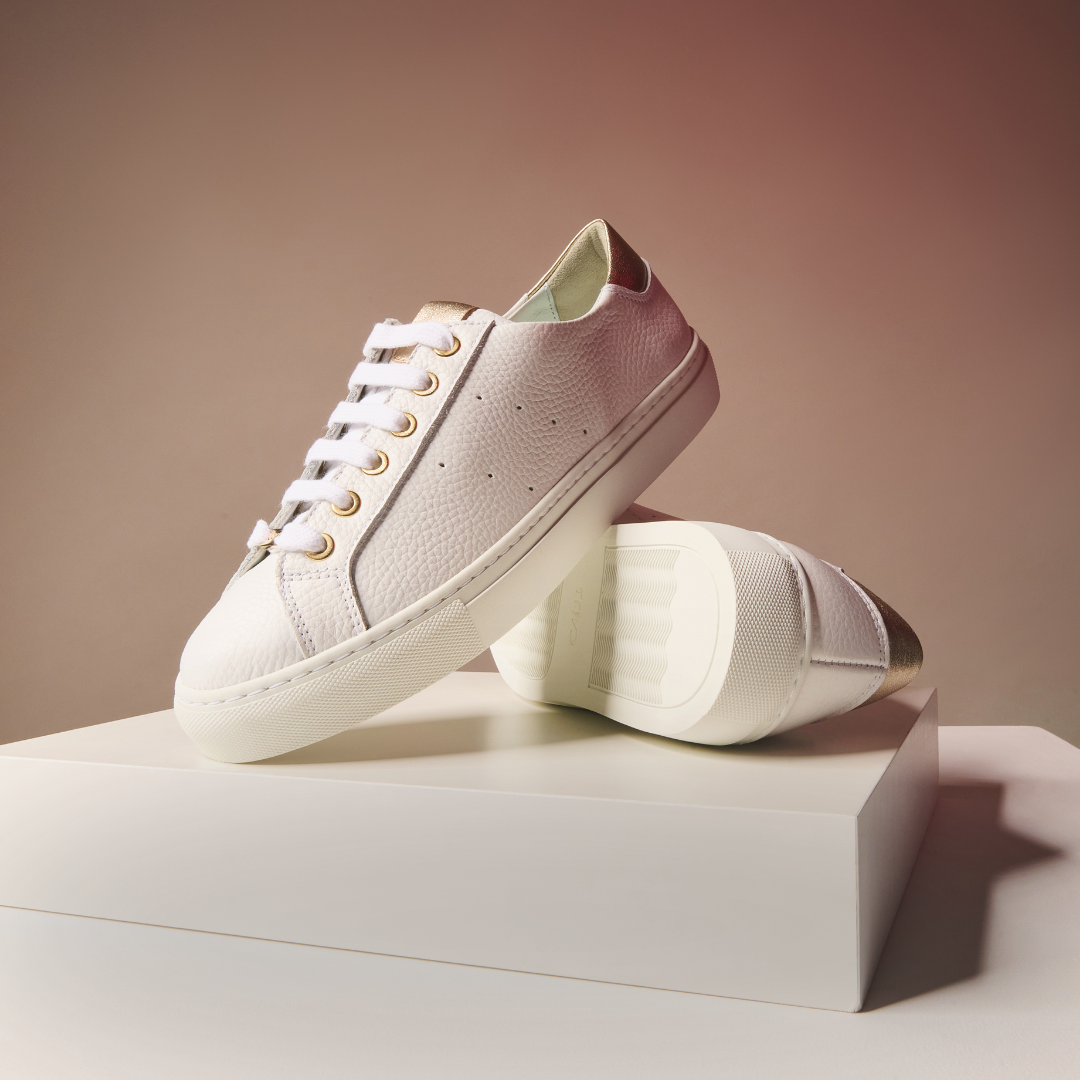
The Star trainer in smooth white leather with grey crackle accents, a cooler-toned white that leans smart and sits as well with tailoring as denim. The wider toe box gives the bunion room and the footbed lifts out for your own orthotics. Fits EE-EEE, true to size.
Origin
Handcrafted in Portugal at a family-run factory in the Porto region, designed in the UK with foot technologists
Material
Smooth white leather upper with grey crackle accents, lamb leather lining
Heel
Flat
Width cap
Fits up to EEE width
Toe box
Wider toe box, fully lined with no seams
Closure
Lace-ups so you can adjust forefoot width
Footbed
Removable moulded footbed so you can use your own orthotics, arch-supported cushioned insole
Designed for
Bunions, wide feet, hammer toes, hallux rigidus
Press
Featured by Hello, Good Housekeeping, The Independent and The London Evening Standard
Browse more images of the Star - White & Grey Leather Wide Fit Trainers:
Our Review
The white and grey Star is the one I wear when I want a trainer that looks considered with tailored trousers, since the grey crackle accents read cooler and smarter than a warm champagne. It is the same comfortable build, with a wider toe box that gives my bunion room and a footbed that lifts out for my orthotics. The grey accents also hide marks at the toe better than an all-white. I wear it with cropped trousers and a knit, or straight jeans and a blazer. True to size in a wide fit, EE-EEE.
Pros
Lace-ups let you adjust forefoot width on a daily basis
Removable footbed swaps out for prescribed orthotics
Fully lined toe box with no seams reduces friction over bunions and hammer toes
EEE width cap accommodates wider forefeet
Cons
White leather scuffs and marks more visibly than darker trainers
The Cosmos chunky trainer in a bright white mesh mix, the most breathable and sporty of the range for warm-weather walking. The wider, deeper toe box gives the bunion room while the mesh keeps the foot cool, and the insole lifts out for your orthotics. Fits EE-EEE, true to size.
Origin
Handcrafted in Portugal at a family-run factory in the Porto region
Material
Bright white leather and textile mix upper, lamb leather lining
Sole
Chunky lace-up outsole
Fit
Wide fit, EE and EEE width
Toe box
Standard at the heel with additional width and depth in the toe box
Footbed
Removable moulded footbed with arch support, so you can use your own orthotics
Browse more images of the Cosmos - Chunky-Sole White Mesh Wide Fit Trainers:
Our Review
The bright white mesh Cosmos is the one I save for summer, because the mesh keeps my feet cooler than leather on a hot walking day. It is the sportiest-looking of the Cosmos colours, so it leans more athletic with leggings or shorts than with tailoring. The wider, deeper toe box still gives my bunion room, and the insole lifts out for orthotics like the rest. The chunky sole cushions miles of pavement without my forefoot aching. It is true to size in a wide fit up to EEE, and I keep the white mesh away from mud.
Pros
Chunky outsole gives the trainer-trend silhouette without squeezing the bunion joint
EE and EEE width cap leaves room for swelling and Morton's neuroma
Removable moulded footbed swaps out for a custom orthotic
Extra depth in the toe box means hammer toes don't hit the upper
Cons
Bright white panels show dirt and scuffs sooner than darker colours
Textile sections need a fabric cleaner rather than a leather wipe
Chunky sole adds weight compared with a low-profile trainer
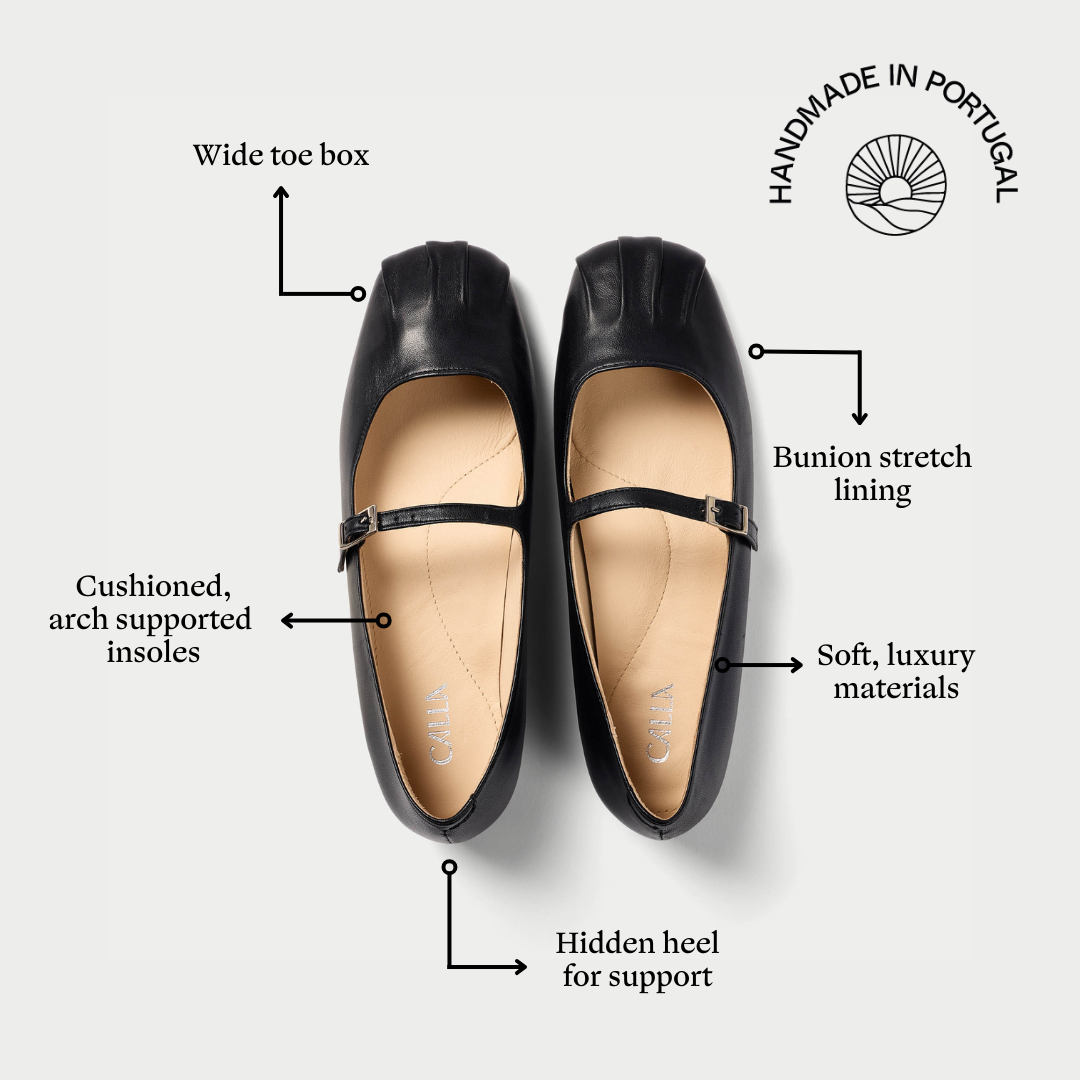
The Charlotte is Calla's crossover ballet flat, the one customers keep coming back to, here in soft black nappa leather. The leather crosses over the toes and stretches across the bunion, with a panel that gives both bunions and tailor's bunions room. Fits up to EEE, true to size.
Origin
Handcrafted in Portugal at a family-run factory in the Porto region
Material
Soft black nappa leather upper, lamb leather lining
Heel
Flat ballerina
Colour
Black
Fit
True to size, fits up to EEE width feet
Toe box
Stretch panel across the toe box for bunions and tailor's bunions, crossover design that stretches to the foot shape
Footbed
Enhanced arch support, extra cushioning at the heel
Browse more images of the Charlotte - Black Leather Ballerinas:
Our Review
Black Charlotte is the ballet flat I reach for most, because the crossover design stretches gently over my bunion instead of pressing a hard line across the joint. The soft nappa leather gives where my foot is widest, and the stretch panel handles both my bunion and the tailor's bunion on the little-toe side. Enhanced arch support and extra heel cushioning mean it carries a full day rather than leaving my feet flat and sore. It is the flat I'd recommend to anyone after a bunionectomy who needs softness and width over the scar area. Fits up to EEE, true to size.
Pros
Stretch panel across the toe box gives over both the bunion and the tailor's bunion sides
Nappa leather softens with wear
Extra heel cushioning eases the back of the foot
Fits up to EEE width
Cons
Flat ballerina sole has limited grip in wet weather
Crossover stretch design relies on the panel rather than laces so cannot be tightened
The Ruby sandal in champagne leather with a soft shimmer, dressy enough for a summer wedding but neutral enough to wear all day. The strap still covers the bunion and the moleskin 'hallux' panel cushions the joint, so an occasion on your feet stays comfortable. Fits EE-EEE, true to size.
Origin
Handcrafted in Porto, Portugal
Material
Champagne leather upper, lamb leather lining
Heel
Flat toe-post sandal
Fit
True to size
Width cap
EE to EEE
Bunion cover
Strap positioned to conceal the big toe joint, hidden moleskin hallux panel
Browse more images of the Ruby - Champagne Leather Sandals:
Our Review
I keep the champagne pair for summer occasions, because the soft shimmer reads as dressed-up at a wedding or a garden party without shouting the way a bright gold would. It is still the bunion-friendly Ruby underneath, so the strap covers my joint and the moleskin panel cushions it through hours of standing for photographs. The arch-supported footbed is what lets me stay in them from the ceremony to the evening rather than going barefoot by the speeches. It sits beautifully against blush, cream and pale florals. True to size on me at an EE-EEE.
Pros
Strap positioned to cover the big toe joint while keeping a toe-post silhouette
Hidden moleskin hallux panel against the joint
Arch-supported cushioned insole under the foot
EE-EEE width cap fits wider feet
Cons
Toe-post style takes a few wears to soften against the skin between the first and second toe
Flat profile gives no pitch under the heel
Light champagne leather shows scuffs at the toe edge with regular wear
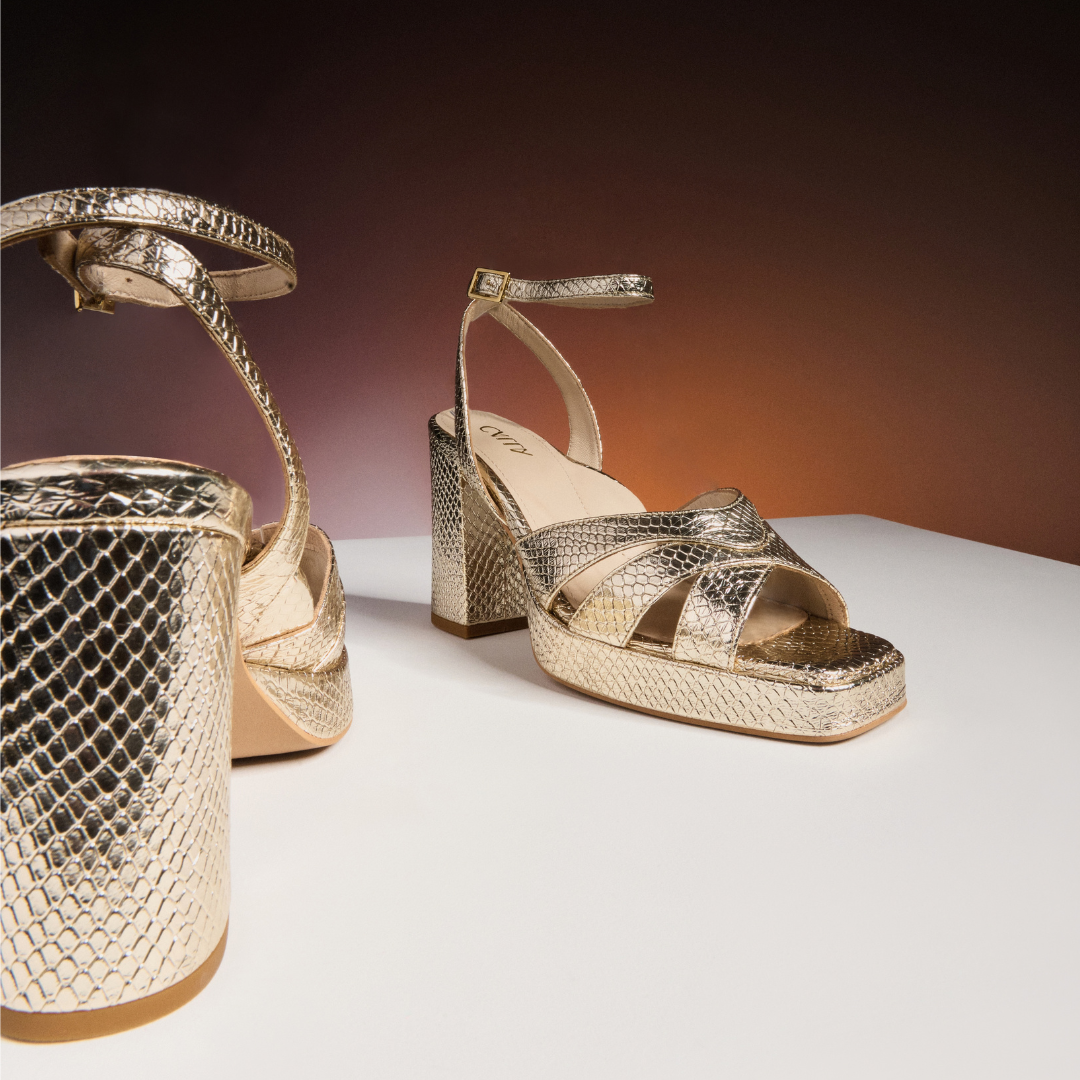
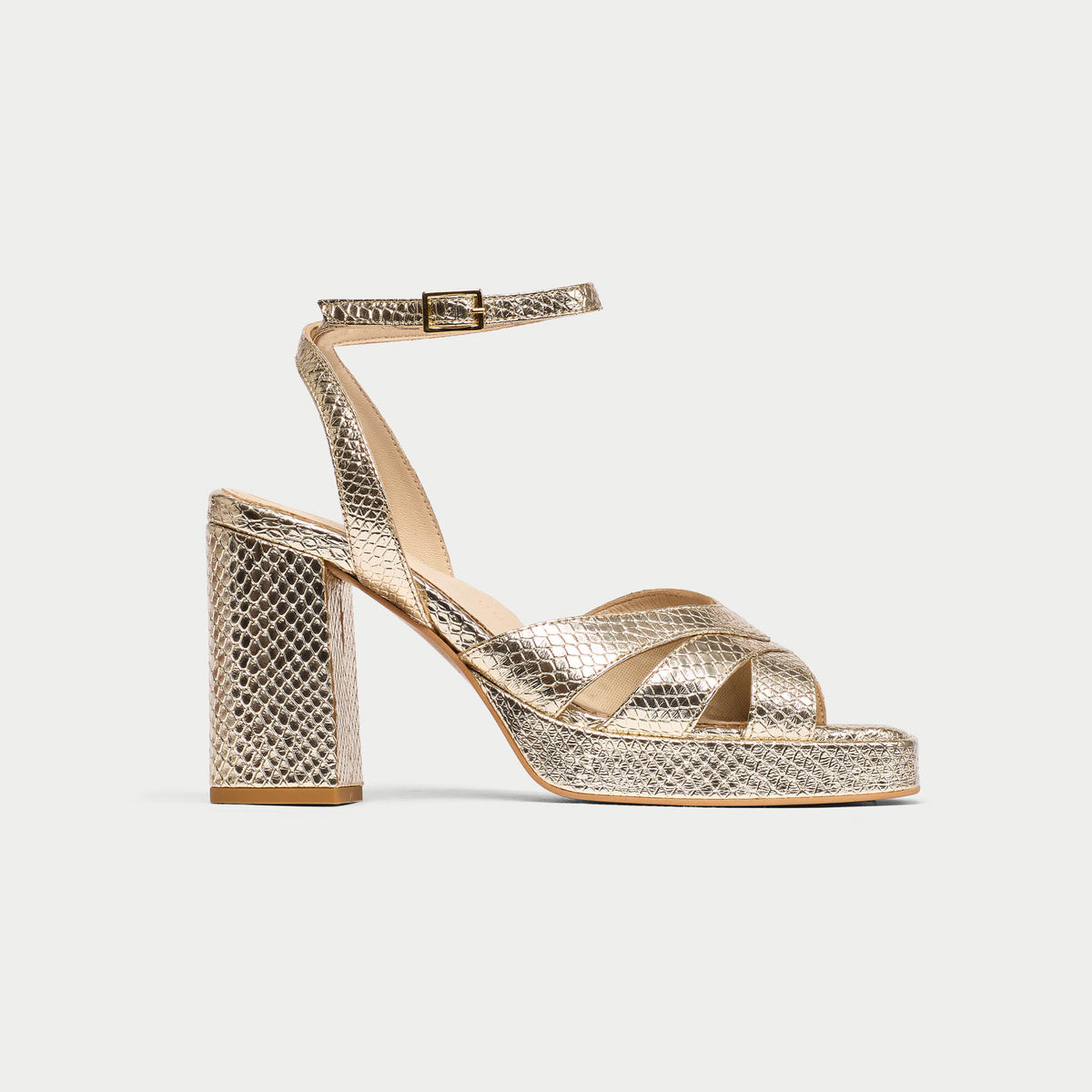
The Emily is Calla's 3.5 inch (9cm) heeled sandal on a half-inch platform, with straps positioned to conceal the bunion, here in soft black leather. The platform eases the pitch off the forefoot and the cushioned arch-supported insole carries you, so you can dance into the early hours. Fits up to EE, true to size.
Origin
Handcrafted in Portugal at a family-run factory in the Porto region
Material
Black leather upper, lamb leather lining
Heel
3.5 inch heel with a half inch platform
Fit
True to size, fits up to EE width, suits a wider toe area paired with a narrower midfoot and heel
Toe box
Wide toe box that conceals the bunion joint, standard at the heel
Strap layout
Positioned to sit clear of pressure points across the forefoot
Footbed
Cushioned, arch-supported insole
Best for
Parties and evening occasions paired with black tailoring
Browse more images of the Emily - Black Leather Heeled Sandals:
Our Review
Black Emily is the tall occasion sandal I wear when I want to actually dance, because the 3.5 inch heel is softened by the half-inch platform so my weight isn't driven onto my bunion. The straps are placed to conceal the joint rather than frame it, which matters to me in a bare sandal. The arch-supported insole means I forget I'm in heels by the end of the night. It fits a wider toe area even if the rest of your foot is narrow, which suits my feet. Fits up to EE, true to size.
Pros
Half inch platform softens the angle of the 3.5 inch heel
Black leather pairs across an evening wardrobe without colour-matching
Strap layout sits clear of the bunion joint
Cushioned arch-supported insole inside
Cons
3.5 inch heel sits at the upper end for full-evening standing
EE width cap so EEE feet will need a different style
Smooth leather sole needs grip pads on slick dance floors
The Saturn rides on a 3cm platform sole, and the cream-and-orange suede is its warm retro-sporty colourblock. The platform adds height with no heel pitch, while the wider seam-free toe box gives the bunion a smooth surface. Fits EE, true to size.
Origin
Handcrafted in Portugal at a family-run factory in the Porto region
Material
Cream and orange suede upper, lamb leather lining
Heel
Flat with a 3cm platform sole
Fit
True to size, fits up to EE width
Toe box
Wider toe box with seamless lining over the bunion area
Browse more images of the Saturn - Cream & Orange Suede Wide Fit Trainers:
Our Review
Cream and orange is the Saturn I wear when I want a bit of height from a trainer without a heel, because the 3cm platform lifts me evenly rather than pitching my weight forward onto the bunion. The two-tone suede has a retro, sporty look that lifts plain denim. The wider seam-free toe box means nothing rubs my bunion, and the laces let me fine-tune the forefoot. Worth knowing it fits an EE rather than going up to EEE, so it suits a moderately wide foot. True to size, and I brush the suede.
Pros
3cm platform sole adds height without a heel angle
Seamless toe-box lining means no stitching to rub the bunion joint
Lace-up lets you slacken the forefoot when feet swell
Cushioned arch-supported insole inside
Cons
Suede needs weatherproofing before wet-weather wear
Cream panels show scuffs and dirt more than darker colours
EE the width cap so EEE feet will need a different model
The Estella is Calla's zip-up trainer with no laces to tie, and black leather is the smart everyday one. A side zip means easy on and off without bending, while the removable moulded footbed and wider fit give the bunion room and take your orthotics. Fits up to EEE, true to size.
Origin
Handcrafted in Portugal, designed in the UK
Material
Black leather upper, lamb leather lining
Heel
Flat
Width cap
Fits up to EEE width feet
Toe box
Wide toe box
Closure
Side zip instead of laces
Footbed
Removable moulded footbed, swap in your own orthotics
Press
Voted one of the best stylish trainers for wide feet by Hello, Good Housekeeping, The Independent, The London Evening Standard
Browse more images of the Estella - Black Leather Zip-Up Wide Fit Trainers:
Our Review
The black Estella is the trainer I reach for when I don't want to bend down and tie laces, because the side zip means I step straight in and out. In black leather it looks tidy enough for a casual office or smart-casual day, not just the gym. The wider fit and moulded footbed give my bunion room, and the footbed lifts out for my orthotics. The zip also means a consistent fit every time rather than laces I retie. True to size, up to EEE.
Pros
Side zip means you slip the trainer on without retying laces
Removable moulded footbed for own orthotics
EEE width fitting accommodates wider feet than most trainer brands
Black leather hides scuffs and city-pavement marks better than white
Cons
Zip is a moving part that adds a wear point lace-ups do not have
No laces means no further width adjustment beyond the fixed zip line
All-black trainer reads more formal than casual so it suits office and smart-casual wear more than sport
The Aurora is Calla's lightweight, low-profile suede trainer, and baby pink is the soft pastel pop in the range. A slim soft-suede shape with a wider toe box gives the bunion room without bulk, and the insole lifts out for your own. Runs short, so size up one; fits up to EE.
Origin
Handcrafted in Portugal at a family-run factory in the Porto region
Material
Baby pink suede upper, lamb leather lining
Heel
Flat, low-profile sole
Fit
Up to EEE width fitting
Toe box
Wide toe box, standard at the heel
Insole
Removable, so you can swap in your own orthotics
Detail
Calla logo embroidered on the side panel
Best for
Bunions and wide feet, paired with relaxed denim, tailored trousers or casual dresses
Browse more images of the Aurora - Baby Pink Suede Wide Fit Trainers:
Our Review
Baby pink is the Aurora I wear when I want a soft hit of colour that still reads gentle, because the pale pink lifts denim or grey without shouting. It is the lightest Calla trainer I own, low to the ground and soft, so it feels less like a shoe and more like a slipper on a long day. The wider toe box gives my bunion room despite the slim shape, and the insole lifts out for my orthotics. The one thing to know is that it runs short, so I sized up by one. Up to EE, and I brush the suede to keep it fresh.
Pros
EE width cap accommodates wider feet than the Saturn line
Removable insole leaves room for your own orthotic
Low-profile sole sits flat with both denim and dresses
Lamb leather lining over the bunion area flexes with the joint
Cons
Baby pink suede marks easily and needs a protector spray before first wear
Suede is harder to clean than smooth leather
Currently on preorder so dispatch may not be immediate
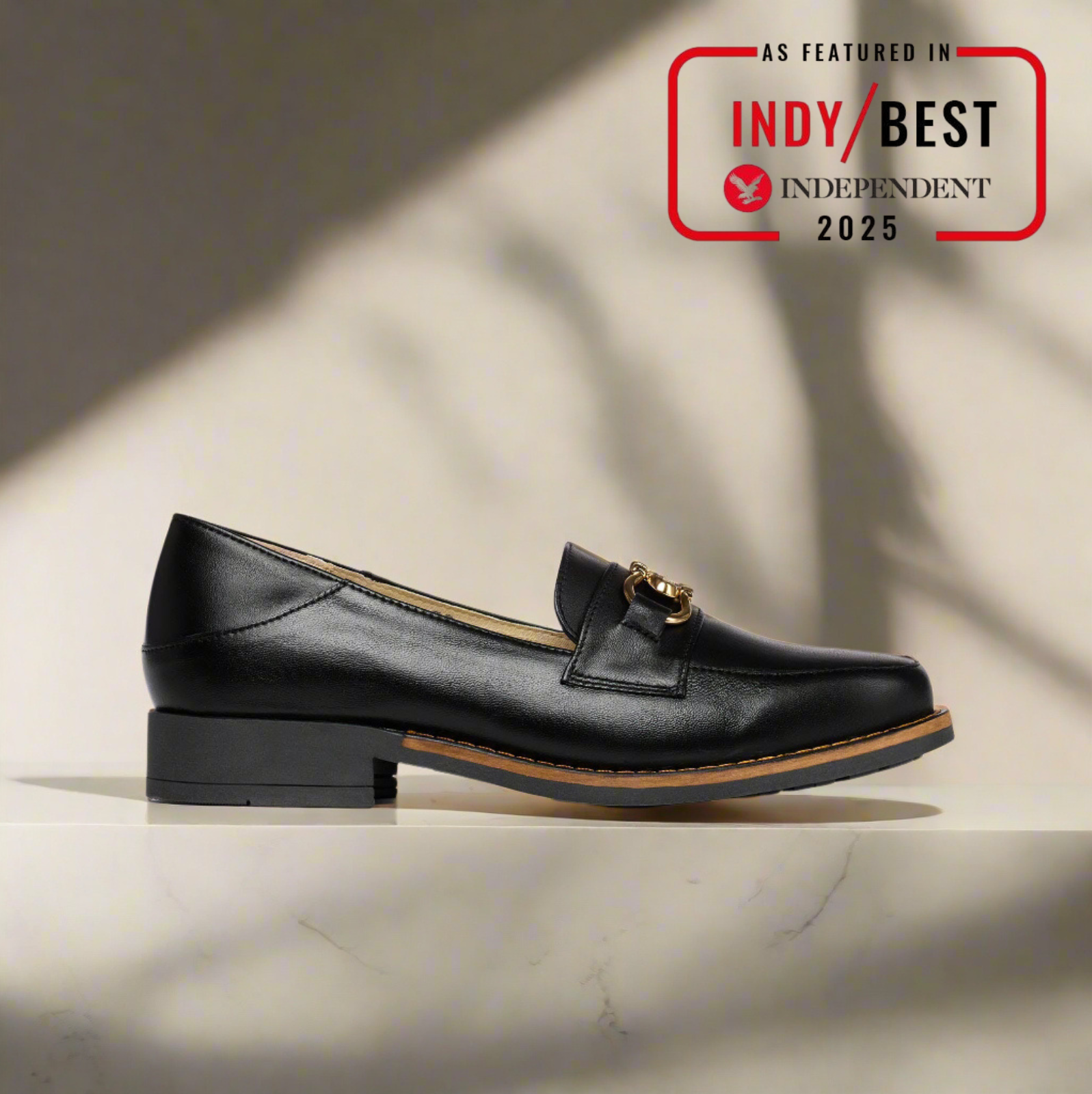
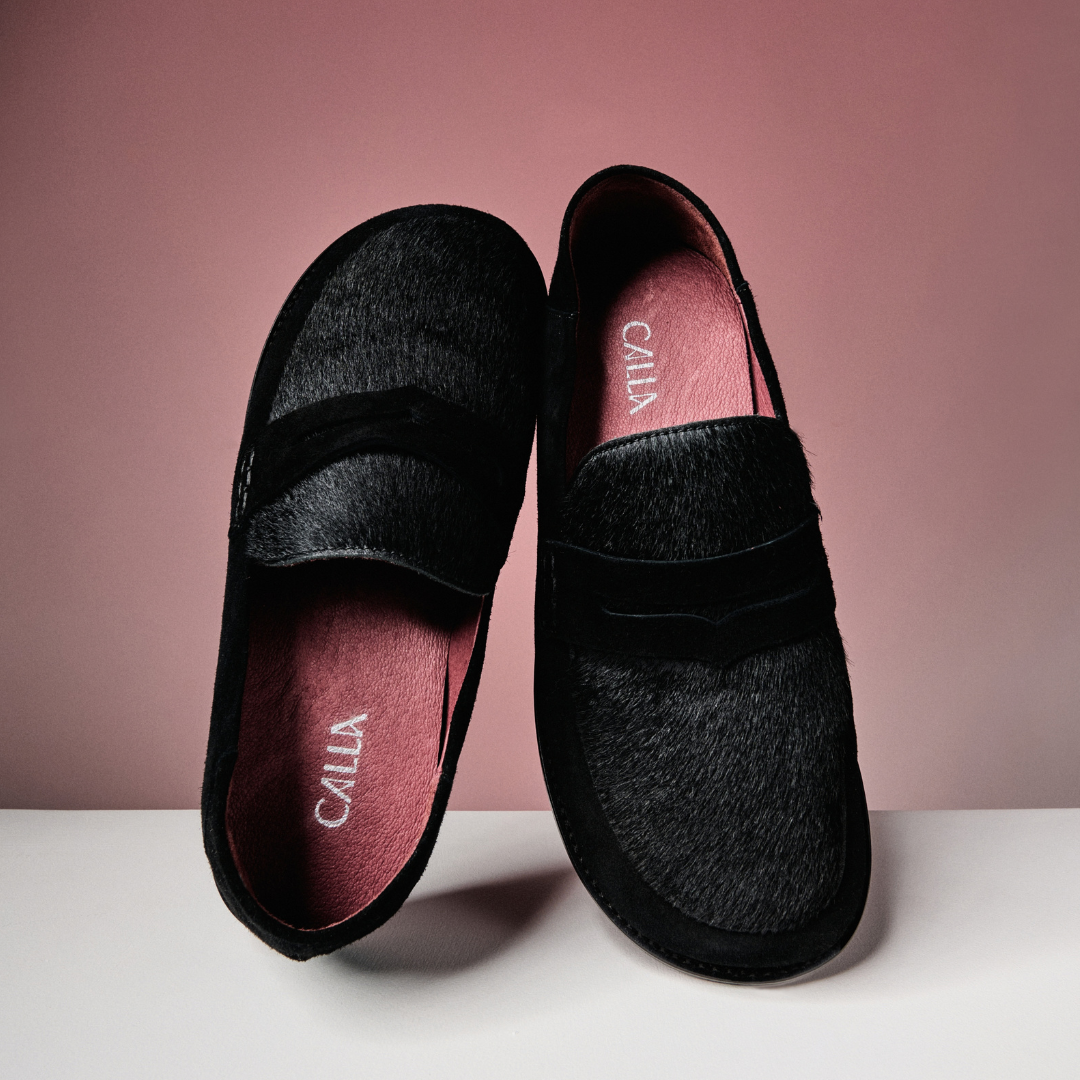
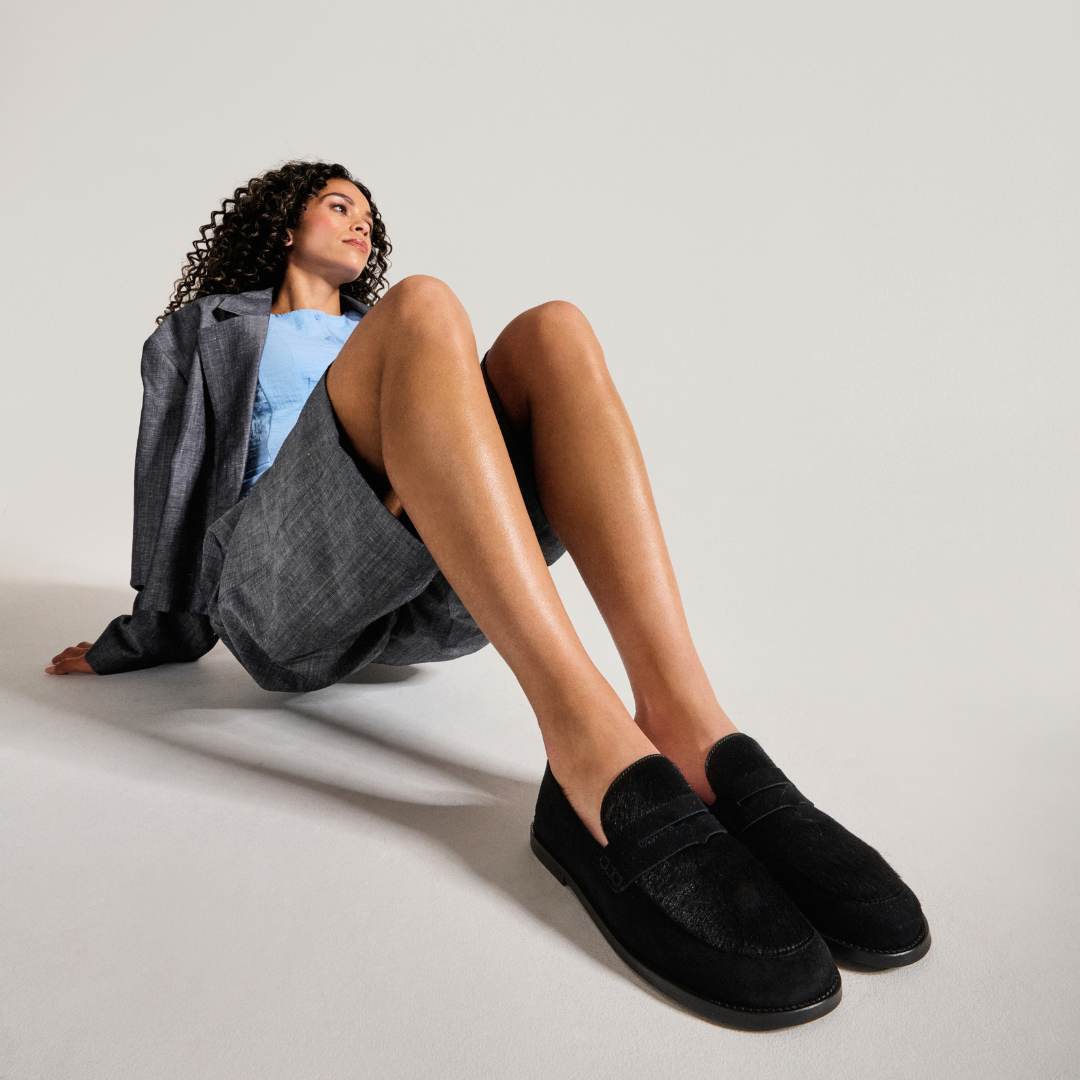
The Meredith is Calla's chunky loafer on a 2.5cm heel, and black leather is the do-everything one. The slight heel and cushioned sole carry a day from the office to dinner, while the wide-enough toe box gives the bunion room a slim loafer wouldn't. Fits up to EE, true to size.
Origin
Handcrafted in Portugal, designed in the UK
Material
Black chunky leather upper, lamb leather lining
Heel
2.5cm
Width cap
Fits up to EE width feet
Toe box
Wide toe box with hidden stretch panel over the bunion area
Browse more images of the Meredith - Black Leather Loafers:
Our Review
The black Meredith is the chunky loafer I wear when a flat feels too slight for tailoring, since the 2.5cm heel and the heavier sole give it some presence under trousers. It takes me from the office to dinner without changing, and the cushioned sole means my feet aren't aching by the evening. The toe box is cut wide enough that my bunion has room rather than being pressed by a narrow loafer. I wear it with trousers or straight jeans. Fits up to EE, true to size.
Pros
2.5cm heel adds height without losing the loafer's flat-shoe ease
Hidden stretch panel flexes over the bunion joint
Cushioned sole takes the impact out of pavement walking
Fits up to EE width feet
Cons
Width fitting caps at EE so EEE feet will be tight
Chunky silhouette sits heavier on the foot than a slim loafer
Slip-on construction means no width adjustment if your foot swells through the day
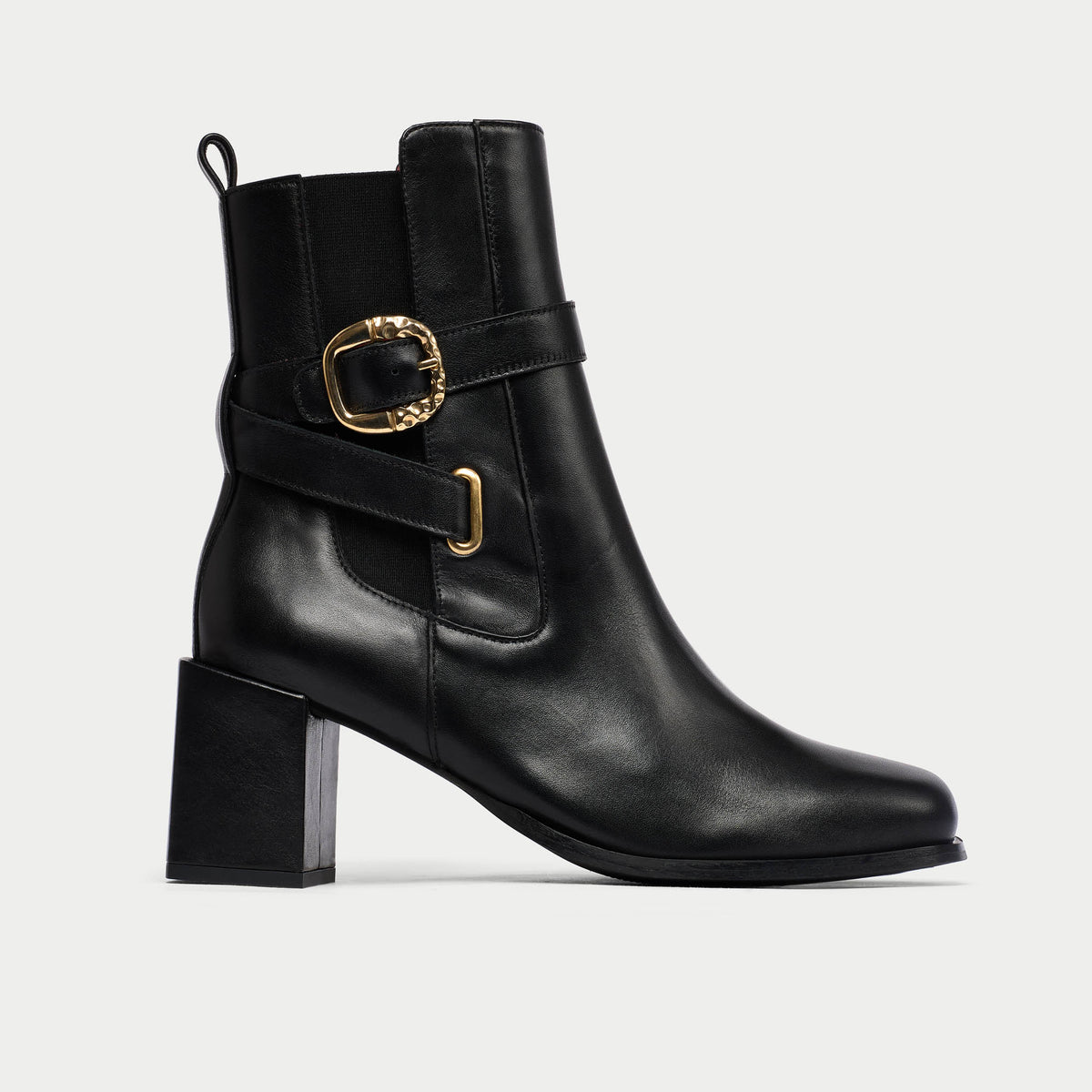
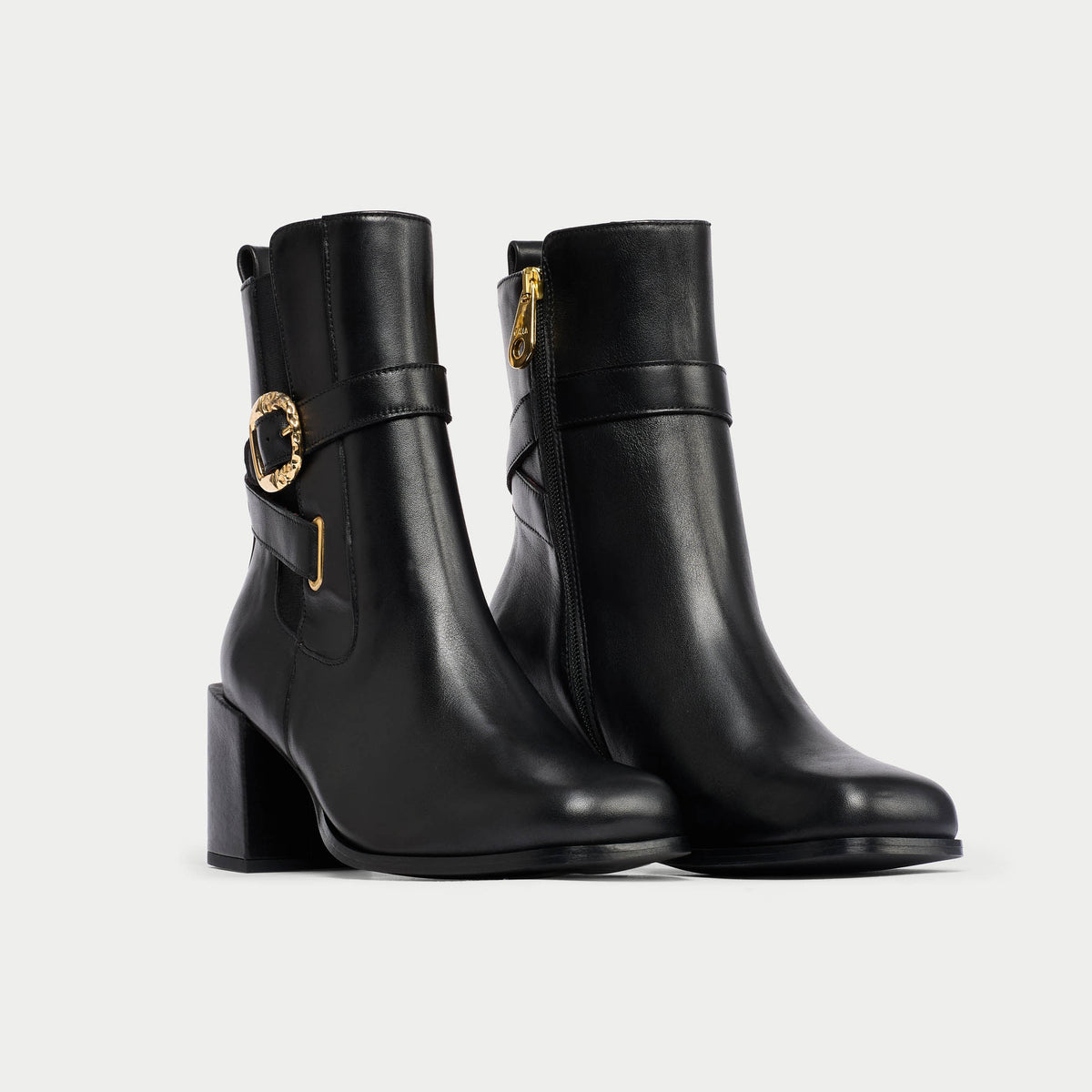
The Alice is Calla's low-heel flat boot on a 4cm heel, in soft calf leather with an easy back zip. An extra wide toe box gives the bunion room while the arch-supported cushioned insole carries an all-day boot. Fits EE-EEE, true to size.
Origin
Handcrafted in Portugal at a family-run factory in the Porto region
Material
Calf's leather upper, lamb leather lining
Heel
4cm block heel
Entry
Back zip
Fit
Fits EE-EEE width feet
Toe box
Wide toe box with hidden stretch panel over the bunion area
Browse more images of the Alice - Black Leather Boots:
Our Review
Black Alice is the everyday flat boot I reach for, since the 4cm heel and soft calf leather are easy with jeans, trousers or a skirt. The back zip makes it simple to get on, and the extra wide toe box gives my bunion room rather than pressing it. The arch-supported cushioned insole means I can wear it all day. It is the go-to boot I pull on without thinking. Fits EE-EEE, true to size.
Pros
4cm block heel gives lift without strain through the forefoot
Back zip eases entry over a wider foot
EEE width cap accommodates the bunion joint
Calf's leather upper softens to the shape of the foot over wear
Cons
Leather uppers benefit from regular conditioning and weatherproofing through wet UK winters
Back zip is the only adjustment so calf width is fixed
4cm heel is not flat so will not suit anyone needing a fully flat boot
What to look for in shoes for hammer toes
A wide and deep toe box, a soft seam-free upper, and a secure heel with a low cushioned sole: these three features work as a set to take the pressure off a hammer toe, and the opposite is what to avoid:
Pointed toes
Shallow toe boxes
Stiff or patent uppers that won't stretch over the joint
High heels that force your weight onto the ball of the foot
A wide and deep toe box
Width lets your toes spread and lie flat. Depth lets your bent knuckle clear the top of the shoe. Most shoes marketed as wide-fit give you one without the other, and that's the gap: a shoe can be wide enough across the forefoot and still press down on a raised toe if the toe box is shallow.
Look for a shoe with extra width and depth in the toe area and a standard fit around the heel, so the shoe stays on your foot securely. A shoe that's roomy across the toes and snug at the heel gives you room where a hammer toe needs it without feeling loose everywhere else.
We call this the Calla Comfort Method. Each shoe is shaped with a standard fit around the heel and additional width and depth in the toe box, up to an EEE fitting across the forefoot, so the shoe accommodates raised joints without losing its hold.
A soft, stretchy, seamless upper
A soft upper that stretches with the toes means the shoe moves with your foot instead of pressing into the raised joint. Leather, suede and stretch-panel materials all do this well. Stiff leather, patent and rigid synthetics do not: they hold their shape and the knuckle takes the force.
Seam placement matters as much as the material itself. A seam sitting directly over the bent joint creates a hard ridge exactly where the toe presses hardest, which negates the benefit of the width. Look for shoes with soft stretch linings and a seam-free interior to avoid this entirely.
Calla shoes are lined with soft lamb leather and feature a hidden moleskin stretch panel positioned directly over the joint, so the material flexes gently where a hammer toe presses hardest. The uppers are soft leather or suede that stretches and gives over time where you need it most, adapting to lumps and bumps rather than pressing into them.
A secure heel and low, cushioned sole
A shoe for hammer toes needs to grip the heel firmly, not be loose all over. If the heel slips, your foot slides forward with every step and your toes jam into the front of the shoe. A standard-width heel with an adjustable fastening holds your foot back and keeps your toes where the room is.
For everyday wear, a low heel, flat or under about an inch, keeps weight off the ball of the foot and the toes. A thicker heel is better than a thin one for stability. And a cushioned, arch-supported insole (what shoemakers call a footbed: the shaped layer your foot sits on) absorbs some of the impact that otherwise travels through your forefoot.
If you wear orthotics (shoe inserts shaped to support the foot, whether custom-made by a podiatrist or bought off the shelf), look for a shoe with a removable footbed, which gives you the depth to drop your own insert in without cramping the toe box.
Our shoes come with a removable moulded footbed on a 3cm sole, deep enough to take whatever your podiatrist has prescribed.
Best shoes for hammer toes by occasion
A hammer-toe-friendly option exists for every occasion. The deep toe box and secure heel stay the same; what changes is how each type of shoe provides them.
Everyday and walking shoes
For days when you're on your feet for hours, a soft, roomy trainer with a removable footbed is the strongest choice, and it combines:
A fully cushioned and lined toe box with no seams
Adjustable laces so you can fine-tune the forefoot width
An arch-supported insole you can swap out for your own orthotics
A cushioned sole absorbs the impact as you walk, and a secure heel counter keeps your foot from sliding forward.
In our trainers, the external stitching is moved forward off the joint so nothing lies over a raised toe. A side zip lets you set the lace tension for your foot width once and use the zip to get in and out day to day.
When the weather turns, an ankle boot with a stretch panel in the toe area and a low, stable heel gives you the same depth and coverage with more warmth. Choose soft leather that flexes over the joint, rather than pressing into it.
Smart shoes for work and occasions
A low block heel or a kitten heel with a deep, soft toe box works for the office and for events where trainers won't do. A wider-fitting court shoe or loafer in soft leather gives the toes room without looking bulky, and a thicker heel is more stable than a stiletto and puts less pressure on the forefoot.
Pointed toes and high heels are the two things to avoid. A pointed toe squeezes the toes together and presses the bent joint sideways. A high heel pushes weight forward onto the ball of the foot, exactly where a hammer toe least needs it. If you do need a little height, a shoe with a low platform under the ball reduces the pitch (the angle between heel and toe) and takes some of that pressure off.
We build our occasion heels up to 3.5 inches (9cm) with a half-inch platform to do exactly that. The finished shoe conceals a hammer toe or bunion rather than advertising it, so you feel dressed up, not 'orthopaedic'.
Sandals for warm weather
A sandal can't match the deep, enclosed toe box of a closed shoe, so the fit comes from adjustability and strap placement instead. An open-toed sandal with adjustable straps that leave the toes free avoids pressing down on the raised knuckle entirely. Straps that fasten around the ankle hold your foot back and stop it sliding forward, which matters more in a sandal than in a closed shoe because there's no heel counter to do the job.
A cushioned, arch-supported footbed still applies. As feet swell in warm weather, adjustable buckles or hook-and-loop fastenings let you loosen the fit without losing support.
Our sandals use deep, wide straps positioned so the joint lies behind the strap rather than under it. The Ruby, our toe-post sandal, goes further with a hidden moleskin hallux panel, a soft layer that cushions the big toe joint directly.
Slippers and shoes for around the house
A supportive slipper with a roomy toe box and arch support is a better option for hammer toes than going barefoot on hard floors. A rigid or painful toe can be aggravated by bare feet on tile or hardwood, and a thin pair of socks offers no cushioning. A slipper with a soft lining and a cushioned footbed gives your feet protection indoors without the pressure of a closed shoe.
Measure both feet for width and depth, not just length, and fit to the larger foot. Feet are rarely symmetrical, and the foot with the more pronounced hammer toe is the one the shoe has to accommodate. Measuring properly before you buy saves the cycle of ordering, returning and guessing.
A bigger size is not the fix. When you size up in length to get width, you end up with shoes that are too long. Your foot slides forward, your toes jam into the front of the shoe, and you're back where you started. What you need is a shoe with extra width and depth in the toe box at your true size, not a longer shoe that happens to be roomier.
Our range is built for feet that are wider across the toes than at the heel. If you have wide feet all over, they probably won't be the right fit, and we would rather say so upfront. You can browse the wide-fitting range here to see what suits your shape.
Getting the fit wrong is extremely common. A 2018 review in the Journal of Foot and Ankle Research found that between 63 and 72 per cent of participants were wearing shoes that did not accommodate either the width or length of their feet, with 50 per cent of women in shoes too narrow compared with 34 per cent of men. Measure standing up when you can, because your body weight spreads the foot slightly wider than when you sit.
Try shoes on later in the day when your feet are at their largest. When you stand, check that there's a thumb's width between the end of your longest toe and the front of the shoe, and that you can feel clearance above the raised knuckle. If the top of the shoe presses down on the bent joint when you stand, the toe box is too shallow, no matter what the width says on the label.
Beyond shoes: pads, toe protectors and orthotics
Toe caps, gel crests and non-medicated pads all ease pressure and rubbing on a hammer toe, but none of them straighten it.
Silicone toe caps sit over the raised knuckle and cushion it against the inside of the shoe.
Gel toe crests slip under the toe to gently support the bent joint.
Non-medicated corn pads stick inside the shoe over the spot where the corn forms.
They protect and cushion your toe; they won't straighten it.
Orthotics can redistribute pressure across the forefoot and take some of the load off the bent joint. But they need room: a removable insole and a shoe with enough depth to take the insert without cramping the toes. If you wear or plan to wear orthotics, choose a shoe with a deep, removable footbed so there's space for the insert.
As Ron McCulloch, the principal podiatric surgeon (a surgeon specialising in foot conditions) at the London Podiatry Centre, puts it: specialised insoles or orthoses (corrective foot supports) 'can help with bunion pain but there is no particular evidence that this approach can stop or slow down the deformity.' They help how your feet feel, but they do not change the toe's position.
If your hammer toe is rigid, painful, or getting worse, the right next step is to see a podiatrist. Shoes, pads and exercises can manage a flexible toe, but a rigid one that doesn't bend back may need professional assessment.
FAQs
What do podiatrists recommend for hammer toes?
For hammer toes, podiatrists typically recommend conservative measures first:
Roomy shoes with a deep toe box
Orthotics to redistribute pressure
Protective pads or toe caps
Toe stretches to keep a flexible toe mobile
Avoiding high heels
Surgery is usually reserved for a rigid, painful hammer toe that doesn't respond to these steps. Please remember that this advice is general, and if you are experiencing foot pain you need to see your podiatrist.
Podiatric surgeon Ron McCulloch of the London Podiatry Centre recommends above all 'to wear good shoes with a round toe and a relatively low heel.' Every Calla shoe is built to exactly that advice.
Can the same shoes work for bunions and hammer toes?
Yes, the same shoes can work for both bunions and hammer toes. A roomy, deep, soft toe box with a seam-free interior suits both conditions, which is why bunions and hammer toes are so often addressed together. The same width and depth that accommodates a bunion also gives a hammer toe the clearance it needs. If you have both, you don't need separate shoes. You can read more about finding the right shoes when you have bunions on our blog.
How can I straighten my hammer toes naturally?
You can't straighten a hammer toe naturally. You will read, more or less everywhere, that toe exercises and stretches straighten the toe. In fact, they help a flexible toe stay mobile and may ease pressure, but they don't reverse the bend. Roomier shoes and protective pads reduce rubbing, which makes a real difference to comfort, but they don't change the toe's position.
A rigid hammer toe that no longer bends back on its own won't straighten without surgery. As Ron McCulloch of the London Podiatry Centre puts it, 'once a bunion has formed it is usually not possible to reverse the condition without surgery,' and the same applies to a rigid hammer toe. If your toe is fixed in position and painful, see your podiatrist.
Does walking barefoot help hammer toes?
Whether walking barefoot helps hammer toes depends on the surface you walk on. Walking barefoot on soft surfaces can help strengthen the small muscles in the foot, which supports a flexible hammer toe. But on hard floors, particularly with a rigid or painful toe, going barefoot can irritate the joint and make things worse. Indoors, a supportive slipper with a cushioned footbed is a better option than bare feet on tile or hardwood.




Leave a comment
This site is protected by hCaptcha and the hCaptcha Privacy Policy and Terms of Service apply.