Best Fashionable Shoes for Plantar Fasciitis Sufferers
It can be very challenging to find shoes when you suffer with plantar fasciitis, a condition that causes pain near the heel, particularly if you still want to look chic and not like you're wearing prescription shoes.
While we do recommend that a podiatrist or physical therapist assesses your feet and movement patterns before you buy, these are our favourite shoes from the Calla range, with all the features you need to make walking with plantar fasciitis more bearable:
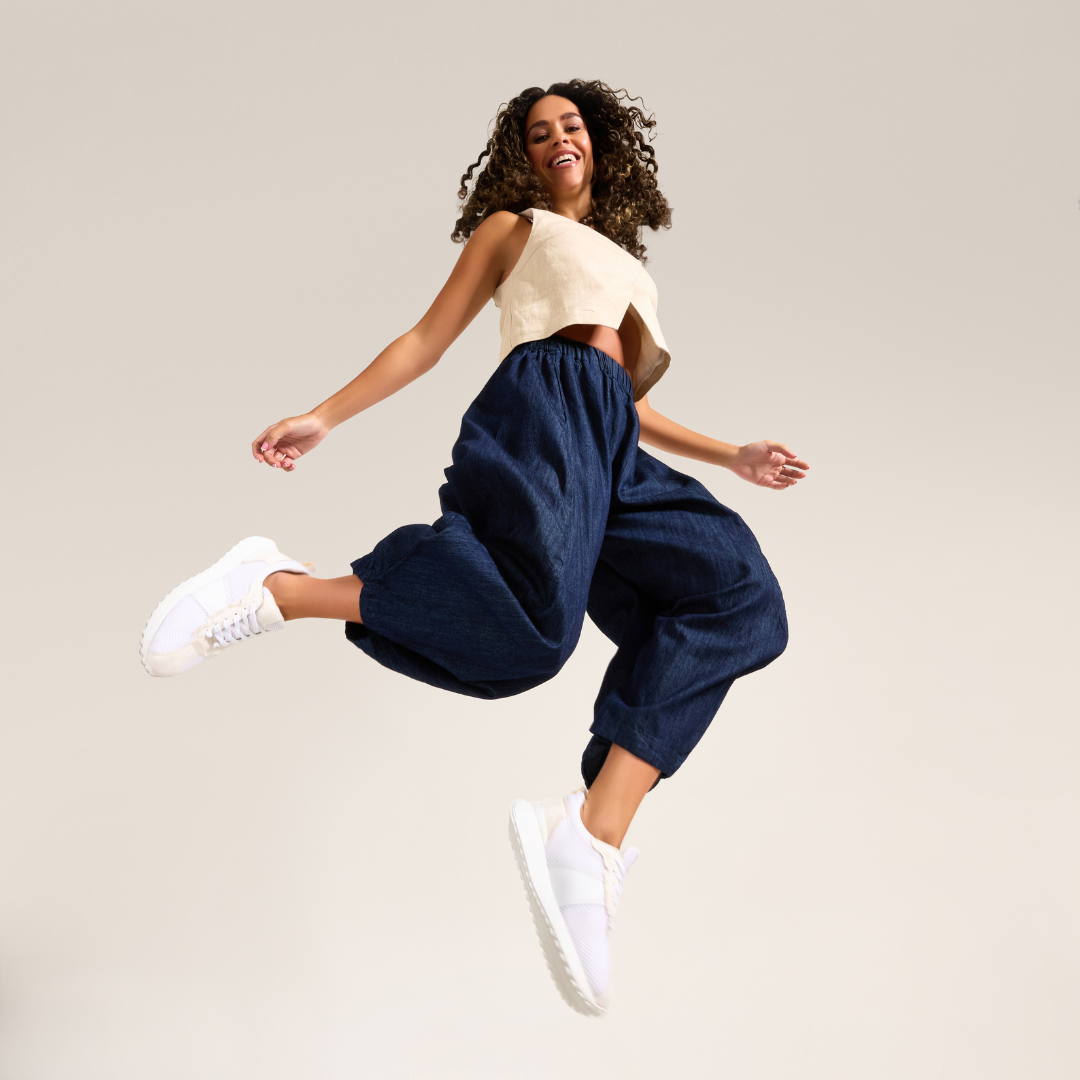
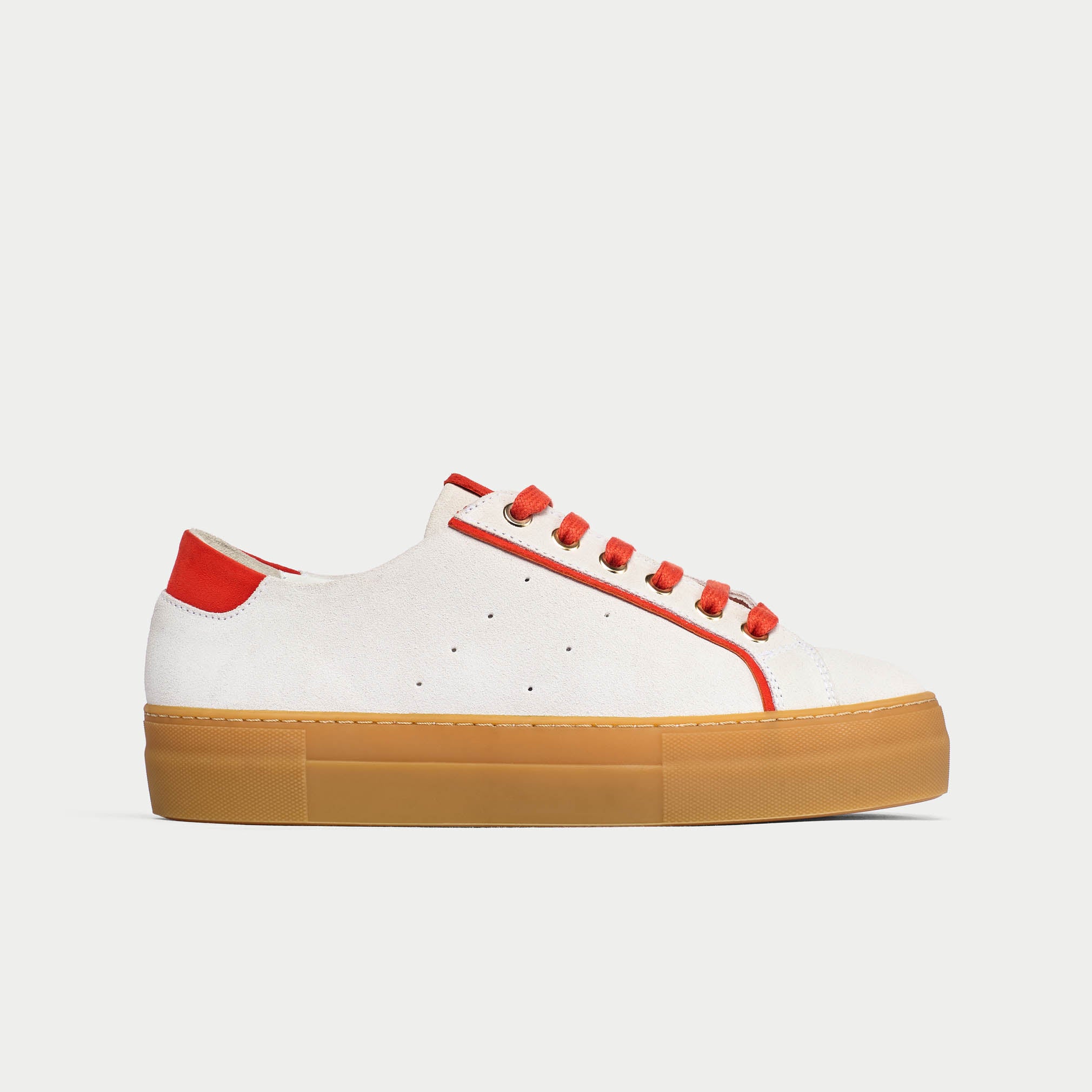
A clean white grain-leather trainer with a removable moulded footbed, so you can drop in your own orthotics, and a fully lined seam-free toe box that gives the bunion a smooth surface. Lace-ups let you open the forefoot towards an EEE width, and the cushioned arch-supported insole carries a full day of walking. True to size.
Origin
Handcrafted in Portugal at a family-run factory in the Porto region
Material
White grain leather upper, lamb leather lining
Heel
Flat
Colour
White
Fit
Fits EE-EEE width feet
Toe box
Wider toe box with extra depth, fully lined with no internal seams
Footbed
Removable moulded footbed with arch support
Closure
Lace-up for forefoot width adjustment
Press
Selected by Hello, Good Housekeeping, The Independent and The London Evening Standard among stylish trainers for wide feet
Browse more images of the Star - White Grain Leather Wide Fit Sneakers:
Our Review
The Star is the trainer I recommend to anyone who wears orthotics, because the moulded footbed lifts straight out and my own insole drops in, which almost no white fashion trainer lets me do. The toe box is fully lined with no internal seams, so nothing rubs across my bunion on a long walk, and I can loosen the laces to open the forefoot when the joint swells later in the day. It runs wide to an EEE but reads as an ordinary white sneaker, so it goes with jeans and a blazer or a shirt dress without looking like a comfort shoe. I have walked through whole city days in them without the forefoot ache I used to expect. True to size for me.
Pros
Grain texture on the leather hides minor scuffs better than smooth white leather
Removable moulded footbed lets you slot in your own orthotic
Seam-free toe box lining over the bunion area
Lace-up forefoot adjusts from EE to EEE
Cons
White leather still marks in wet or muddy conditions
The Estella zip-up trainer in clean white leather, the easy white you step into without tying a lace. The side zip gives quick on and off, while the wider fit and removable moulded footbed give the bunion room and take your orthotics. Fits up to EEE, true to size.
Origin
Handcrafted in Portugal, designed in the UK
Material
White leather upper, lamb leather lining
Heel
Flat
Width cap
Fits up to EEE width feet
Toe box
Wide toe box
Closure
Side zip instead of laces
Footbed
Removable moulded footbed, swap in your own orthotics
Press
Voted one of the best stylish trainers for wide feet by Hello, Good Housekeeping, The Independent, The London Evening Standard
Browse more images of the Estella - White Leather Zip-Up Wide Fit Sneakers:
Our Review
White is the Estella I wear when I want a clean trainer with none of the lace-tying, since the side zip lets me step in and go. It keeps a tidy, polished look in white leather, so it works with jeans or cropped trousers. The wider fit gives my bunion room and the moulded footbed lifts out for orthotics. The zip gives the same secure fit each time without fiddling. True to size, up to EEE.
Pros
Side zip means you slip the trainer on without retying laces
Removable moulded footbed for own orthotics
EEE width fitting accommodates wider feet than most trainer brands
White leather pairs with most outfits in a way coloured trainers do not
Cons
White leather marks and scuffs faster than darker colours
Zip is a moving part that adds a wear point lace-ups do not have
No laces means no further width adjustment beyond the fixed zip line
The Meredith chunky loafer in neutral leather with a gold horsebit detail, the day-to-night one. A 2.5cm heel and cushioned sole carry the day, while the wide-enough toe box gives the bunion room. Fits up to EE, true to size.
Browse more images of the Meredith - Neutral Leather Loafers:
Our Review
Neutral leather is the Meredith I wear when I want a loafer that goes from day to evening, since the soft neutral and the gold horsebit give it just enough polish for dinner. The 2.5cm heel and cushioned sole keep me comfortable from morning on, and the toe box is wide enough that my bunion has room. The horsebit lifts plain trousers without trying too hard. It wipes clean more easily than the suedes. Fits up to EE, true to size.
Pros
2.5cm heel sits low enough for full-day wear
Gold horsebit detail across the vamp
Cushioned arch-supported insole
Lamb leather lining flexes over the bunion area
Cons
Width cap stops at EE
Neutral leather will show scuffs and needs a conditioning cream to keep the colour even
Horsebit detail rules out the most formal black-tie settings
The Freya is Calla's tassel loafer, and black suede is the soft, velvety everyday one. A hidden stretch panel in the toe box flexes over the bunion while the wide toe box gives the forefoot room, so a smart loafer doesn't press on the joint. Runs big in suede, so size down a full size; fits up to EEE.
Browse more images of the Freya - Black Suede Loafers:
Our Review
Black suede is the Freya I wear most, because the soft velvety finish dresses up trousers while still feeling relaxed, and the tassels give it a bit of character. The hidden stretch panel sits in the toe box and flexes over my bunion, so the joint isn't pressed the way it is in a stiff loafer. The wide toe box and cushioned insole carry me through a full day at a desk and out to dinner. The one thing to get right is sizing, since the suede runs big and I took a full size down. Up to EEE, and I brush the suede to keep it looking fresh.
Pros
EEE width cap suits wider feet
Hidden stretch panel flexes over the bunion joint
Flat profile for all-day standing or walking
Lamb leather lining against the foot
Cons
Sizing runs a full size large so you must order down
Suede upper picks up rain marks without a weatherproof spray
Black suede shows scuffs on the toe with regular wear
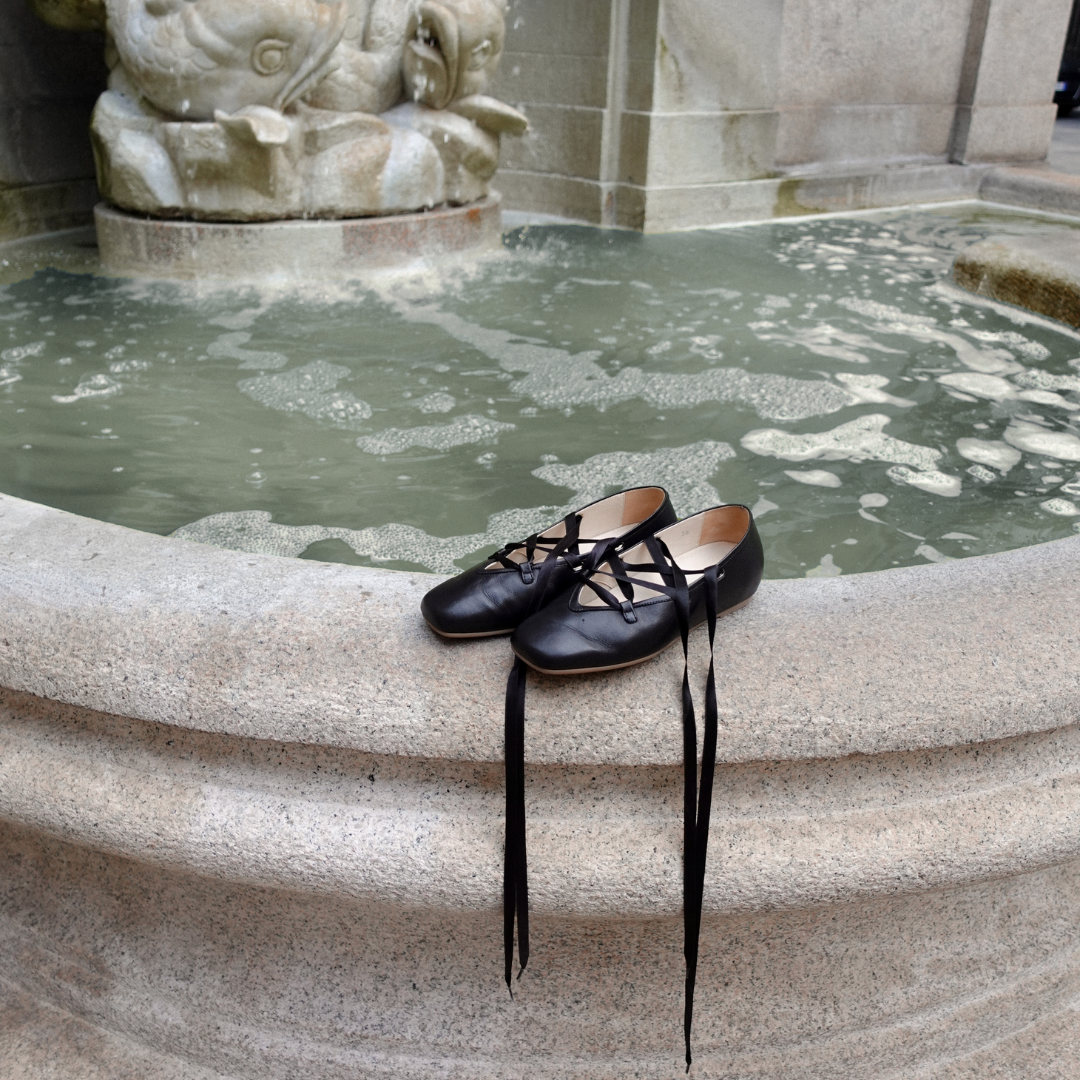
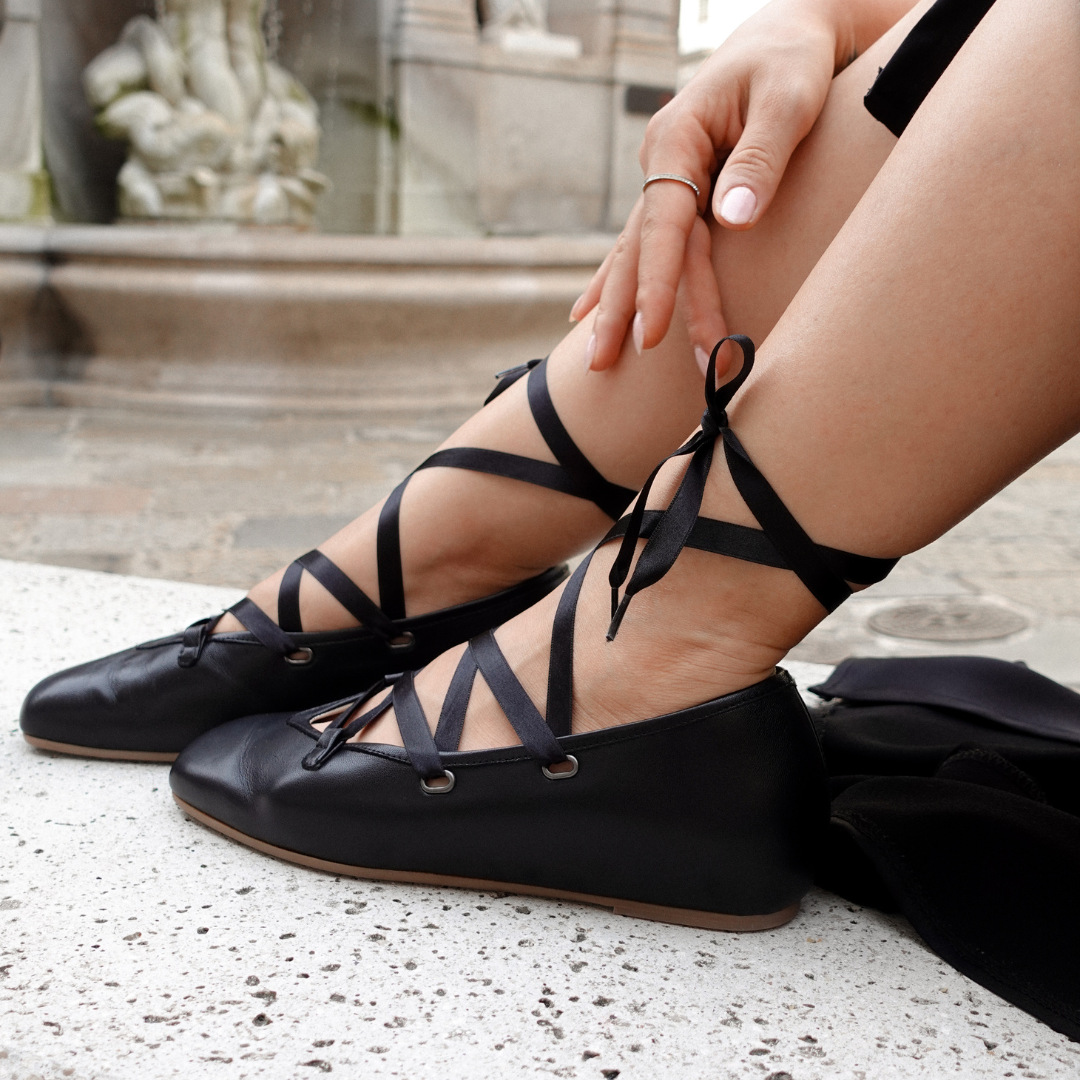
The Charlotte is Calla's crossover ballet flat, the one customers keep coming back to, here in soft black nappa leather. The leather crosses over the toes and stretches across the bunion, with a panel that gives both bunions and tailor's bunions room. Fits up to EEE, true to size.
Origin
Handcrafted in Portugal at a family-run factory in the Porto region
Material
Soft black nappa leather upper, lamb leather lining
Heel
Flat ballerina
Colour
Black
Fit
True to size, fits up to EEE width feet
Toe box
Stretch panel across the toe box for bunions and tailor's bunions, crossover design that stretches to the foot shape
Footbed
Enhanced arch support, extra cushioning at the heel
Browse more images of the Charlotte - Black Leather Ballerinas:
Our Review
Black Charlotte is the ballet flat I reach for most, because the crossover design stretches gently over my bunion instead of pressing a hard line across the joint. The soft nappa leather gives where my foot is widest, and the stretch panel handles both my bunion and the tailor's bunion on the little-toe side. Enhanced arch support and extra heel cushioning mean it carries a full day rather than leaving my feet flat and sore. It is the flat I'd recommend to anyone after a bunionectomy who needs softness and width over the scar area. Fits up to EEE, true to size.
Pros
Stretch panel across the toe box gives over both the bunion and the tailor's bunion sides
Nappa leather softens with wear
Extra heel cushioning eases the back of the foot
Fits up to EEE width
Cons
Flat ballerina sole has limited grip in wet weather
Crossover stretch design relies on the panel rather than laces so cannot be tightened
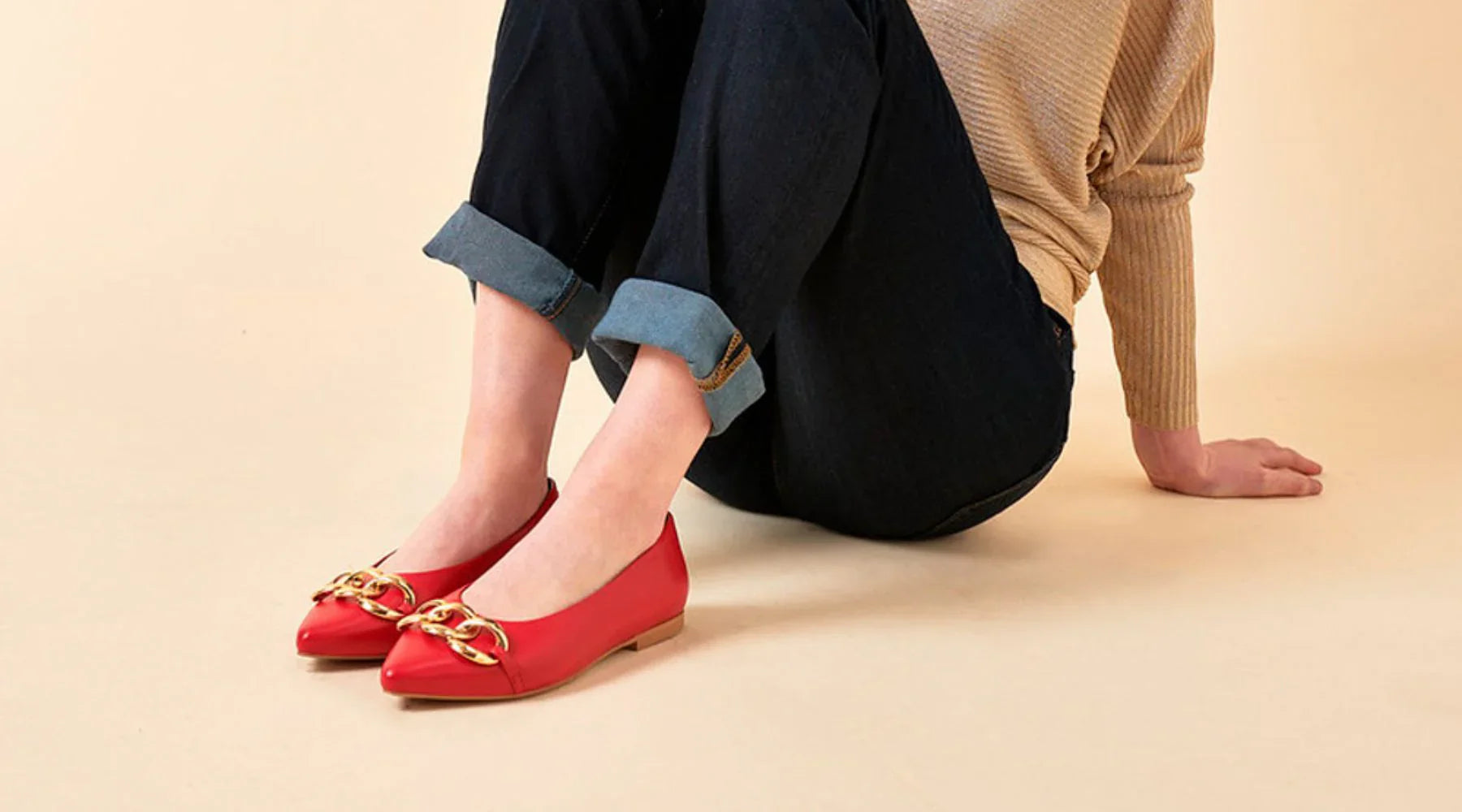
The Claudia court in smooth black leather, a pointed toe on a low kitten heel that sharpens tailoring and lengthens the foot line. The point sits ahead of the toes while the toe box stays wide over the bunion, so a sharp court doesn't pinch the joint. Fits EE, true to size.
Origin
Handcrafted in Portugal at a family-run factory in the Porto region
Material
Black leather upper, lamb leather lining
Heel
Kitten heel
Toe shape
Pointed toe
Fit
True to size, fits EE width feet best
Toe box
Wide toe box with hidden stretch panel over the bunion area
Browse more images of the Claudia - Black Leather Pumps:
Our Review
The black Claudia is my pointed court for formal days, the one I wear when a rounded toe feels too soft for a sharp suit. The point lengthens my foot and finishes tailoring cleanly, but the part that matters to me is that the width sits over my bunion while the point extends past my toes, so the shape doesn't crush the joint the way a normal pointed court does. The low kitten heel lets me wear it from a morning meeting into an evening dinner. With a pencil skirt or wide-leg trousers it does the sharp, polished thing I want. I take my true size, an EE.
Pros
Kitten heel gives a small lift suitable for full days on the feet
Pointed toe sits on a wide toe box so the bunion joint has room
EE width cap suits wider forefeet
Black leather pairs with workwear through to evening
Cons
Pointed toe shape narrows visually so very wide feet beyond EE may prefer a rounded toe style
Leather courts need conditioning to keep the upper looking fresh
The Hallie is Calla's Mary-Jane court, a pointed toe on a stable 5cm block heel with a strap across the foot, here in soft black leather. The 5cm block keeps you steady while the EEE toe area gives the bunion room, so the point sits ahead of the toes rather than on the joint. Fits up to EEE, true to size.
Style
Mary Jane court shoe with pointed toe
Material
Black patent leather upper, lamb leather lining
Heel
5cm block heel
Finish
Glossy patent
Fit
Fits up to EEE width
Toe box
Pointed toe over a wide toe box, bunion-friendly fit
Insole
Cushioned, arch-supported
Best for
Office, evening events, weddings
Origin
Designed in the UK, handcrafted in Porto, Portugal
Browse more images of the Hallie - Black Leather Pumps:
Our Review
Black Hallie is the Mary-Jane court I wear for work and dinner, because the strap across the foot holds me securely and the 5cm block heel is low and stable enough to stand and walk in all day. The pointed toe sharpens the look, but the width runs to EEE so the point sits ahead of my toes while my bunion has room. It is soft black leather rather than a stiff court, so the joint isn't pressed. I wear it with a jumpsuit or a little black dress. Fits up to EEE, true to size.
Pros
5cm block heel sits in the all-day wearable range
Mary Jane strap holds the shoe on the foot without pressing the bunion joint
Pointed toe over Calla's wide toe last so the shape is slimmer than the foot inside
EEE width cap with lamb leather lining
Cons
Patent finish shows scuffs and scratches more visibly than matt leather
Pointed toe is a closer-cut shape than the round-toe styles in the range
Glossy patent surface can pick up dust and smudges that need wiping down
The Delilah is Calla's tall court done on a stable 8cm block heel with a half-inch platform, in black shine leather. The block heel and platform give height with stability and ease the pitch on the big toe joint, while the EEE forefoot gives the bunion room. Fits up to EEE, true to size.
Origin
Handcrafted in Portugal at a family-run factory in the Porto region
Browse more images of the Delilah - Black Shine Leather Pumps:
Our Review
Delilah is the heel I wear when I want real height but not the wobble of a stiletto, because the 8cm block heel and half-inch platform give me the height on a stable base. The platform eases the pitch so my weight isn't driven onto my bunion, and the goats leather flexes where my forefoot is widest. The EEE width is more generous than the Sophia, so it suits a wider foot at height. The shine leather dresses up an evening outfit. Fits up to EEE, true to size.
Pros
Goats leather flexes around the forefoot where bunions sit
8cm block heel spreads weight across a wider base than a stiletto
Half-inch platform reduces the effective pitch of the heel
Fits up to EEE width feet
Cons
8cm is at the upper end of all-day heel height
Shine leather finish shows scratches and scuffs faster than matt
Smooth leather sole can feel slick on polished floors until worn in
The Ruby toe-post sandal in soft milk leather, a clean light neutral that lifts summer whites and pastels and lengthens the foot. The bunion stays covered by the strap and cushioned by the moleskin 'hallux' panel, so the lightest-looking sandal is still the bunion-friendly one. Fits EE-EEE, true to size.
Origin
Handcrafted in Porto, Portugal
Material
Milk leather upper, lamb leather lining
Heel
Flat
Width cap
EE-EEE
Style
Toe post sandal with strap positioned to cover the bunion area
Footbed
Arch-supported cushioned insole with hidden moleskin hallux panel
Sizing note
True to size
Best for
Warm weather when a barely there sandal still needs to cover the joint
Browse more images of the Ruby - Milk Leather Sandals:
Our Review
Milk is the Ruby I pick for pale summer outfits, because a light neutral close to cream lifts a white dress and makes my foot look longer in a way a dark sandal never does. Underneath it is the same design that sold me on Ruby in the first place, the strap covering my bunion and the moleskin panel cushioning the joint so it isn't on show or rubbing. The arch-supported footbed keeps me in them through a full summer day. I wear it with broderie, pale linen and light denim. True to size at an EE-EEE, though I keep the lightest leather away from anything that might mark it.
Pros
Strap is positioned to cover the bunion area instead of crossing over it
Moleskin hallux panel sits under the joint to reduce rub
EE-EEE width cap accommodates wider forefeet
Neutral milk leather pairs across summer wardrobes
Cons
Light milk leather shows dirt and scuffs around the strap edges
The toe post sits between the first and second toe which takes a day or two to get used to
The Ruby sandal in cognac brown leather with a black edge, which lifts a warm tan out of purely-casual and lets it sit with tailoring. The strap covers the bunion and the moleskin 'hallux' panel cushions the joint for a full day on your feet. Fits EE-EEE, true to size.
Origin
Handcrafted in Porto, Portugal
Material
Cognac brown leather upper with black edge, lamb leather lining
Heel
Flat
Width cap
EE-EEE
Style
Toe post sandal with strap positioned to cover the bunion area
Footbed
Arch-supported cushioned insole with hidden moleskin hallux panel
Sizing note
True to size
Best for
Warm weather when a barely there sandal still needs to cover the joint
Browse more images of the Ruby - Cognac Leather Sandals:
Our Review
The cognac is the Ruby I reach for when I want a brown sandal that isn't only a beach shoe, and the black edge is what does it, giving the warm leather a sharper line that works with trousers. It covers my bunion the way the whole Ruby range does, with the strap across the joint and the moleskin panel underneath, so a smart-casual work day doesn't end in soreness. The arch support holds through lunch and the walk back. I wear it with dark denim or khaki, and it carries into early autumn better than a pale sandal. True to size for me at an EE-EEE.
Pros
Strap is positioned to cover the bunion area instead of crossing over it
Moleskin hallux panel sits under the joint to reduce rub
EE-EEE width cap accommodates wider forefeet
Cognac with black edge sits between dressy and casual
Cons
The toe post sits between the first and second toe which takes a day or two to get used to
Flat pitch with no heel lift
Leather sandal soles need drying out after a wet day
Step into Comfort Without Sacrificing Style
Foot pain, especially from plantar fasciitis, isn’t simply a physical nuisance; it’s a problem that can affect your mood, focus, and productivity.
While many options claim to offer relief, finding footwear that eases discomfort and complements a sophisticated wardrobe is a precise process requiring deeper understanding.
With the right insights, you can discover solutions that seamlessly combine therapeutic support and polished style.
No more painful feet halfway through the day, no more nights massaging away your heel pain, just beautifully cushioned wide women's shoes designed to relieve your aches, not add to them (and made from exceptional quality materials too).
Why the Right Footwear Will Change Your Life
Shoes influence more than how you walk - they determine how you feel at the end of a long day. Poorly designed pairs worsen plantar fasciitis by overloading the ligament running along the bottom of your foot. Footwear that addresses the root cause alleviates strain and restores your freedom to move confidently throughout your day.
Summary of Plantar Fasciitis Causes
Here is a summary of the proven causes of plantar fasciitis:
Aging
High Intensity Activities
Obesity
Genetics
Supinating
Hard Flooring
What Happens with Poorly Designed Shoes?
Flat or unsupportive soles force your fascia to overextend, increasing inflammation and pain.
Heels lacking shock absorption transmit pressure directly into your heel, intensifying the stabbing sensation associated with plantar fasciitis.
Benefits of Thoughtful Choices
Pressure Distribution: High-quality midsoles balance weight across the foot to reduce stress on pain-prone areas.
Anatomically Designed Arch Support: Footwear featuring built-in orthotics cradles the arch to prevent the ligament from stretching too much with each step.
Stabilized Motion: Anti-pronation technology, often incorporated into athletic and dress styles, ensures proper alignment from heel to toe, reducing strain.
Takeaway: Wearing well-engineered options can transform what feels like an exhausting marathon into a manageable, pain-free stride - whether you're rushing between meetings or exploring new cities.
What is Plantar Fasciitis?
Plantar refers to the bottom of the foot.
The Plantar - The Plantar is the name given to the sole, which is easy to remember because we put all of our weight on our feet.
Fascia - This is the fibrous tissue that connects bones and other bodily parts.
Plantar Fasciitis - It’s defined as a band of fibrous tissue that runs the length of the bottom of the foot and connects the heel bone to the toes.
The integrity of the Fascia, which works as a body stabilizer, is critical. That’s because our bodies’ weight is centred on the soles of our feet. Its springy characteristics produce a bounce-back effect, similar to that of shock absorbers in a car, providing a smooth ride and effectively protecting our bodies from ground forces when we run or walk.
The body has little protection from the impact of walking or running after the Fascia’s shock-absorbing qualities are damaged or rendered useless owing to injury. The body is compelled to endure the stress and strain of those harsh, unforgiving earth forces directly. This affects the feet and the rest of the body, from the legs to the back and neck.
Symptoms of Plantar Fasciitis
Plantar Fasciitis is characterized by a number of symptoms, which can be:
Morning Hobble
Morning Heel Pain
Recurrent Morning Pain
Pain after Prolonged Periods of Rest
Contracted Fascia
Subsiding Pain
Morning Hobble
When you first wake up and walk in the morning, your bodyweight presses down on your plantar fasciitis, which can feel like a dry old rubber band stretched too far. This causes you to unnaturally walk as you try to relieve the pain and discomfort in your feet’s bottoms.
Morning Heel Pain
The discomfort you feel when you first get out of bed in the morning is the first sign of plantar fasciitis. As soon as your foot touches the floor, there’s that sudden pain in your heel. Or there can be a dull discomfort that extends down the bottom of your foot to your toes.
Recurrent Morning Pain
It’s no secret that the pain tends to return like clockwork every morning. This morning soreness will gradually worsen over time, and you’ll notice that stretching out the Fascia will take considerably longer every morning. Plus, it will become more challenging over time.
Pain after Prolonged Periods of Rest
It can also flare up after sleeping, but it’s also likely to happen after extended periods of sitting or inactivity. This is because the Fascia prefers to contract when the foot is at rest. As a result, the pain cycle continues as you get up to walk, just as it did when you initially woke up.
The pain also tends to get worse as time goes by.
Contracted Fascia
It may feel as if the bottoms of your feet are cramped, almost hyper-extended, when you first start walking after sleeping or resting. This is because the fascia bands have tightened to the point that they cannot extend and flex naturally under your body’s weight.
Subsiding Pain
Plantar Fascia pain might make standing and walking difficult at first, but it will lessen in your morning routine after some time. This is due to your Fascia Band gradually stretching out and releasing its hyper-contracted state. You might not even think about it again until the following morning when it happens again.
Key Features to Look for in Pain-Relief Footwear
Finding the right shoes that work with—not against—your foot structure involves focusing on these critical features:
1. Elevated Support Without the Bulk
Effective plantar fasciitis relief incorporates reliable support systems in a lightweight, discreet design. Look for aspects like:
Thermoplastic Urethane (TPU) Shanks: These provide structural integrity, preventing over-flexing of the sole.
Dual-Density Foam Layers: This combination cushions underfoot while adding stability to reduce excessive movement.
For instance, modern ankle boots with hidden orthotic insoles provide both aesthetic appeal and reliable support. A mid-block heel can even offer slight elevation to relieve pressure on the heel bone.
Example: A slim Chelsea boot with a shock-absorbing sole and reinforced arch support can pair seamlessly with tailored trousers, allowing you to stay stylish and comfortable during back-to-back meetings.
2. Materials That Respond to Your Foot’s Needs
The materials used significantly impact your comfort and recovery. Fabrics should strike a balance between durability and flexibility:
Knit Uppers: These stretch naturally to accommodate swelling while offering breathability, making them ideal for warmer climates.
Full-Grain Leather: This premium material molds to your foot over time, providing a personalized fit while maintaining a polished look.
Gel or Memory Foam Insoles: These adapt to the unique contours of your feet, offering immediate relief and long-lasting cushioning.
Tip: Avoid rigid or cheap synthetic materials that trap heat and cause friction, worsening symptoms like heel tenderness.
3. Functional Designs That Don’t Compromise Aesthetic Appeal
There’s no reason to settle for shoes that are either stylish or supportive. Today’s designs use innovative techniques to blend style with functionality:
Pumps with hidden EVA midsoles look elegant while absorbing shock with each step.
Sneakers featuring streamlined silhouettes pair comfort with versatility, suiting both business-casual attire and weekend outings.
Flats with reinforced toe boxes provide ample room without sacrificing a sleek profile.
Real-world Application: A pointed-toe ballet flat with contoured arch support and padded heel counters can elevate your outfit without the sting of plantar fasciitis.
Expert Tips for Selecting the Perfect Pair
When shopping for pain-relief footwear, a strategic approach ensures you make an informed choice:
1. Shop According to Your Routine
Your daily activities should guide your priorities:
For commuting: Opt for lightweight loafers with removable insoles that can accommodate custom orthotics.
For standing or walking extensively: Seek sneakers with multidirectional tread patterns for superior traction and stability.
For formal settings: Heels no higher than 2 inches with shock-absorbing platforms are both functional and sophisticated.
2. Evaluate Support Systems
Test the insole by pressing your thumb into the arch area—it should feel firm yet flexible. Avoid shoes with overly soft insoles, as they lack the necessary structural support to combat plantar fasciitis.
3. Choose Adjustable Features
Buckles, Velcro straps, or elastic gussets allow you to customize fit, ensuring the shoe hugs your foot snugly without pinching or pressure points.
Pro Insight: Calla integrates discreet adjustment systems into our designs, offering flexibility without sacrificing elegance.
Unproven Causes
These are unproven causes of Plantar Fasciitis:
Natural Fascia Band Thickening
Heel Spurs
Weight-bearing activities
Natural Fascia Band Thickening
The Fascia Tissue can thicken over time if it is wounded and re-injured, which is a natural occurrence throughout your life. But this isn't a cause of PF.
Heel Spurs
Heel Spurs are calcium deposits on the bottom of the heel bone that form a bony protrusion. They’re not the same condition as Plantar Fasciitis, even if they are usually associated with it. They are more common in people who already have Plantar Fasciitis, and many with heel spurs don’t even know they have them as these people don’t experience heel spurs-induced pain.
Weight-Bearing Activities
Walking and carrying hefty weights will invariably put greater weight and pressure on the Plantar Region. In general, weight-bearing tasks are only for very brief periods, as opposed to being obese, when extra weight is constantly carried when standing, walking, and running.
While Heel Spurs, Fascia Band Thickening, and Weight-Bearing Activities have all been suggested as potential reasons, none have been proven to have a direct, significant link to the beginning or progression of Plantar Fasciitis.
Research Backed Causes of Plantar Fasciitis
According to research, the following factors can cause Plantar Fasciitis:
High-Intensity Activities
Obesity
Aging
Hard Flooring
Supinating
Genetics
High-Intensity Activities
Beginning a strenuous activity that causes more significant pounding pressure on the foot, such as aerobic gym classes, running on the pavement, military activities, or even Irish dancing, can cause Plantar Fasciitis. The explanation for this is that the Fascia band hasn’t had enough time to adjust to the new stress. Pain and inflammation will develop due to the overuse of any untrained muscle in the body.
Obesity
Overweight people are 1.4 times more likely to develop Fascia discomfort. This is because the Plantar Region supports your entire body weight throughout the day.
Obesity puts more weight and pressure on the fascia band, putting the Plantar region under a lot of strain. The Fascia stretches to its maximum under the body’s weight over time, eventually developing microscopic rips and micro-tears. As Fascia has become injured and weakened, pain ensues.
Aging
Degenerative changes are inevitable as our bodies age. Between the ages of 45 and 65, the suppleness of the Fascia decreases significantly, affecting its shock-absorbing capacity. This reduction also makes the Fascia more vulnerable to traumas like rips and microtears.
Plantar Fasciitis affects older athletes more than younger athletes, with severe stabbing pains in the heels being the most common complaint.
Hard Flooring
A link has been shown between Plantar Fasciitis and long periods of standing at work.
This action can either cause or exacerbate pain and discomfort in the Fascia Tissue. Restaurant and factory workers who spend their days walking on hard surfaces or standing on hard concrete floors are particularly vulnerable.
Supinating
Supinators are people with flat feet. Plantar Fasciitis is more common among them than in people with higher arches.
When you have flat feet, your fascia bands are fully extended and lack the flexibility to bounce back and walk more softly. Any additional tension placed on this vital area will have an immediate impact.
Genetics
A combination of genetic and environmental factors can cause Plantar Fasciitis.
Some inherited genes make an individual more prone to Muscle Contractions. A contraction occurs when tendons and tissues shorten and harden, such as the Fascia Band. The band’s suppleness is lost when it retracts and sets, making injuries more likely.
Plantar Fasciitis Pain
A stretched fascia can be as achy as any other over-extended ligament in the body. It develops micro tears when a rubber band is stretched to its utmost, just like the Plantar Fascia band. Micro-tears and rips can form, causing a great deal of pain and irritation.
Is There a Cure for Plantar Fasciitis?
Plantar Fasciitis is still incurable, and so treatment of the symptoms is the only way sufferers can find relief.
Most of these therapies are designed to relieve inflammation, extend the Fascia band gradually, offer proper arch support beneath the feet, or counteract the Fascia’s contraction when sleeping.
Some sufferers turn to their chiropractor or primary care physician for assistance. On the other hand, most Primary Doctors will just confirm the disease and then provide common home remedies that you can find online.
Only a small minority of people will be advised that their pain has evolved to the chronic stage when it is resistant to therapy. These individuals will be sent to an Orthopedist for further consideration.
Here are some Orthopedic options:
Shock-Wave Therapy Plantar healing is accelerated with the application of sound waves. Pain, numbness, tingling, swelling, and localized bruising are some of the possible side effects.
Platelet-Rich Plasma Injections For precise pain treatment, these injections are guided by cutting-edge Ultrasound Technology.
Steroid Injections Used to relieve discomfort temporarily. They may weaken the plantar fascia band over time, causing it to rupture.
Surgery The Fascia Band is separated from the heel bone.
Tenex Procedure Plantar Fasciitis scar tissue can be removed with a non-surgical, minimally invasive technique.
Only a tiny percentage of people choose surgical treatment after visiting an Orthopedist. This is because surgery comes with its own perils that might lead to other issues, such as reducing underneath support and weakening the arches.
The good news is that conservative home remedies, such as wearing a decent pair of store-bought Insoles and properly fitting, supportive shoes for all your everyday activities, may fix 90% of all Plantar Fasciitis cases within a year.
Empower Your Step - Practical Solutions for Every Occasion
Plantar fasciitis doesn’t have to limit your style. By choosing options with precision-engineered support, premium materials, and adaptable designs, you can alleviate discomfort and elevate your overall experience. Whether you need ankle boots for busy days or flats for casual outings, the right footwear empowers you to move confidently through every chapter of your day.







Leave a comment
This site is protected by hCaptcha and the hCaptcha Privacy Policy and Terms of Service apply.